
By Andrew Boltz · June 19, 2026
Florence has a reputation problem. Not a bad one. An incomplete one. The city gets marketed as the birthplace of the Renaissance, home of Michelangelo’s David, and the place where you eat Bistecca and stare at the Duomo until your neck files a complaint. All of that is true. None of it is the whole picture.
Here’s the issue with Florence’s greatest hits: they’re so loud that most visitors sprint from one to the next and never notice what’s hiding in between.
Here are 10 things Florence doesn’t put on its brochures, but should.
This is not a list of “secret places” that stopped being secret in 2014. It is a list of things that make Florence stranger, funnier, older, more human, and much more interesting than the standard Duomo-Uffizi-David sprint.
Heads up: some links on this page are affiliate links. If you book or buy through one, I may earn a small commission and you pay exactly the same price. More in the full affiliate disclosure.
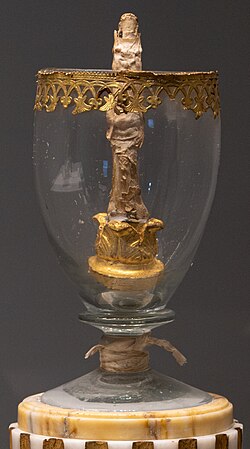
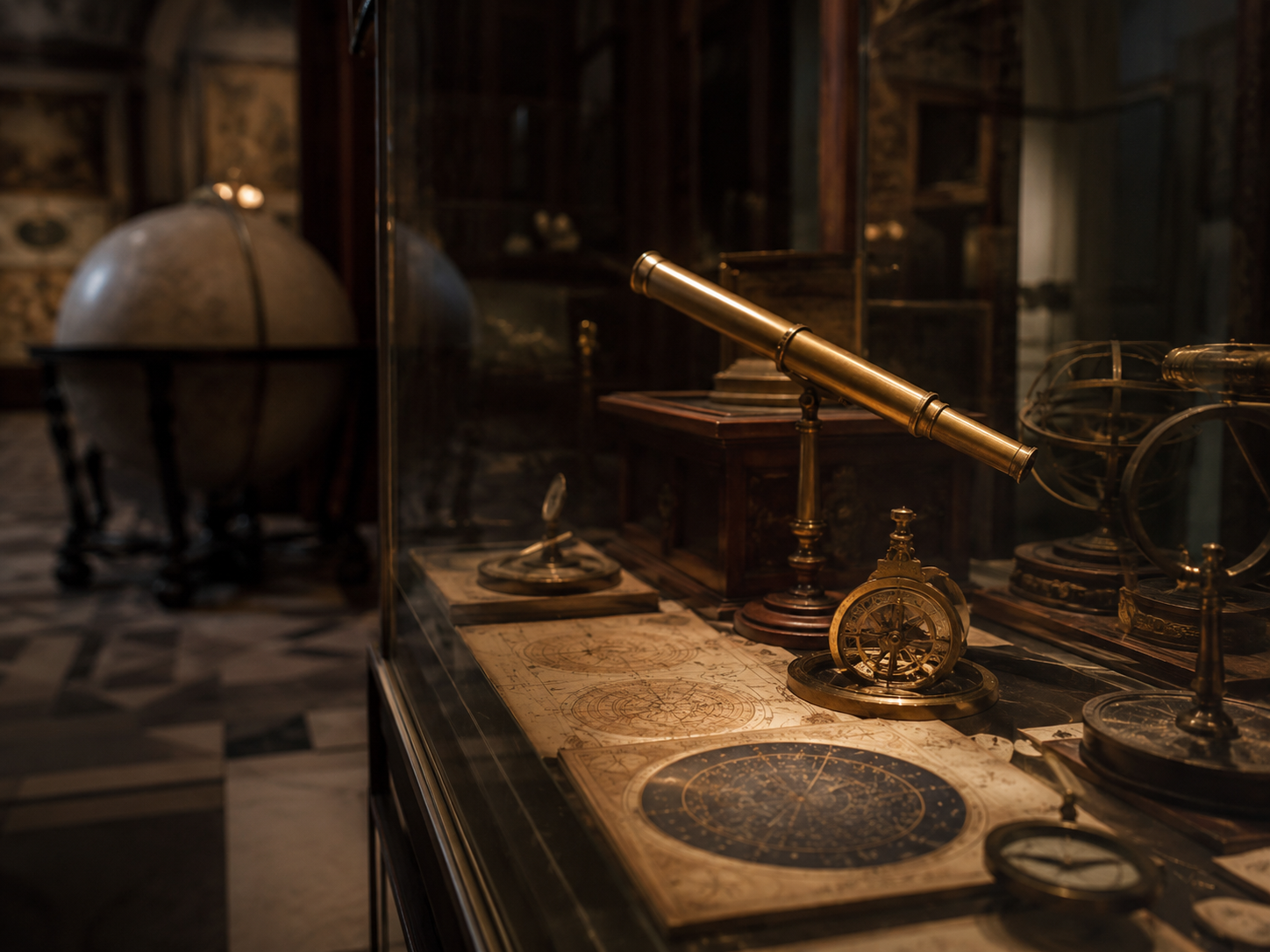
This is not a rumor. This is not a metaphor. The Museo Galileo houses his actual telescopes, his actual compass, and his preserved fingers in glass reliquaries. Yes, they have his middle finger. And yes, dedicating a museum display to Galileo flipping off the church for eternity is the most subtly hilarious thing in Florence. The story is somehow both reverent and deeply Italian. When Galileo’s body was moved to its permanent tomb in 1737, a group of admirers pried off a few choice pieces as keepsakes, the way you might take a memento from someone you really respected. The surviving relics eventually made their way into museum care, because apparently Florence looked at a severed Enlightenment-era finger and said, “Yes, that’s educational.” It’s one of the more genuinely unhinged museum experiences in a city that has no shortage of them. But, really, go to see the instruments that changed how humans understand the solar system.
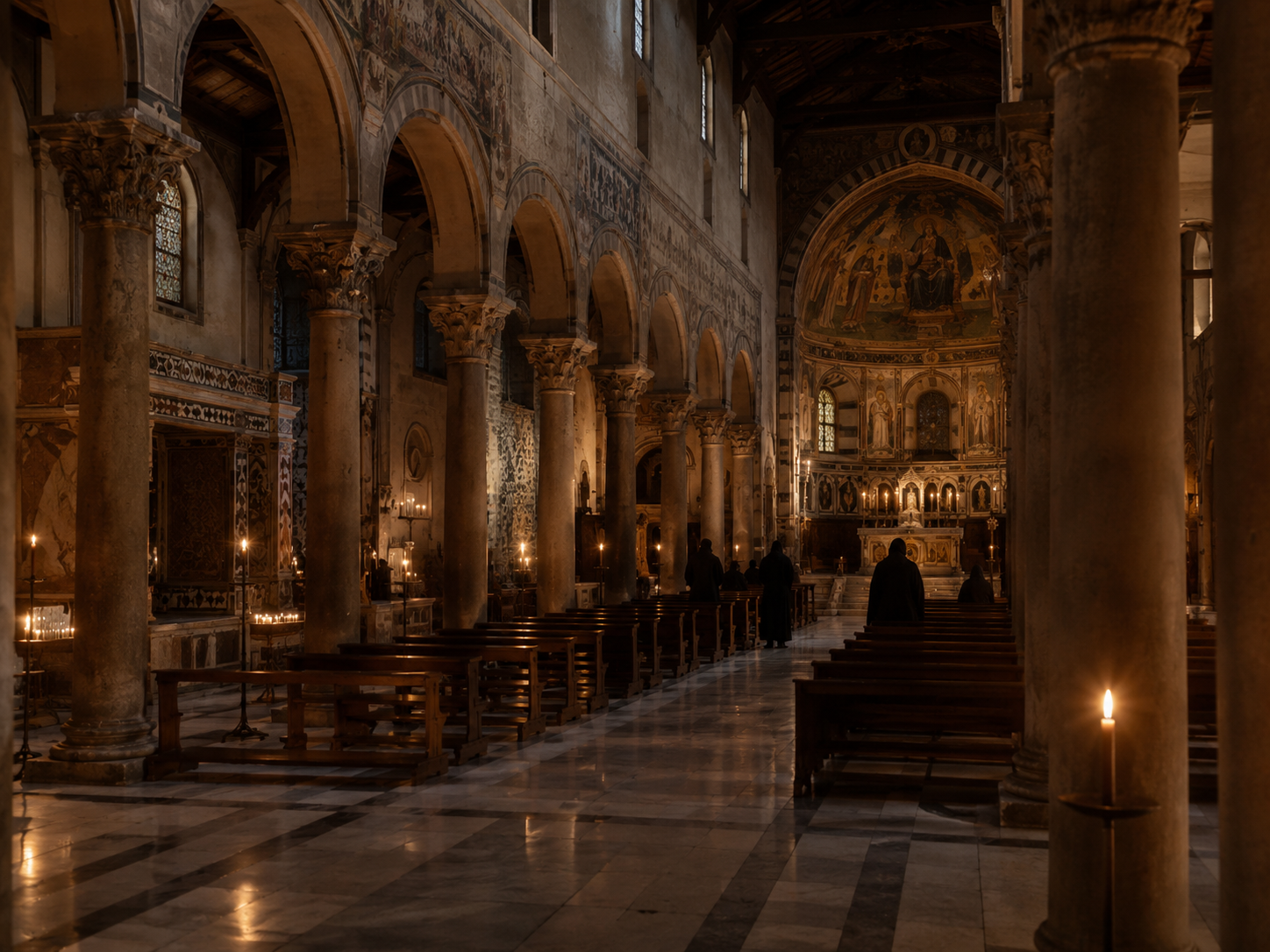
San Miniato al Monte sits above Florence on the south side of the Arno, a short, steep climb above Piazzale Michelangelo. It is one of the oldest and finest Romanesque churches in Tuscany, dating to the 11th century, with a geometric marble facade and a floor covered in zodiac signs and animal mosaics from 1207. Most evenings the Benedictine monks who live there sing vespers. The time shifts with the season, so check the abbey’s own schedule before you climb. Gregorian chant, in a church that has been hearing it since medieval times. You can walk in, sit down, and listen for free. It does not photograph well, which is exactly why it remains one of the few experiences in Florence not entirely ruined by Instagram. But by all accounts, it’s one of those travel moments that bypasses your brain entirely and goes somewhere else. Worth every step of the uphill walk.
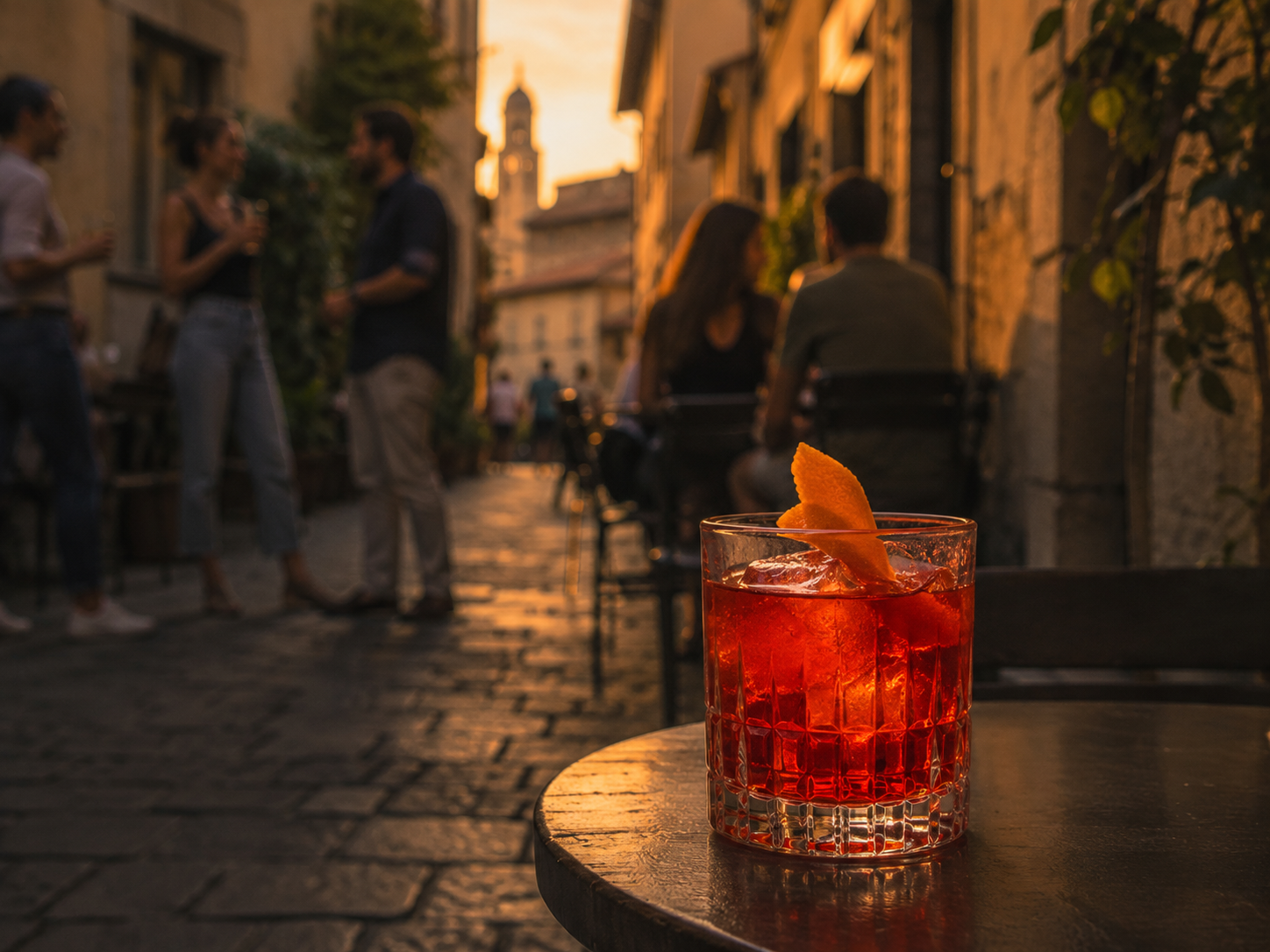
The story Florence tells goes like this. Around 1919, at a bar called Caffè Casoni, a count named Camillo Negroni asked his bartender to strengthen his Americano by replacing the soda water with gin. The bartender obliged. The cocktail spread. You have been drinking it ever since without knowing you owed Florence a thank-you note.
The Oltrarno neighborhood, on the south side of the Arno, is where you go to drink one properly. The aperitivo culture is real and excellent, particularly around Piazza Santo Spirito. This is also where Florence stops performing for tourists and starts just being Florence: slightly rougher, considerably more local, and significantly more interesting than the block immediately surrounding the Duomo. After a day on Florence’s paving stones, a Negroni stops being a drink choice and starts being necessary medical triage.
The full Florence plan
Every one of these is worth an hour of your trip. Fitting them into three days without crossing the Arno five times is the part that takes work. The Florence 3-Day Itinerary lays out the route across all three days, with the tickets worth booking before you fly.
Get the Florence 3-Day Itinerary
Instant PDF download.
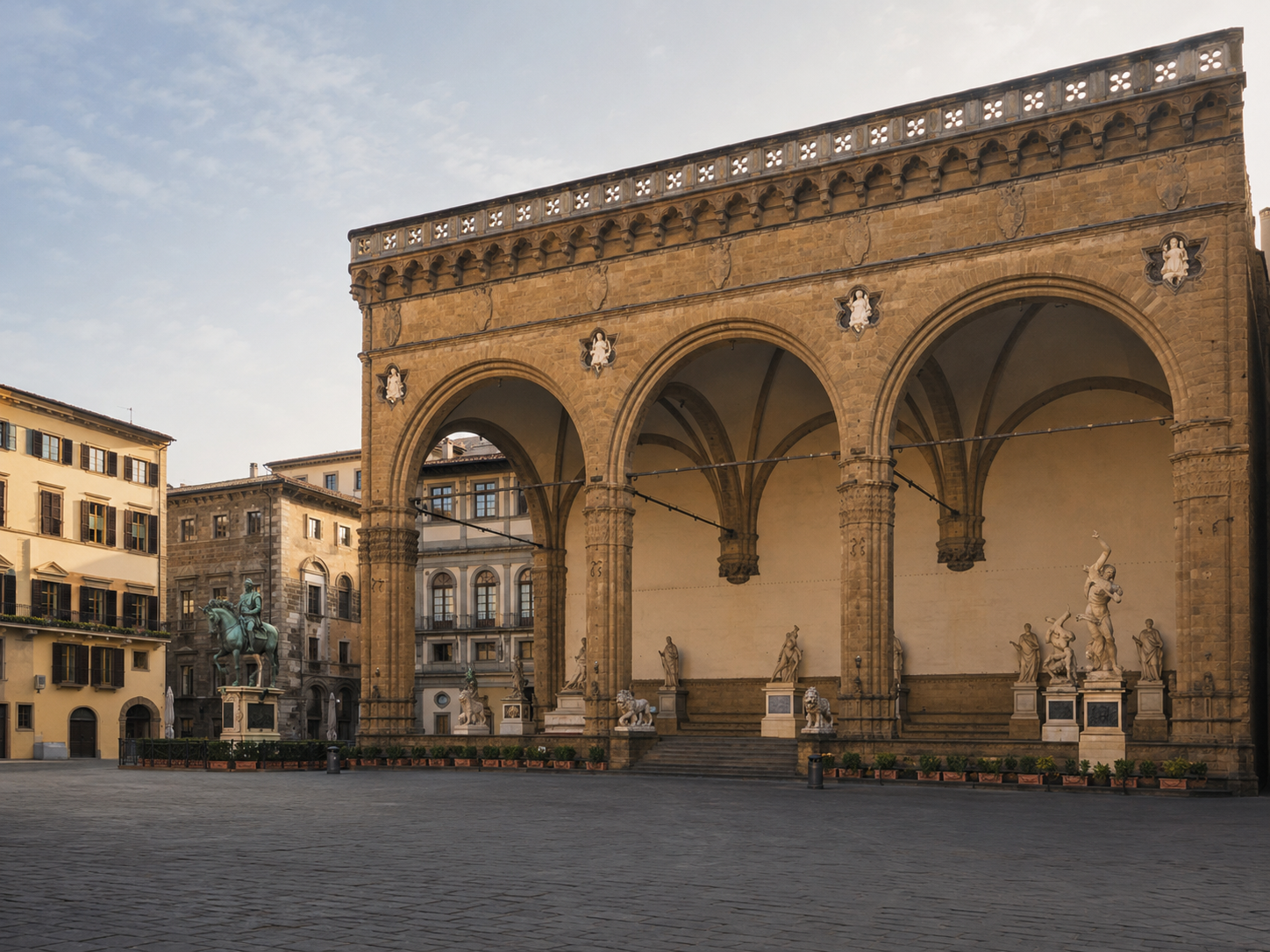
The Loggia dei Lanzi sits on the south side of Piazza della Signoria, right next to the Palazzo Vecchio. It is an open-air arcade that houses, among other things, Benvenuto Cellini’s Perseus Holding the Head of Medusa (1554) and Giambologna’s The Rape of the Sabine Women (1583), two of the most technically accomplished sculptures produced during the entire Renaissance period.
They are outside. They are free. They are viewable at any hour. Most visitors walk straight past them to go photograph a replica of the David standing a few feet away, which is a little like ignoring a Ferrari to take a picture of a Ferrari poster. Stop. Look at them.
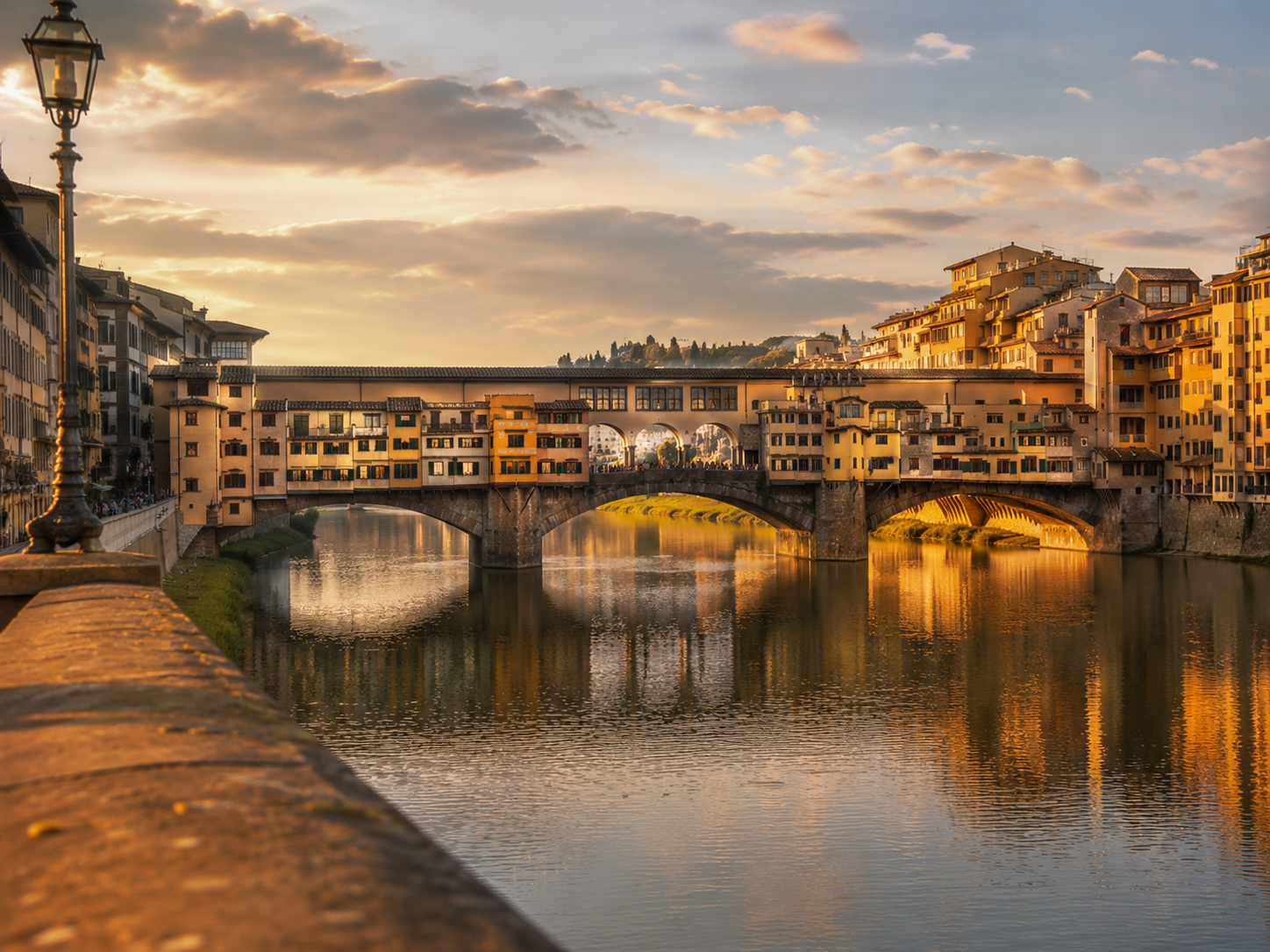
The famous shops lining the Ponte Vecchio sell gold and jewelry. They have since the 16th century, after Ferdinando I de’ Medici issued a decree removing all the butchers, tanners, and fishmongers who had previously occupied the bridge. The usual explanation is the smell, along with the decorum of a bridge that now had the grand duke’s private corridor running above it. As far as municipal zoning laws go, swapping raw tripe for Rolexes is the kind of political maneuvering that ages exceptionally well for the local tax base. The best photograph of the bridge is not from on it but from the Ponte Santa Trinita, one bridge upstream, looking east in the late afternoon when the light is coming at a useful angle.
Michelangelo’s David is the reason everyone books tickets to the Galleria dell’Accademia. It deserves the reputation. Visitors say again and again that it is more impressive in person than any photograph prepares them for, which is a rare thing to hear about a famous artwork. And there is no “strategic” fig leaf for the prude. Deal with it.
Try the official site first. If it is sold out, the resellers may still have tickets, and you will pay a premium for them. That premium is how they earn. If you would rather have the ticket than the saving, this is where to look.
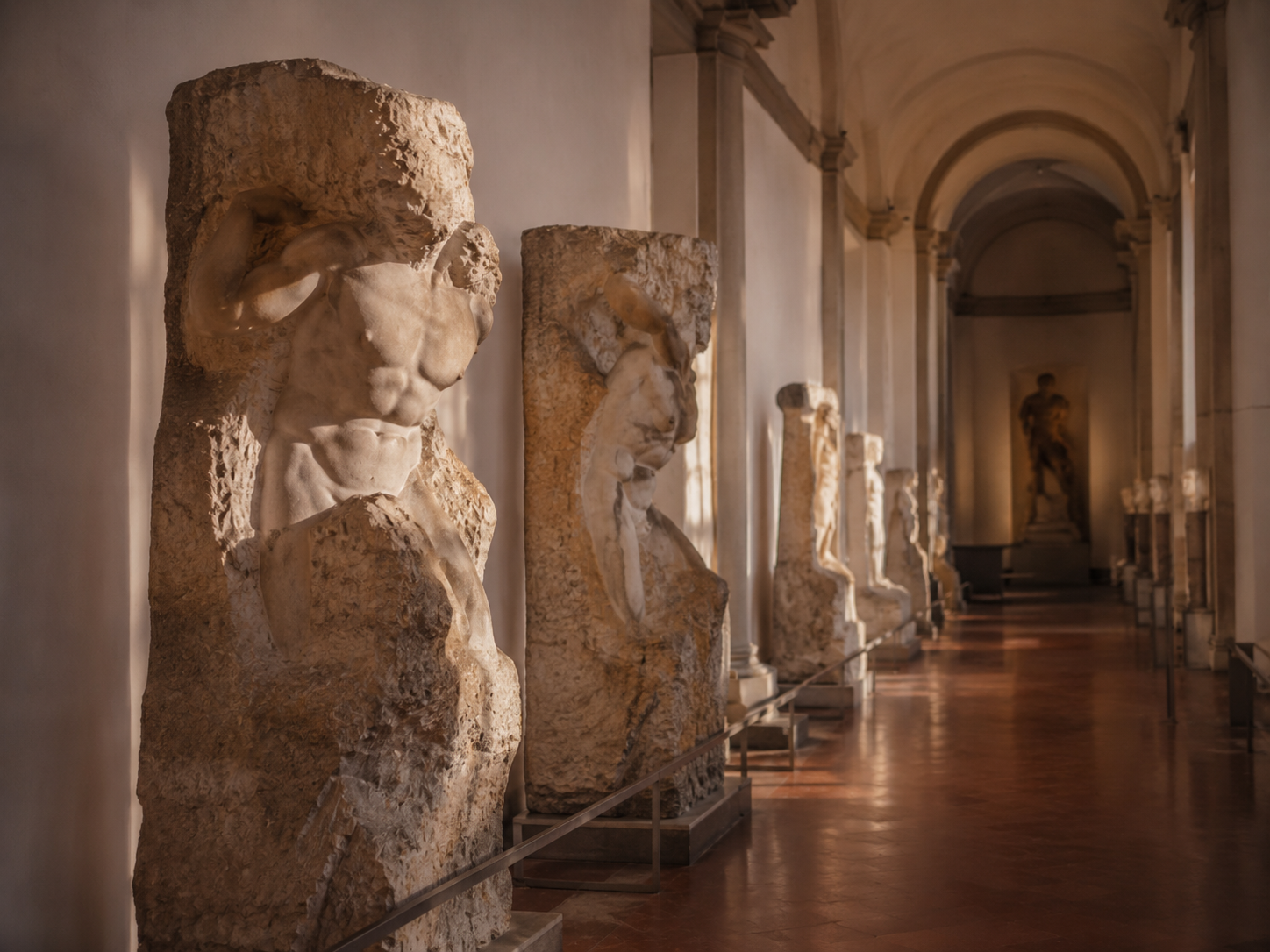
But flanking the long corridor that leads to the David are the Prisoners: four unfinished marble figures Michelangelo left partially carved, human forms apparently trying to claw their way out of the stone. One reading says Michelangelo left them that way on purpose, souls struggling free of the stone. The plainer explanation is that they were carved for the tomb of Pope Julius II, a commission that kept shrinking until they were no longer needed. Either story makes them more interesting than most finished sculptures, and yet most visitors blow past four unfinished Michelangelos like they’re hallway carpet, sprinting towards the one naked giant at the end.
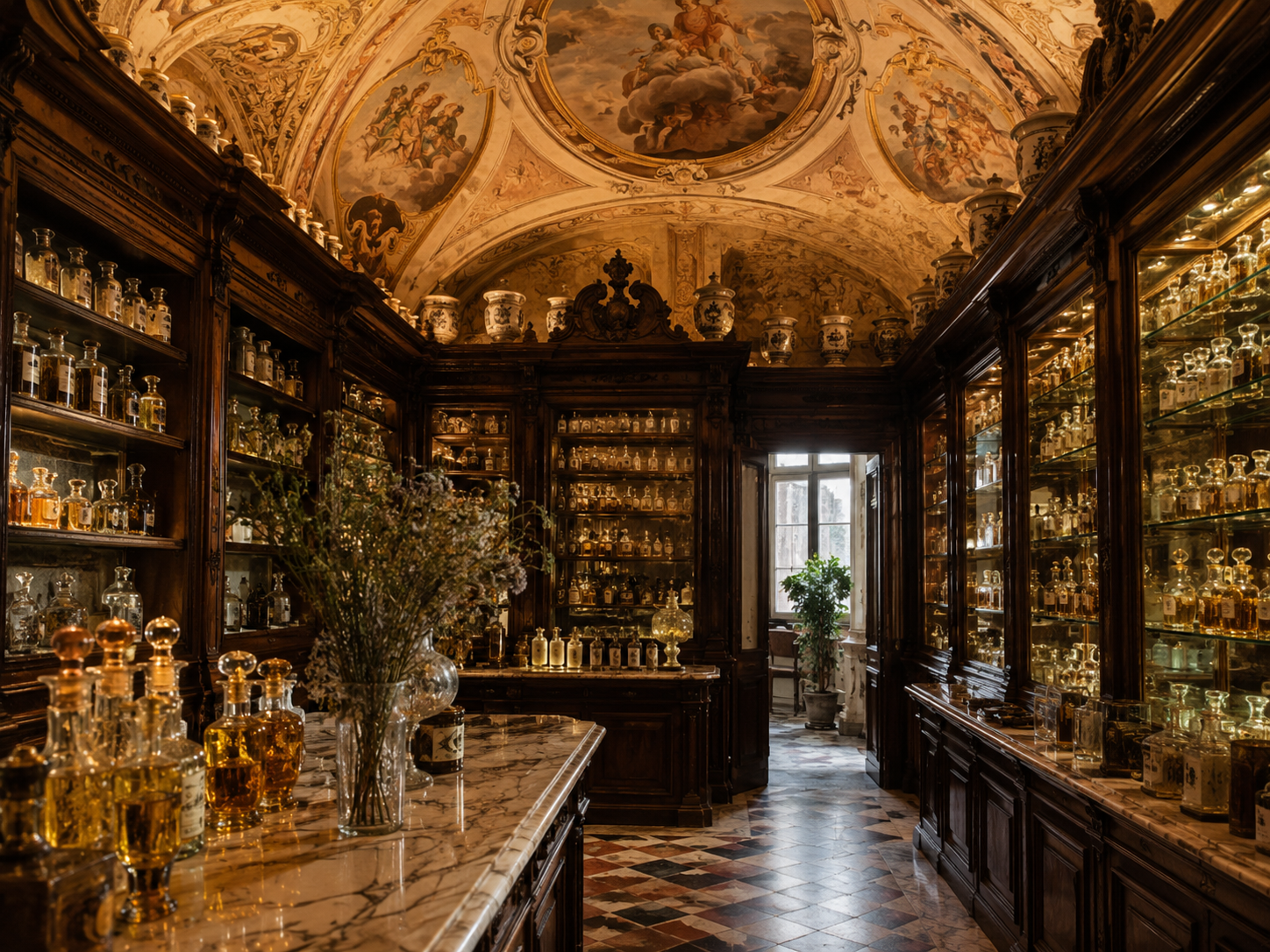
The Officina Profumo-Farmaceutica di Santa Maria Novella is a few minutes’ walk from the train station, in a complex where Dominican friars were making herbal remedies and scented waters as far back as the 13th century. The current retail space occupies a frescoed hall that was originally a chapel, which is either very respectful or very on-brand for a place selling rose water.
The products are made to formulas refined by Dominican friars over centuries, and buying them here, in the original hall, beats an airport counter for the story alone. You’ll budget like a responsible adult right up until you’re standing in a 700-year-old chapel surrounded by things that smell expensive. That’s how dinner becomes a panini and your suitcase comes home heavier than it left. If you were going to buy any of it anyway, buy it here and accept the inevitable.
The Boboli Gardens, behind the Palazzo Pitti, are the default choice for a green escape from Florence’s stone streets. They are large, they are beautiful, and in peak season they contain a substantial percentage of Florence’s total tourist population per square meter.
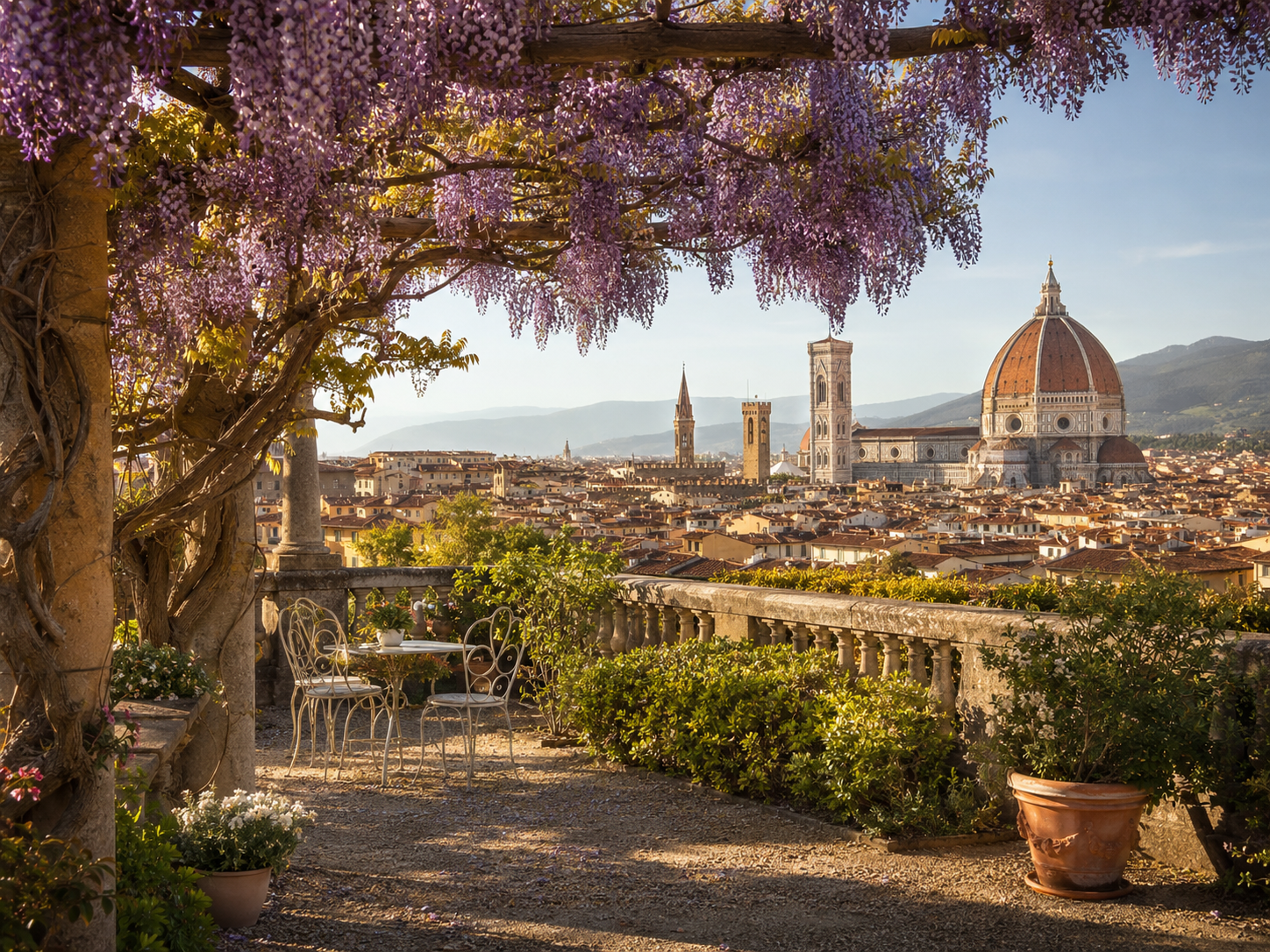
The Bardini Garden, just a short walk east along the hillside, covers similar ground with a fraction of the crowd. In April and May, the wisteria tunnels there are genuinely spectacular. The garden also provides excellent views back over the city and connects to a network of paths that wind up toward San Miniato. A combined Boboli and Bardini ticket, €15, is sold at the ticket offices on the day of your visit. It’s not a secret in any technical sense. It’s simply overlooked, which in Florence amounts to the same thing. If you have not fixed your dates yet, the month you pick changes this trip more than anything else on this list.
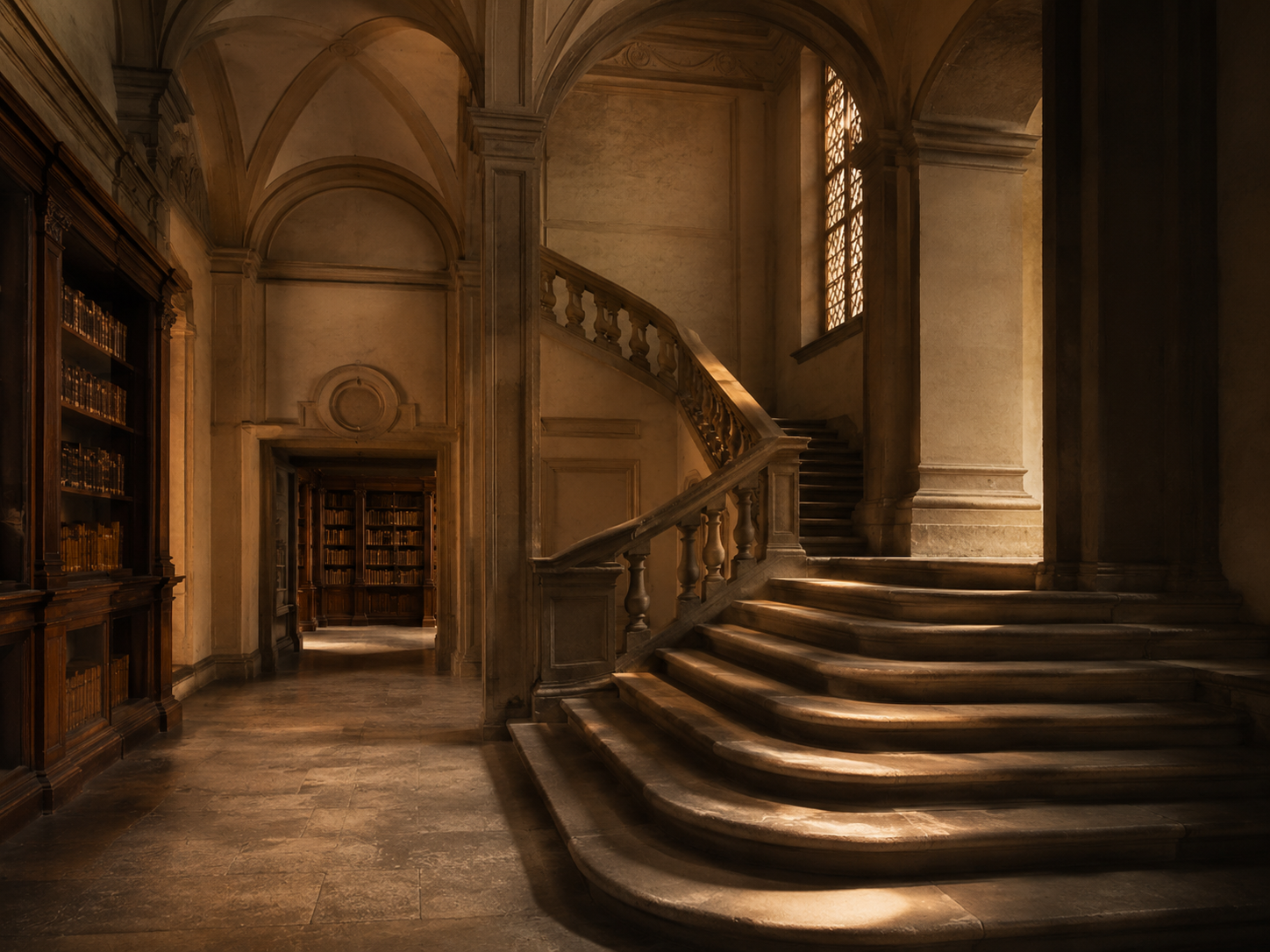
The Biblioteca Medicea Laurenziana, accessible through the cloister of the Basilica di San Lorenzo, houses one of the most important manuscript collections in the world. Early manuscripts of Dante and Petrarch. A Virgil manuscript from the late Roman period. Medieval illuminated texts.
The vestibule and staircase leading to the reading room were designed by Michelangelo, a man who, it turns out, could not be trusted to design a normal staircase. He spent considerable time making this one do things staircases had no business doing. The space is unusual, slightly unsettling in the best architectural way, and frequently close to empty. The entry fee is modest. It’s not on most Florence itineraries, and it’s better for that.
Trattoria Mario has been operating on Via Rosina, one block from the Mercato Centrale, since 1953. The menu changes every day with whatever the kitchen bought at the market that morning. You do not so much order as negotiate with whatever the kitchen decided Florence deserved that day. The tables are communal, which means you will be seated next to strangers, which in practice means you may well end up trading recommendations with regulars.
Lunch only, Monday through Saturday, noon to 3:30pm, and not a minute longer. No reservations, so expect a queue. The ribollita and the bistecca are what the regulars come for, at prices that look like an accounting error next to everything else Florence charges. If I am anywhere near the Mercato Centrale at lunchtime, this is the lunch I am planning around.
Florence rewards the traveler who slows down long enough to look sideways. The Uffizi, the Accademia, and the Duomo deserve every word ever written about them. But the city’s real character lives in the things that aren’t on the official tour: a pharmacy from the Middle Ages, a hillside garden nobody’s fighting over, a church where the music hasn’t changed in a thousand years, and a restaurant that’s been ignoring trends since before your parents were born.
Now, the part where I sell you something. I’m not going to pretend this next paragraph is anything else. If you want the full version, the route planning, restaurant picks, booking notes, neighborhood strategy, and the stuff you actually need to know before you’re standing in line sweating through your shirt, my Florence 3-Day Itinerary Guide is $9.
Get the Florence 3-Day Itinerary Guide →
Get the guide: Instant PDF download, $9.
Not ready for the full Florence guide yet? Drop your email below and grab my free Florence Day Trip Guide. It covers the best easy day trips from Florence, including where to go, how to get there, and which trips are actually worth your limited vacation time.
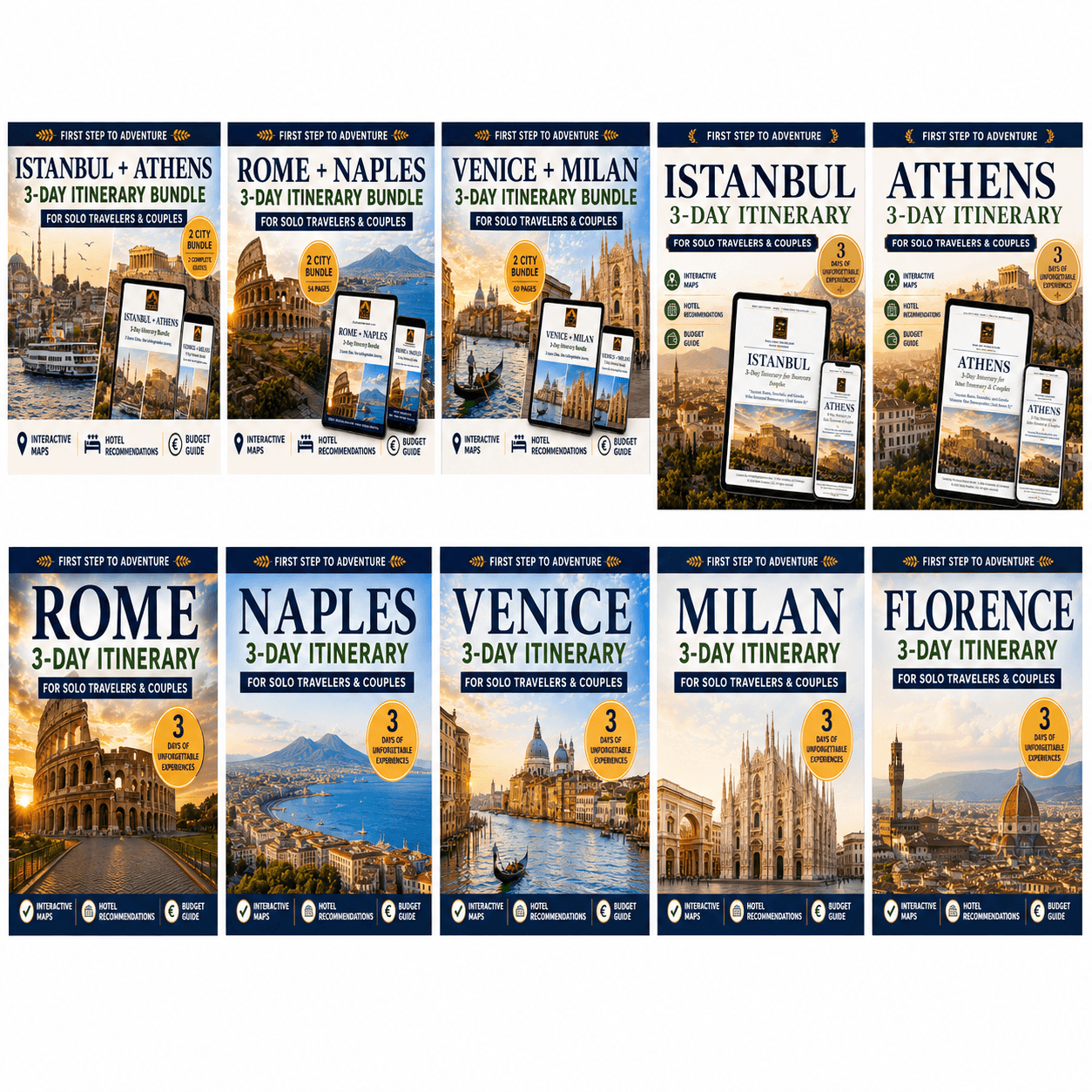
Every 3-day guide:
Rome · Naples · Venice · Milan · Athens · Istanbul
Traveling two cities? The Rome + Naples, Venice + Milan, and Athens + Istanbul bundles are there too.
Join the Adventure
No spam. Unsubscribe any time. One email at a time.