
By Andrew Boltz · May 20, 2026
Let me paint you a picture. You’ve just landed at Athens International Airport, Eleftherios Venizelos, if you want to be fancy about it, after what was probably a very long series of flights. You shuffle through passport control at a pace that can only be described as “glacially Mediterranean.” Forty-five minutes of shuffling forward six inches at a time, watching the line move with the urgency of someone who has nowhere to be and is fully at peace with that fact.
Welcome to Greece. Leave your American sense of efficiency at the door.
I was traveling with one of my adult twin sons, his uncle, a 30-year veteran travel agent who, in a detail I find quietly hilarious, had never once been to Greece, his wife, and three of his clients. First time out together as a group. This was the start of my “Travel Family Adventures” as it would become known, traveling with Mike (Travel Agent), Sue (his wife), my son Corey, and a rotating group of Mike’s many friends / clients. I have the most spoiled Black Lab in the world, so my wife and I take separate long vacations as we will not leave the dog alone with family /friends /kennel (never), for more than a long weekend. She goes to the beach and Disney with her family and I roam internationally with my “travel family”. This group was spending two days in Athens prior to boarding a Greek Isle NCL Cruise.
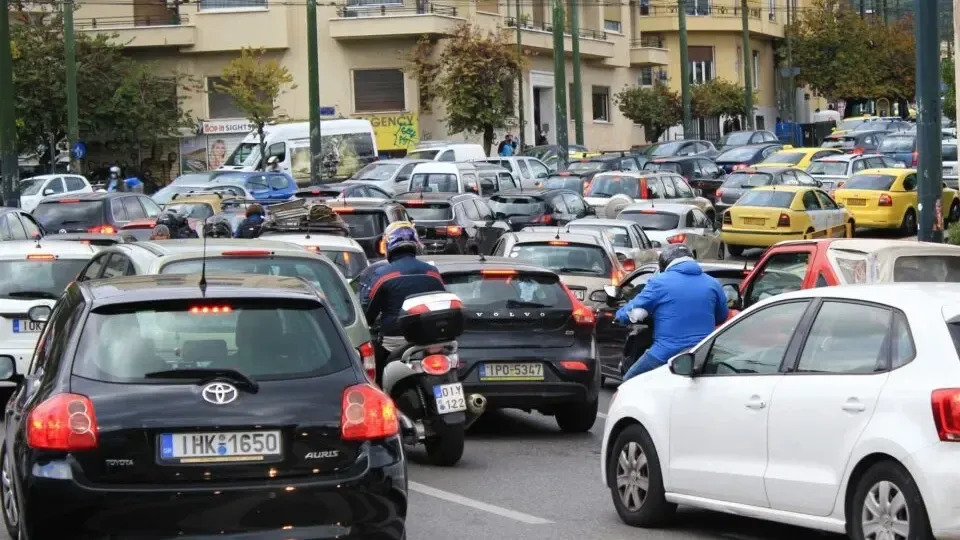
Once we finally cleared immigration and breathed actual Athens air, our driver loaded us into an SUV for the ride into the city. The 45-minute estimate is aspirational, the kind of number that assumes traffic laws are taken seriously, which in Athens they are not. The city has 3.5 million people operating inside a street grid designed for considerably fewer. Lane markings are decorative. Turn signals are optional. Double-parking isn’t a violation, it’s a lifestyle. Motorcycles materialize from directions that two eyes and mirrors can’t cover. Coming from the U.S., the whole experience was genuinely unreal: not terrifying, just operating on a completely different set of rules than anything I’d encountered before…and it mostly works. Our driver navigated all of it with the calm of a man who has made peace with his entire career taking place inside a video game. I say “mostly works” because, well, we’ll get to that.
Heads up: some links on this page are affiliate links. If you book or buy through one, I may earn a small commission and you pay exactly the same price. I only list things I would use myself. More in the full affiliate disclosure.
After the airport gauntlet and the traffic obstacle course, you want somewhere genuinely nice to decompress. The Grand Hyatt Athens delivered.
This is a full luxury property, 548 rooms, modern design, marble bathrooms, 55-inch TVs, and the kind of pillow situation that makes you briefly consider canceling the rest of the trip and just staying in bed. The staff was attentive and professional throughout our stay.
But the real reason you book the Grand Hyatt Athens? Rooftop infinity pool.
Perched on the upper floors with a direct sightline to the Acropolis, which at night glows a warm amber against the Athens skyline, the rooftop pool is one of those travel moments you actually remember. You float there, drink in hand, staring at one of the most iconic structures in human history, and think: yeah, okay, this is why I do this.
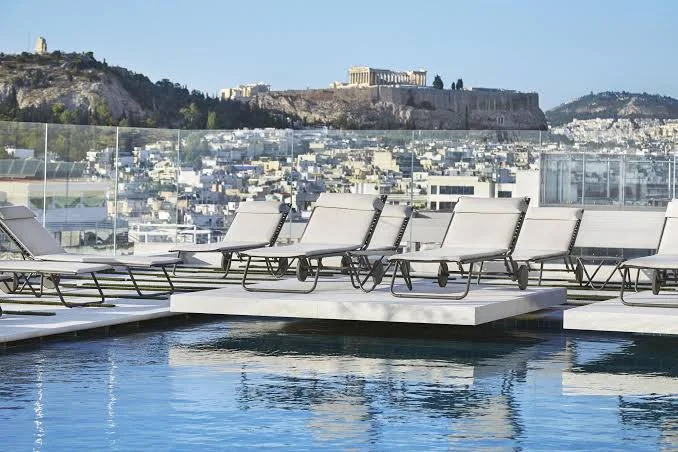
Fair warning: get to the pool early. By mid-afternoon the lounge chairs are gone faster than tzatziki at a Greek wedding. Arrive early or resign yourself to standing.The rooftop restaurant, The Grand, serves Mediterranean cuisine on the 8th and 9th floors, same view, slightly dressier. Breakfast is a genuine pleasure: full buffet spread, good coffee, partial Acropolis views as backdrop. Dinner features fresh pasta, grilled seafood, dry-aged cuts, and a Greek wine list that will make you feel cultured even when you’re just pointing at something and saying “that one.”
For the points people: The Grand Hyatt Athens is a World of Hyatt property. Check current redemption category, as it has been adjusted since our visit. Either way, the rooftop views make it a strong redemption regardless of tier. Popular with cruise passengers for a reason.
The hotel sits on Syngrou Avenue, about a 5–10 minute taxi ride from the Acropolis and well-positioned for Piraeus cruise departures.
The full Athens plan
Athens is walkable right up to the moment you plan it in the wrong order and spend the hottest hour of the day on the Acropolis. The Athens 3-Day Itinerary sequences it properly.
Get the Athens 3-Day Itinerary
Instant download.
We booked a private guided morning tour, and I cannot recommend this approach enough. Athens in mid-August is hot, crowded, and disorienting. Having someone who actually knows what they’re looking at makes an enormous difference. Our guide was knowledgeable, enthusiastic without being exhausting, and spoke perfect English. Which, by the way, you’ll find throughout the tourist areas. Greeks in hotels, restaurants, and tour operations are remarkably fluent, a genuine surprise if you’re expecting the usual language-barrier dance you get elsewhere in Europe.
A note on the August heat: We got lucky, both days were comfortable, nothing that slowed us down or made us miserable. Your mileage may vary. Go early regardless. The Acropolis opens at 8am and the difference between arriving at 8 and arriving at 11 is significant even on a mild day.
The Acropolis
The word “Acropolis” means “high city,” and the Greeks were not being subtle. This flat-topped limestone rock rises nearly 500 feet above Athens, and from the top you can see the whole chaotic, magnificent sprawl below.
I was prepared to be impressed by the Parthenon. I was not prepared for the sheer scale of it. That a structure this enormous was built entirely by hand 2,500 years ago, and that after every war, explosion, earthquake, occupation, and general calamity that has visited this particular piece of land since 438 BC, this much of it is still standing is genuinely staggering. You stand in front of it and your brain quietly gives up trying to contextualize what it’s seeing. The columns are slightly curved, a deliberate optical illusion so the structure looks perfectly straight from a distance. Ancient Greeks were, frankly, showing off.
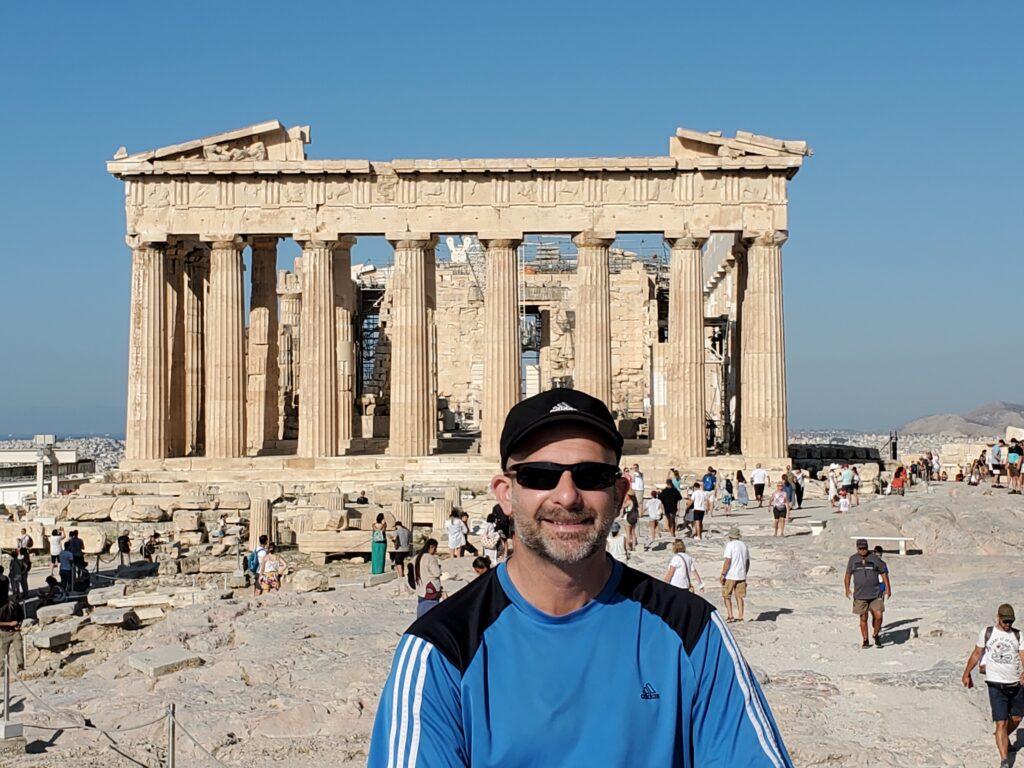
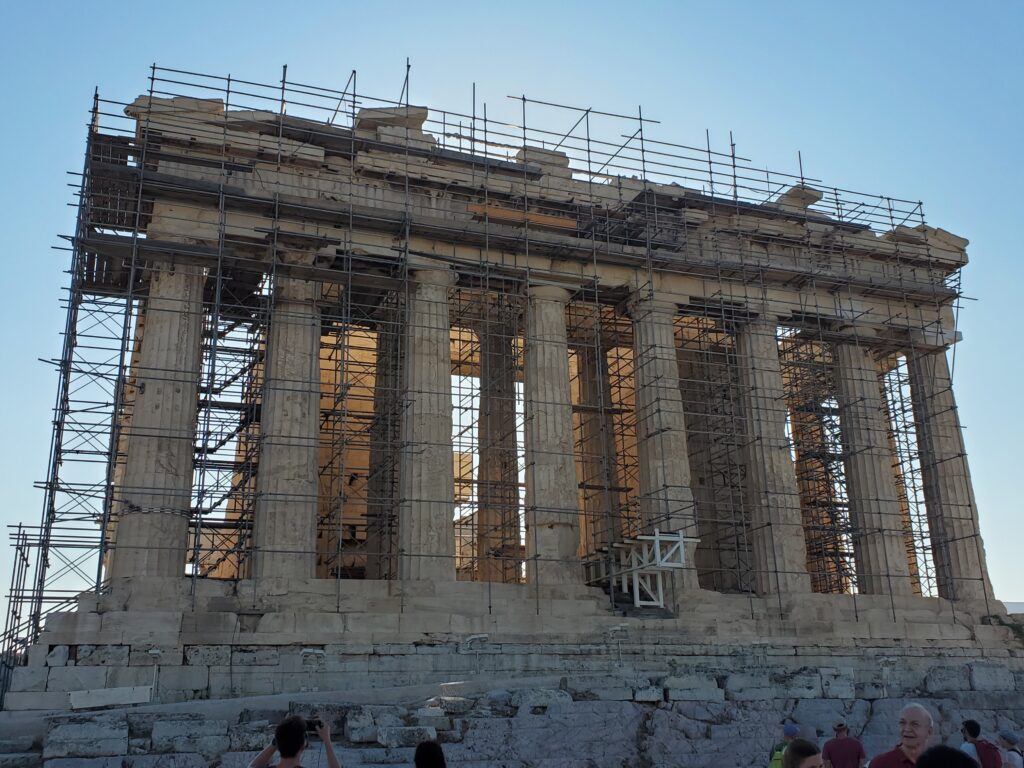
One honest note: parts of the Parthenon are under ongoing restoration, and the scaffolding does intrude on the view and the photos. It didn’t diminish the experience for us. I was still thrilled to be standing there, but if you’re expecting a completely unobstructed postcard moment, calibrate accordingly.
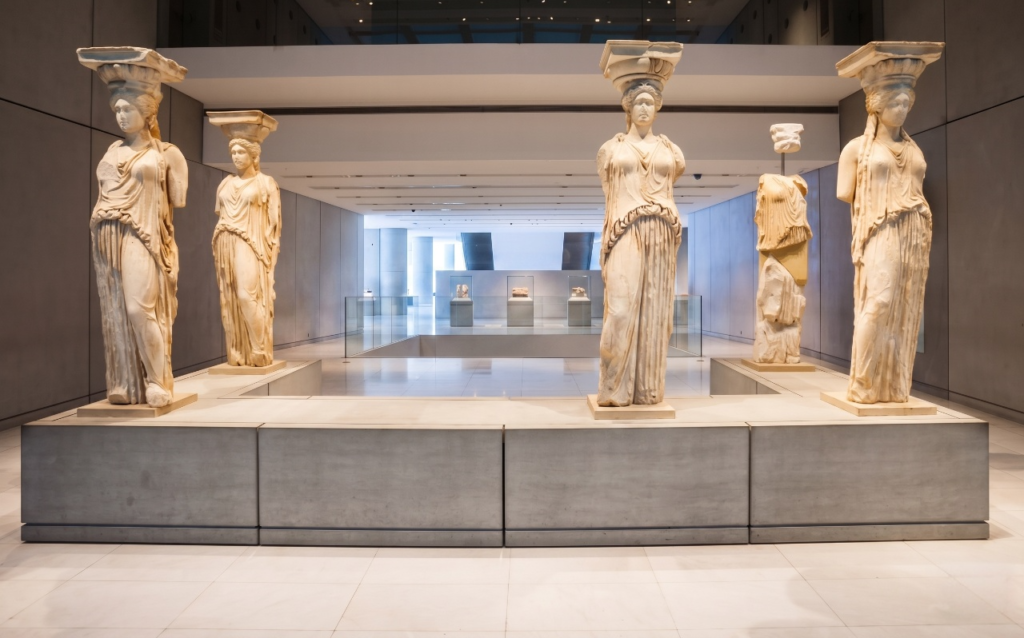
The rest of the complex rewards the time. The Erechtheion, the asymmetrical temple sitting right beside the Parthenon, is famous for the Caryatids, six draped female figures literally serving as architectural support columns, holding the porch of a temple on their heads. They’ve been doing this for 2,500 years without complaint. I have a tremendous amount of respect for that work ethic.
Perched at the very edge of the hill is the Temple of Athena Nike, small, perfectly proportioned, and built deliberately without wings so Victory couldn’t fly away from Athens. The Athenians wanted to keep her put. This particular Nike, for the record, is not owned by Phil Knight.
The Odeon of Herodes Atticus is a 5,000-seat theater carved into the hillside in 161 AD. It was built by a wealthy Athenian in memory of his late wife, which is either the most romantic gesture in the ancient world or a monument to guilt. Probably both. The acoustics are extraordinary and it still hosts live performances today. If you can time a concert here, do it.
The Theater of Dionysus sits on the southern slope. It is a 25,000-seat venue and the literal birthplace of Western drama, tragedy included. I nearly contributed my own “tragedy” when I looked over the upper rows. The steepness is no joke.
Honest assessment on tour time: 90 minutes is not enough if you actually want to absorb what you’re looking at. Push for two hours minimum. We were hustled along at a pace that left me wanting to sit down and just look for a while. Book two hours plus or come back on your own in the afternoon when the tour groups thin out.
The Accident, the Lunch, and Why Athens Is Athens
Here’s the story I promised you.
After the Acropolis, we drove up to Lycabettus Hill, the highest point in Athens at about 900 feet, with a panoramic view of the entire city and the Saronic Gulf glittering in the distance. It’s the kind of view that resets your internal compass. You realize Athens is enormous in a way that the street-level chaos never fully communicates.
On our way down from Lycabettus, heading toward lunch, we stopped at a traffic light.
Crunch.
What the hell was that? Followed immediately by: Did that really just happen?
Yes. We had been rear-ended in the middle of Athens. Our driver got out, spoke to the other driver in Greek for about two minutes, came back, and delivered one of the most Greek sentences I have ever heard in my life: “It will be taken care of later.”
We looked at each other. …OK.
He started the car and drove us to lunch.
The restaurant was exactly the kind of place you only find through a driver who knows the city: small, family-owned, nondescript, tucked into the middle of a block with no view and no signage worth writing home about. The kind of place that’s been there for decades, where our driver almost certainly knew the owner and was putting some business their way, which is exactly how these things work when you’re on a guided tour in a foreign country. We settled in, started being served big communal platters of Greek classics … rotisserie chicken, grilled lamb, spanakopita, stuffed grape leaves, fresh pita, a village salad drowning in feta and olives. Good food; not gushed-over food. But, genuinely our first real exposure to authentic Greek cooking.
(There is no food photo here. I don’t photograph food. Never have, probably never will. I’m not a foodie, and I’ve never quite understood the social media impulse to document every meal, as if we’ve never seen food before. Everyone eats. You’ve probably never stood in front of the Parthenon in person, so I’ll post that. The lamb was good. Moving on.)
We were a few bites in when someone looked out the window.
There was our driver. Standing on the sidewalk outside. Talking to the other driver.
We were miles from the accident. Thirty minutes had passed. That man had tracked him down.
You have got to be kidding me.
We found out later that there was no police report. No claims adjuster. No three-month phone tag with an insurance company. They exchanged whatever passes for insurance information in Greece, worked it out between themselves, and that was apparently that. We looked at each other around the table and said, almost in unison, “That would never happen in a big city back in the U.S.!”
It wouldn’t. Not in a million years.
And somehow that one little scene told us more about Athens than anything we’d seen on the Acropolis.
Here is something nobody warns you about Athens: the ruins are everywhere. Not just the Acropolis. Ancient columns and foundations turn up on ordinary street corners like historical fire hydrants. You’re walking through a modern neighborhood: coffee shop, mobile phone store, apartment building, and there’s a 2,000-year-old something just sitting there, fenced off, with a small placard. Other cities have parks. Athens has ruins. Also, and I want to be direct about this: Athens has a remarkable number of statues with genitalia on full, enthusiastic display. The museums, the street corners, everywhere. No travel guide warns you about this.
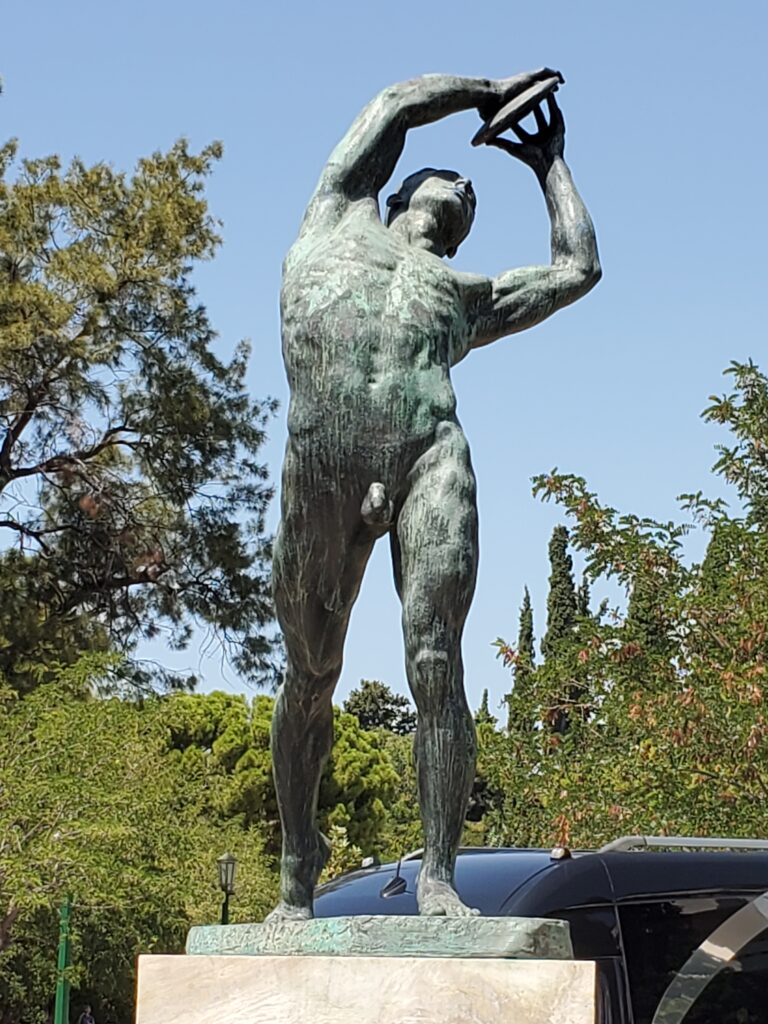
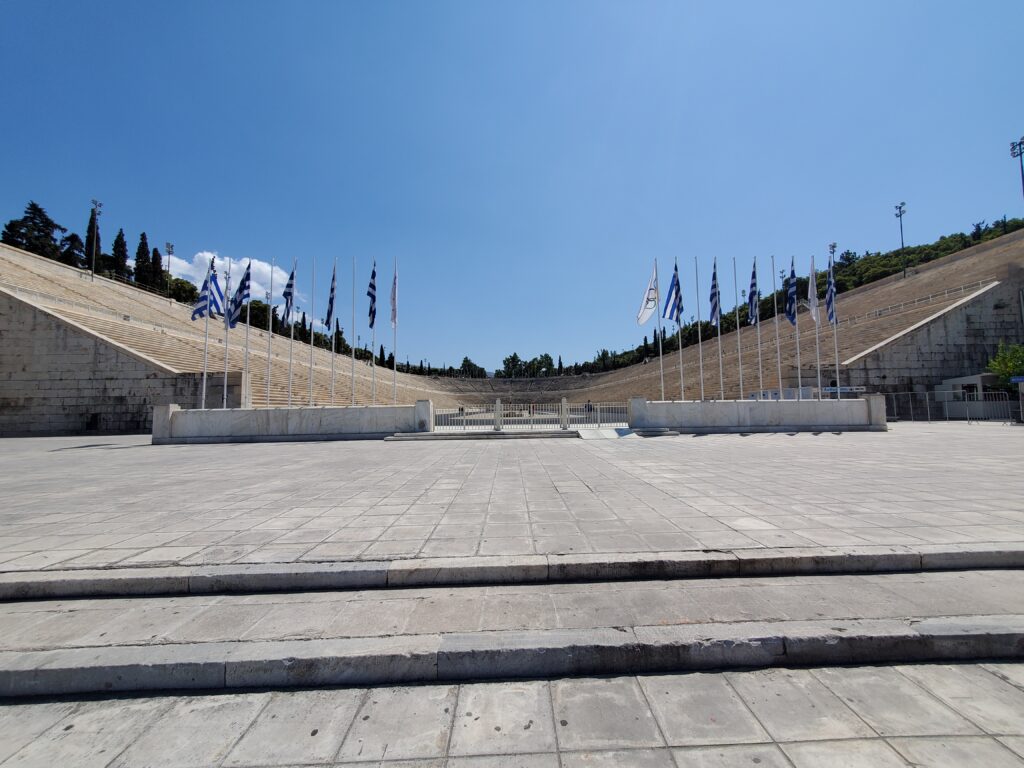
Athens is the birthplace of the modern Olympics. The 1896 games were held at the Panathinaiko Stadium, a horseshoe-shaped venue built entirely of white Pentelic marble. It’s beautiful in a specific way that only marble can be, luminous in the afternoon sun, impractical as a building material for most purposes but absolutely perfect for this. It seats 50,000 and still serves as the finish line of the Athens Marathon. Really, just spectacular.
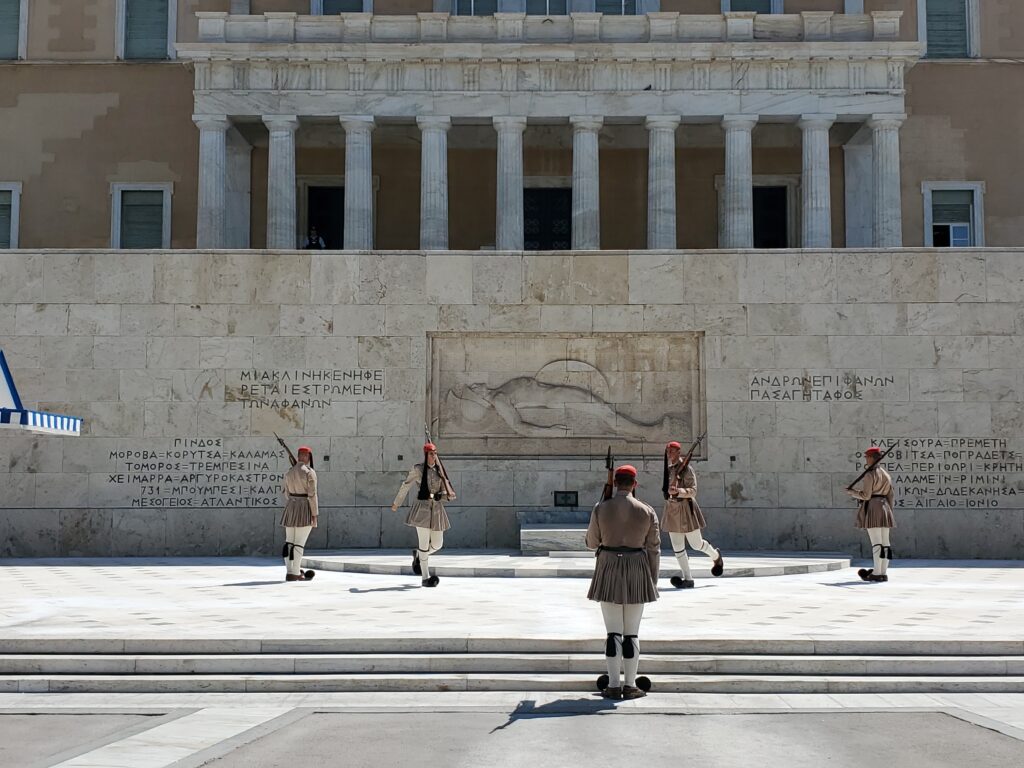
The Evzones, the Greek Presidential Guard, perform their ceremonial changing of the guard at the Tomb of the Unknown Soldier in front of the Greek Parliament at Syntagma Square. Every hour on the hour, with a full ceremonial change on Sundays.
When the guards begin to move, something remarkable happens: everything stops. Not figuratively, literally. Traffic holds. Pedestrians pause mid-stride. The ambient noise of the square drops away. The ceremony runs a full ten minutes or more, and for every one of those minutes the entire area operates as if by collective agreement that this moment deserves silence and full attention. The precision of the movements, the slow high-stepping march, the perfectly synchronized rifles, the fustanella skirt alone has 400 pleats, one for each year of Ottoman rule. These are not ceremonial soldiers going through the motions. They mean every second of it. The crowd feels it. We felt it. I was not expecting to be as moved by this as I was.
Stop. Watch the whole thing.
The afternoon took us through Plaka, the oldest residential neighborhood in Athens, a honeycomb of narrow lanes, pastel houses, outdoor tavernas, and tourist shops selling everything from hand-painted icons to “I ♥ Athens” magnets. Unabashedly touristy in parts, genuinely beautiful in others. The Ancient Agora sits at its edge, the civic and commercial heart of ancient Athens, where Socrates reportedly wandered around asking people uncomfortable questions until they finally lost patience with him. Understandable, honestly.
And right there, next to the Agora, between buildings, on a street corner: more ruins. Just ruins. Athens. Without a guide giving you the context, most of it reads as a very organized field of rubble. With context, you realize you’re standing in the place where Athenian democracy actually happened, where people voted, traded, and argued about the same things people argue about today. That lands differently than looking at old stones.
Save this for late afternoon. The New Acropolis Museum opened in 2009, and I’ll say it directly: it’s the best archaeological museum I’ve ever walked through, and I’ve been to a lot of museums and been bored in most of them.
Try the official site first. If it is sold out, the resellers may still have tickets, and you will pay a premium for them. That premium is how they earn. If you would rather have the ticket than the saving, this is where to look.
The building presents the Acropolis finds in chronological order, floor by floor, culminating in the top level where the original Parthenon frieze is displayed in its full 160-meter length, the sculptures arranged exactly as they appeared on the temple, with plaster casts filling the gaps where the originals currently reside in London. You can see precisely what’s missing. The effect is quiet and a little devastating. Draw your own conclusions.
The five original Caryatids from the Erechtheion are displayed here at eye level, lit beautifully. These are not replicas. These are the actual women-shaped columns that held up a temple 2,500 years ago. You stand two feet from them and the distance between you and ancient Greece collapses in a way it simply doesn’t anywhere else. Budget 90 minutes minimum. Non-negotiable. Go.
Athens rewards the curious and exhausts the impatient. It is ancient and modern, chaotic and beautiful, exasperating and magnificent, often in the same city block, occasionally at the same traffic light. We left having been rear-ended, fed by a driver who knew a guy, and quietly undone by a 2,500-year-old building that simply refuses to fall down.
By our third morning, the city had done its job. We loaded into the car before the heat set in, windows down on Syngrou Avenue one last time, and made the 30-minute run to Piraeus, Athens’s less scenic but extremely functional exit door. The port is massive and businesslike; nobody’s there for the views. Our Norwegian Sun was docked and waiting. We boarded, found our cabins, and by early afternoon the Athens skyline was shrinking behind us. I have vowed to return someday to do it again.
If your guided tour also ended in an unexpected roadside negotiation, you are not alone. I feel like there’s a club.
This is the Athens I just described, turned into a 3-day plan you can actually follow: what to see, in what order, where to eat, and how to skip the lines.
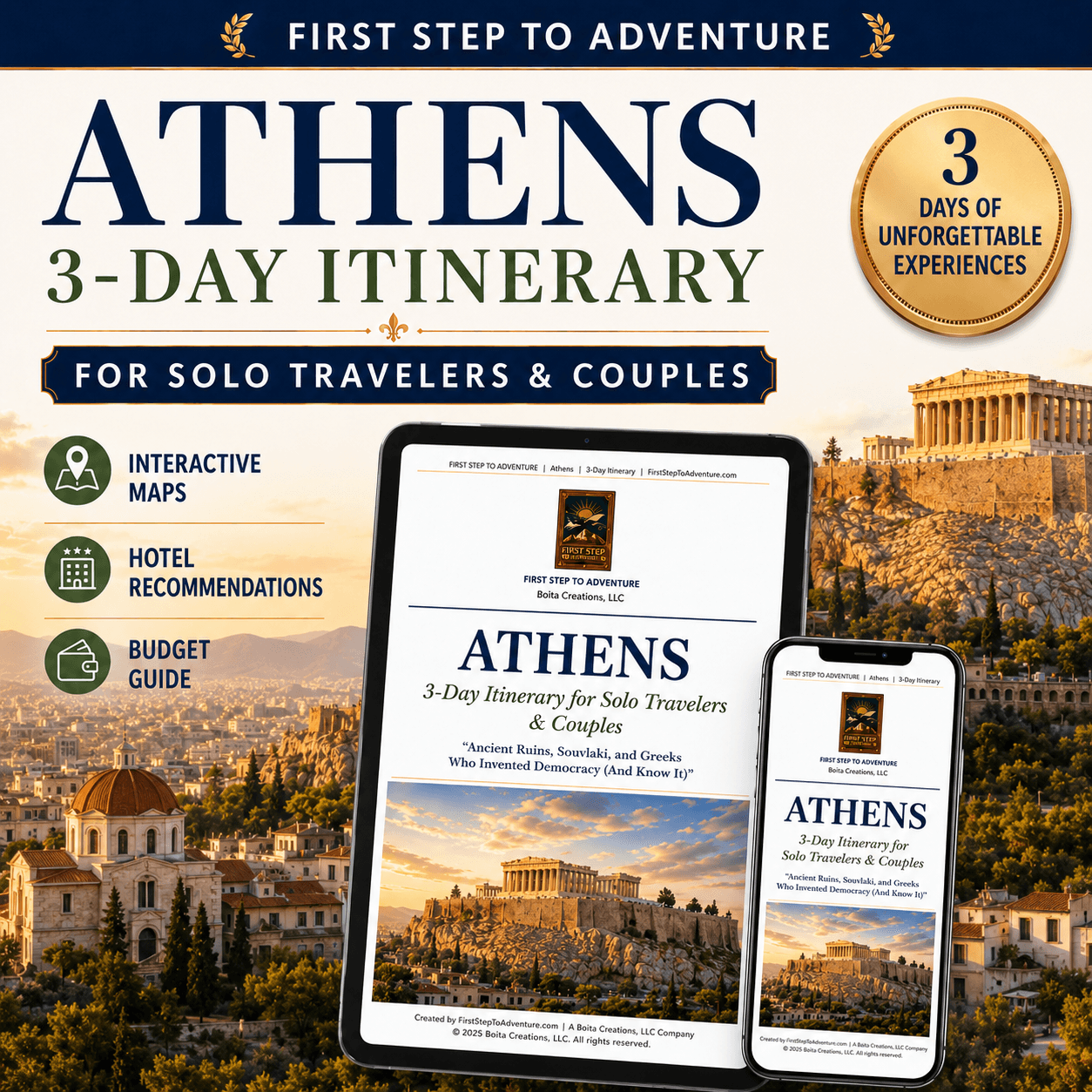
Get the Athens 3-Day Itinerary: Instant PDF download, $9. Grab it here →
Every 3-day guide:
Rome · Florence · Naples · Venice · Milan · Istanbul
Traveling two cities? The Rome + Naples, Venice + Milan, and Athens + Istanbul bundles are there too.
Join the Adventure
No spam. Unsubscribe any time. One email at a time.