
By Andrew Boltz · July 3, 2026
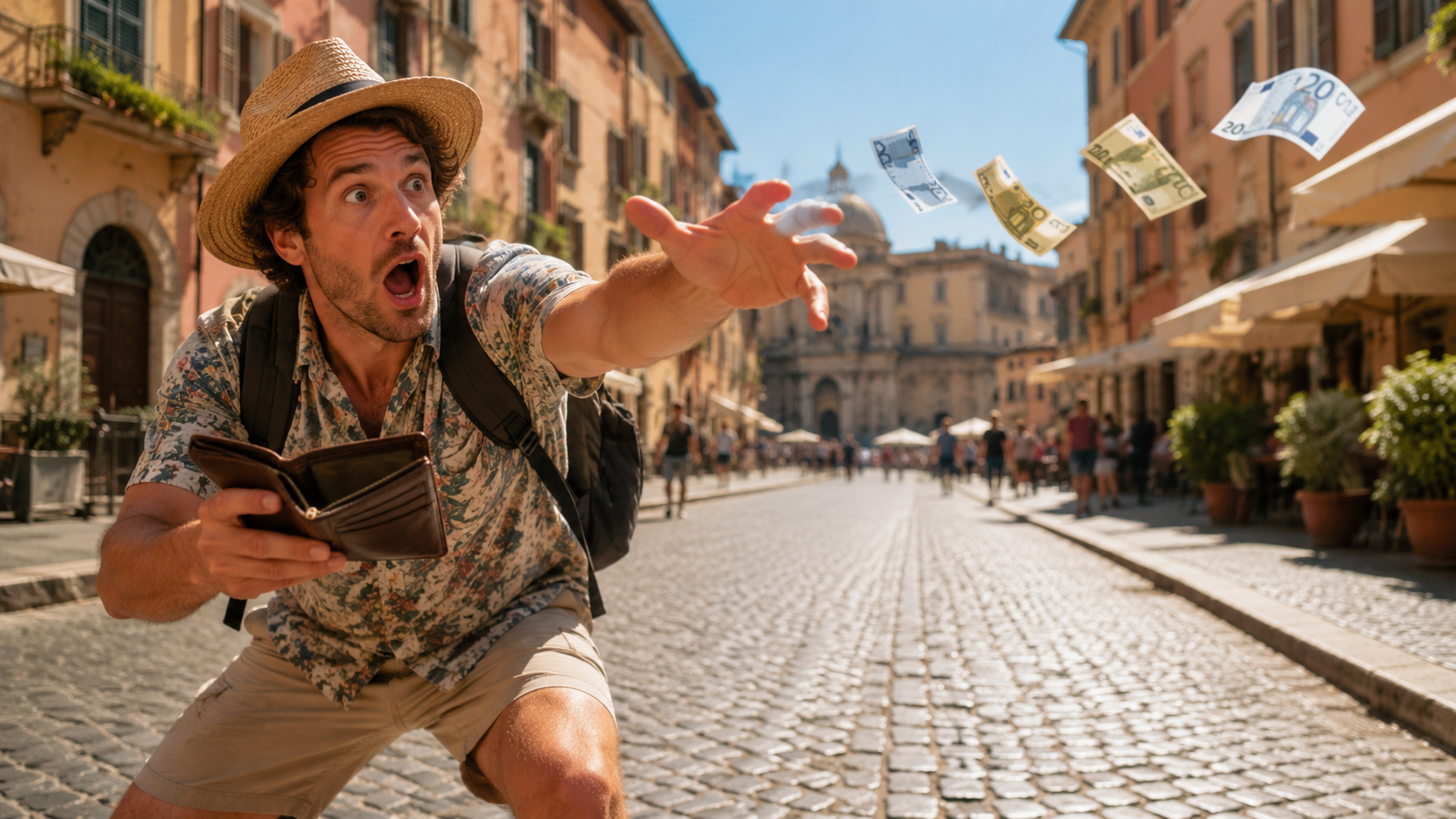
Rome runs on two thousand years of history and, apparently, about two hundred ways to separate a visitor from another fifty euros. None of it is a secret. The scams and traps here are so well documented that avoiding them takes roughly ten minutes of reading, which is about nine more minutes than most people give it before they land.
Here are seven of the most reliable Rome tourist scams, traps, and travel mistakes that separate visitors from their money, and exactly how prepared travelers sidestep every one.
Heads up: some links on this page are affiliate links. If you book or buy through one, I may earn a small commission and you pay exactly the same price. More in the full affiliate disclosure.
Rome’s historic center is wrapped in a ZTL, a Zona a Traffico Limitato, which is Italian for “cameras that photograph a license plate and mail out a bill.” Only residents and permit holders can drive in these zones during restricted hours. Everyone else risks a fine that commonly runs from about 80 to over 300 euros, with rental-car administration fees often added later. The cruelest part is the delay. Rental drivers usually do not find out for months, when the rental company forwards the ticket and adds its own processing fee of up to 50 euros for the privilege. The fix is simple: do not rent a car for a city visit. Rome’s center is walkable, the metro is cheap, and nothing worth seeing requires a steering wheel.
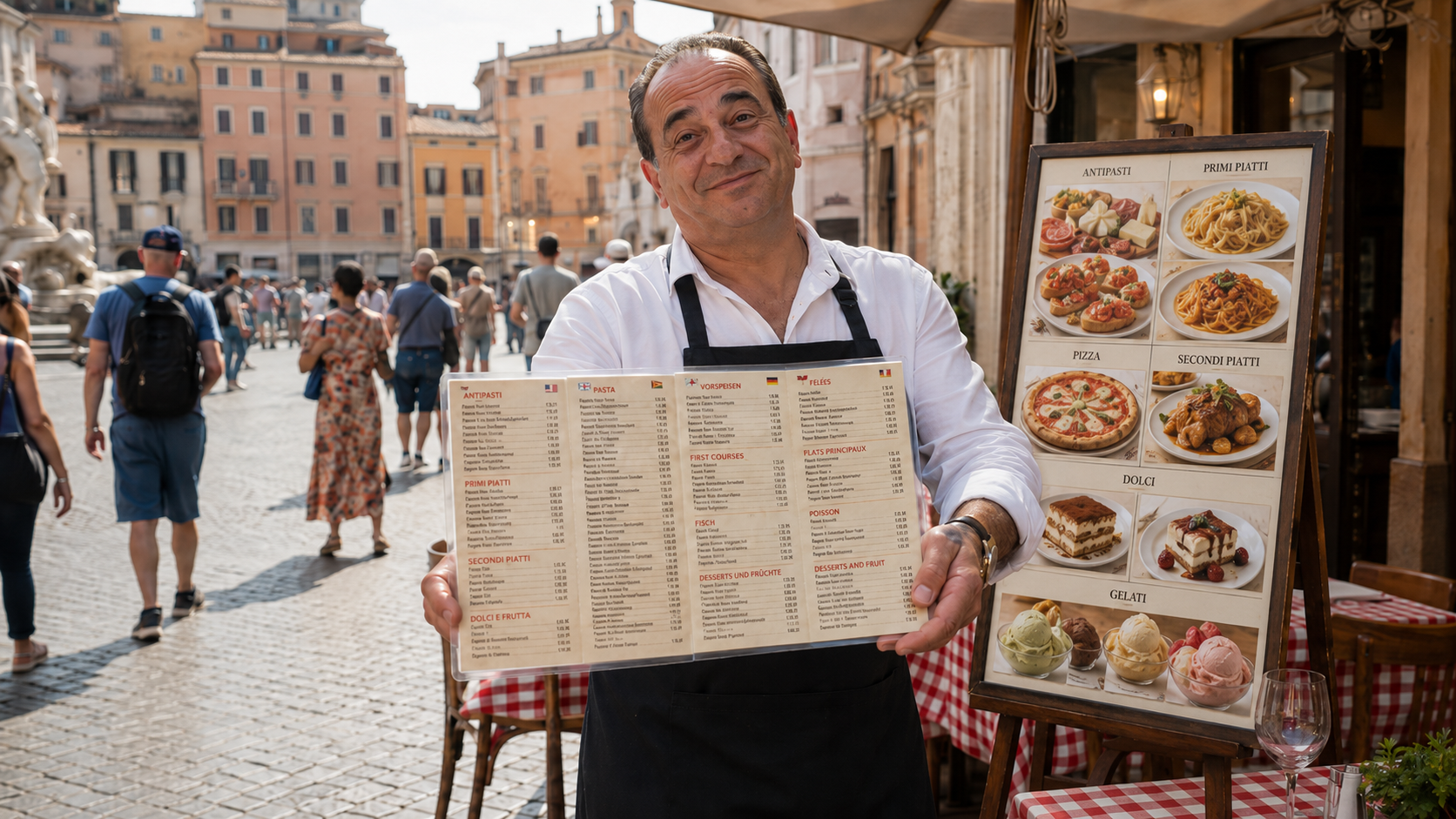
The most obvious Rome tourist restaurants are not subtle. If a place sits right on a famous piazza, displays laminated photos of its food, translates the menu into nine languages, and pays someone to wave visitors in from the street, it is not really a restaurant. It is a tourist trap wearing a checkered tablecloth. These are the places behind every “I paid 65 euros for a bowl of ice cream in Piazza Navona” news story.
Real Roman food hides about a five-minute walk away. From Piazza Navona, head down Via dei Coronari or Via del Governo Vecchio and duck into the side streets, where the menus are handwritten, often only in Italian, and you may actually see locals eating inside. Watch the coperto too, a per-person cover charge that is normal and legal, but should be a euro or three, not a surprise on the final bill.
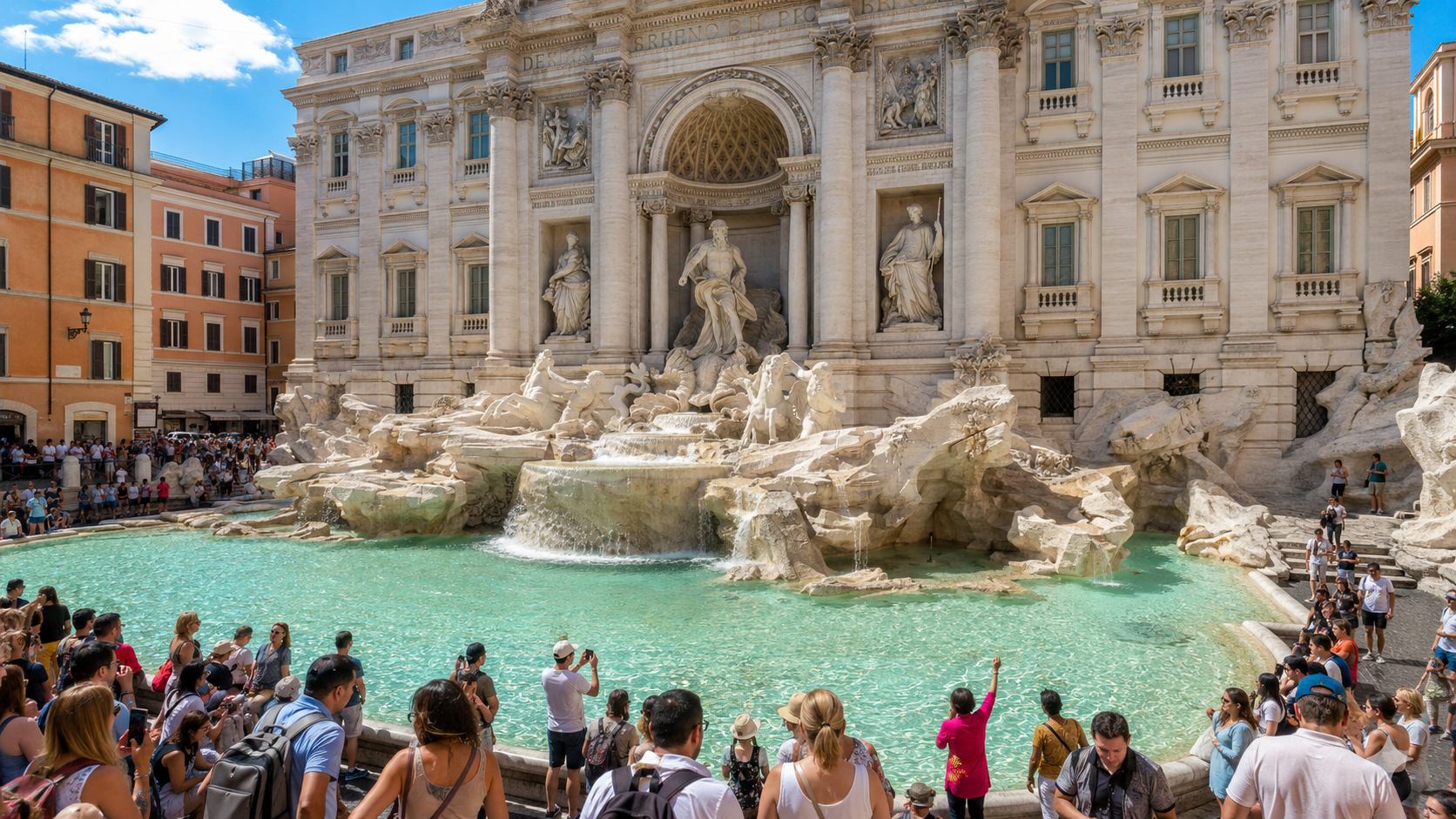
As of 2 February 2026, getting down to the basin at the Trevi Fountain costs non-residents two euros. The ticket applies from 11:30am to 10pm on Mondays and Fridays and from 9am to 10pm the rest of the week, and at the entrance it is card only. Viewing the fountain from the surrounding piazza stays free, and the basin is free to everyone after 10pm. It is a small fee, but nobody enjoys discovering it while wedged into a shoulder-to-shoulder crowd. The bigger trap is everything around the fountain. The cafés facing it charge a premium for a forgettable espresso, and the crowd is prime hunting ground for the bracelet and rose sellers covered further down. Toss the coin, take the photo, and eat somewhere three streets back.
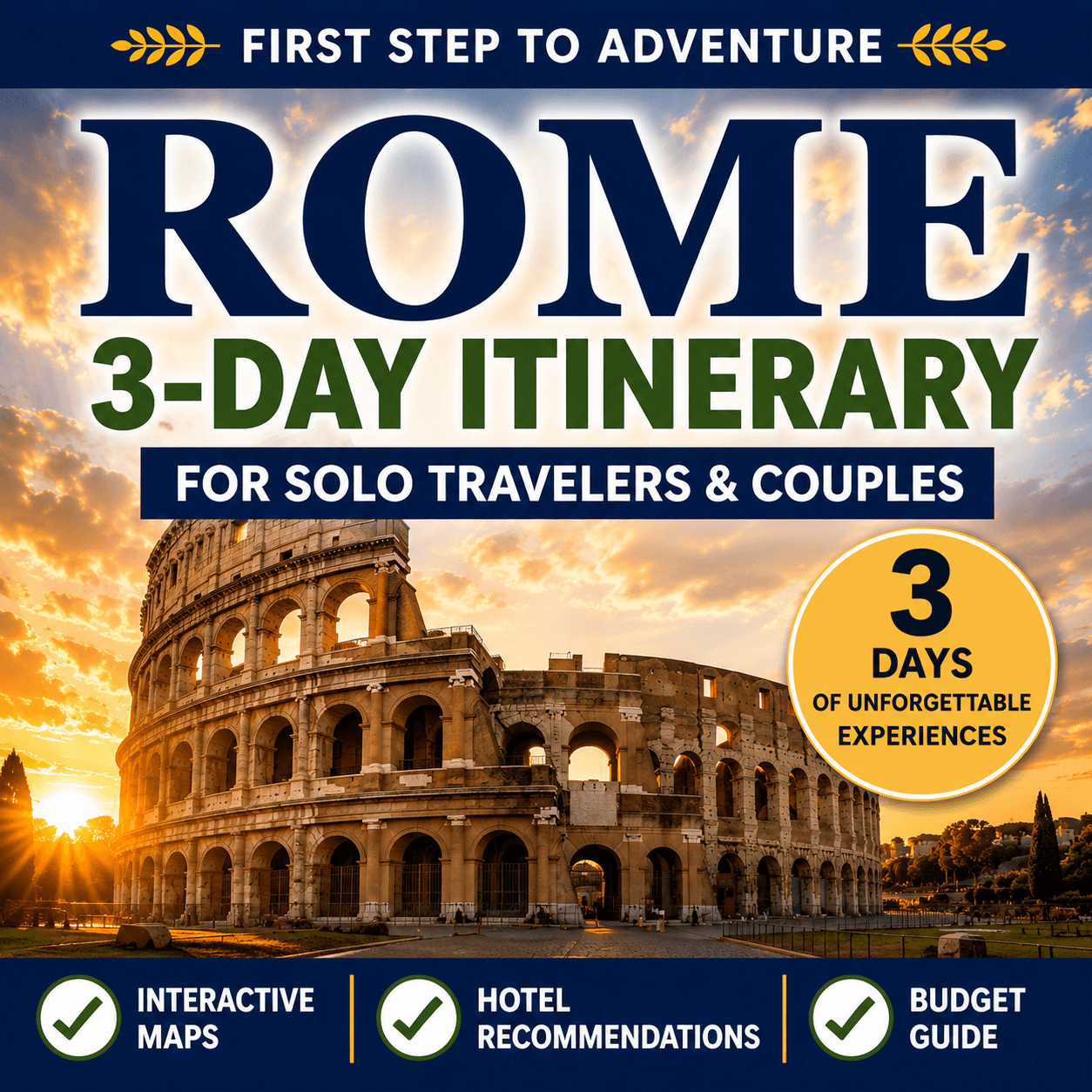
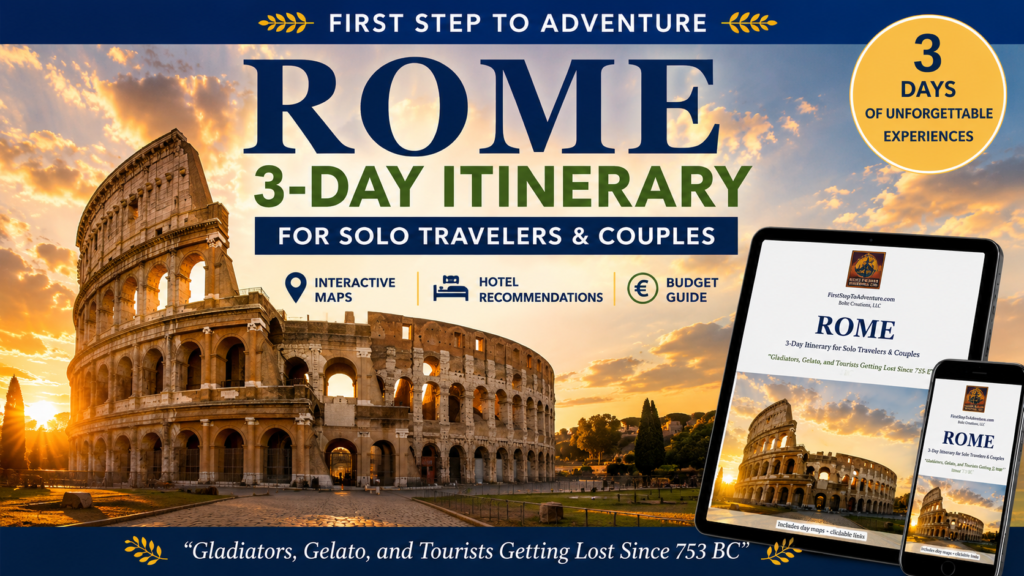
Planning the full trip? My Rome 3-Day Itinerary Guide builds these warnings into the route, so you are not figuring it out while standing in a crowd with luggage.
Get the guide: Instant PDF download, $9.
The Rome plan that avoids all of this
Knowing the traps is worth something. Having a route that never walks you past them is worth more. The Rome 3-Day Itinerary lays out three days that skip the queues and the markup.
Instant download.
The Fiumicino taxi scam is simple: someone catches you inside the terminal before you ever reach the official taxi rank. There is a fixed, official taxi fare from Fiumicino Airport to anywhere inside the Aurelian Walls, which covers essentially all of central Rome. It is 55 euros, flat, with all bags and passengers included. The official cabs are white, carry a “TAXI” sign on the roof, and wait at the marked ranks outside Terminals 1 and 3.
Anyone offering a taxi from inside the building is the one ride to refuse. That ride is unofficial, unmetered, and frequently double the price. Walk to the official rank, confirm the 55-euro flat rate before getting in, and ignore the freelancers.
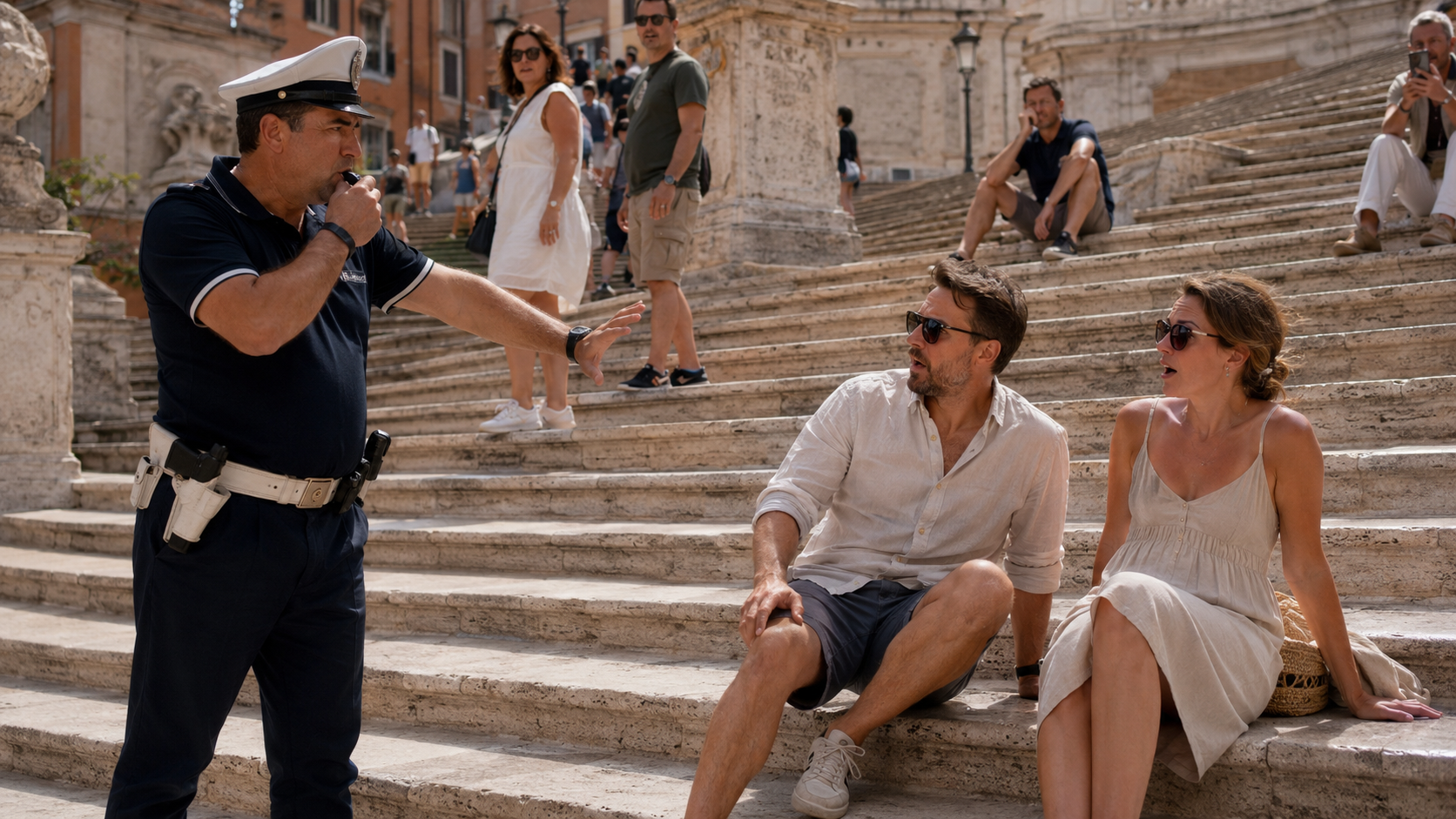
The Spanish Steps look like the perfect place to rest a tired pair of feet and eat a gelato, which is exactly how people discover the Spanish Steps fine. They are also a protected monument, and sitting on them has been banned since 2019. Police patrol the staircase and blow whistles at anyone who settles in, and the fine for ignoring them reaches 250 euros, climbing toward 400 if the steps get dirtied.
It all feels absurd until the whistle points your way. Admire the staircase, take the picture, and save the gelato for a bench or a piazza where sitting is still perfectly legal, which is nearly everywhere else in the city.
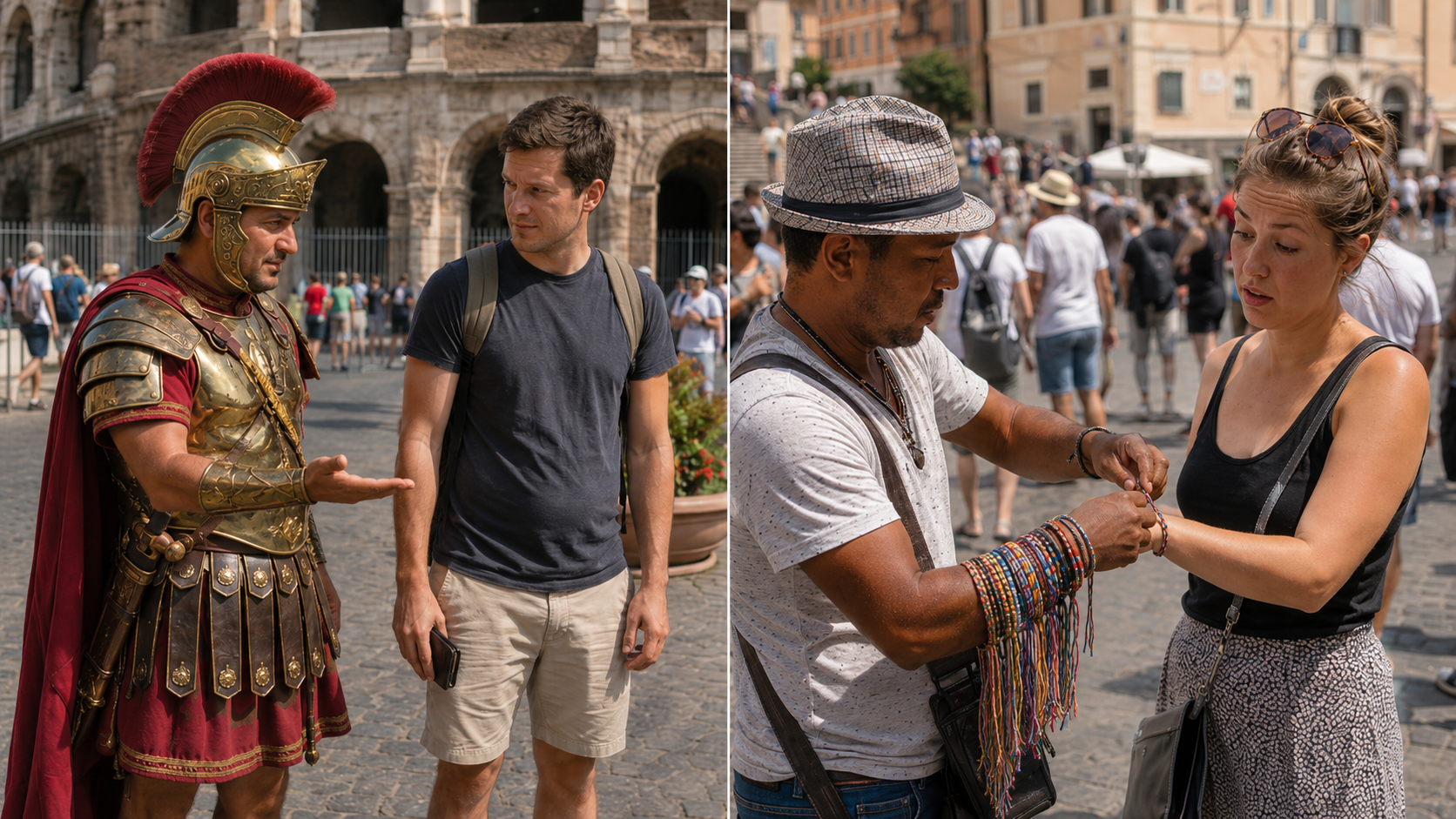
Near the Colosseum, costumed centurions offer to pose for photos. What they tend not to mention up front is the “customary” fee, which starts around five euros and climbs based on how awkward the standoff becomes. Rome has banned paid photo-posing in historical costume through a string of ordinances since 2015, and Italy’s top administrative court upheld the ban, which has done almost nothing to remove them from Via dei Fori Imperiali.
The same energy fuels two of the most familiar Rome tourist scams: the bracelet and rose routines. Someone strikes up a friendly chat, ties a bracelet onto a wrist or presses a rose into a hand, calls it a gift, and then firmly requests payment. The move is to keep both hands in pockets and keep walking. A gift that arrives with an invoice was never a gift.
The Colosseum draws well over ten million visitors a year, and where there are lines, there are people selling a way around them. Some street sellers offer genuine tickets at inflated prices. Others sell paper worth nothing at all. In April 2025 Italy’s competition authority fined the Colosseum’s former official ticket seller and six tour operators close to 20 million euros combined, after finding that bots buying in bulk had made base-price tickets almost impossible to get online.
Buy tickets from the official Colosseum, Vatican, or Borghese websites, or from a guided tour booked in advance. Anyone loitering outside the gate with a lanyard and a clipboard is not the official box office, no matter how convincing the lanyard looks.
Try the official site first. If it is sold out, the resellers may still have tickets, and you will pay a premium for them. That premium is how they earn. If you would rather have the ticket than the saving, this is where to look.
Not one of these traps is clever. They work because most visitors arrive tired, excited, and unprepared, and the city knows it. Most are ordinary Rome travel mistakes with a very avoidable price tag. Ten minutes of reading is the entire defense.
That is the whole idea behind the First Step to Adventure Rome guide: a step-by-step plan for three days in the city, with the real restaurants, the sensible routes, and a full budget breakdown so nothing on the bill is a surprise. Get the Rome 3-Day Itinerary Guide here.
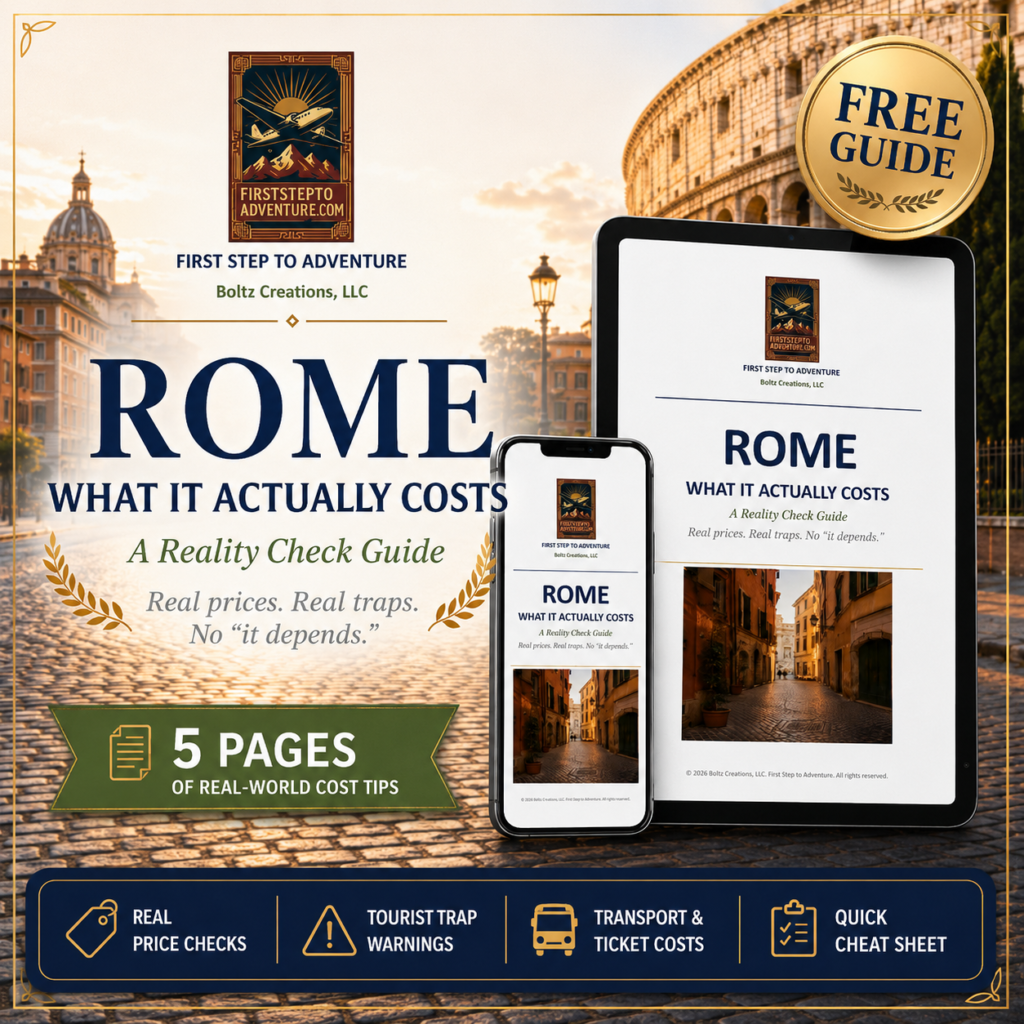
And for anyone who just wants to know what Rome actually costs before booking a single thing, there is a free companion guide that lays out real prices, real numbers, and none of the “well, it depends.” Grab Rome: What It Actually Costs, free, right here.
If you have not picked a base yet, where to stay in Rome ranks the neighborhoods by walking time to the big sights, and everything in Italy you need to book in advance covers the tickets that sell out.
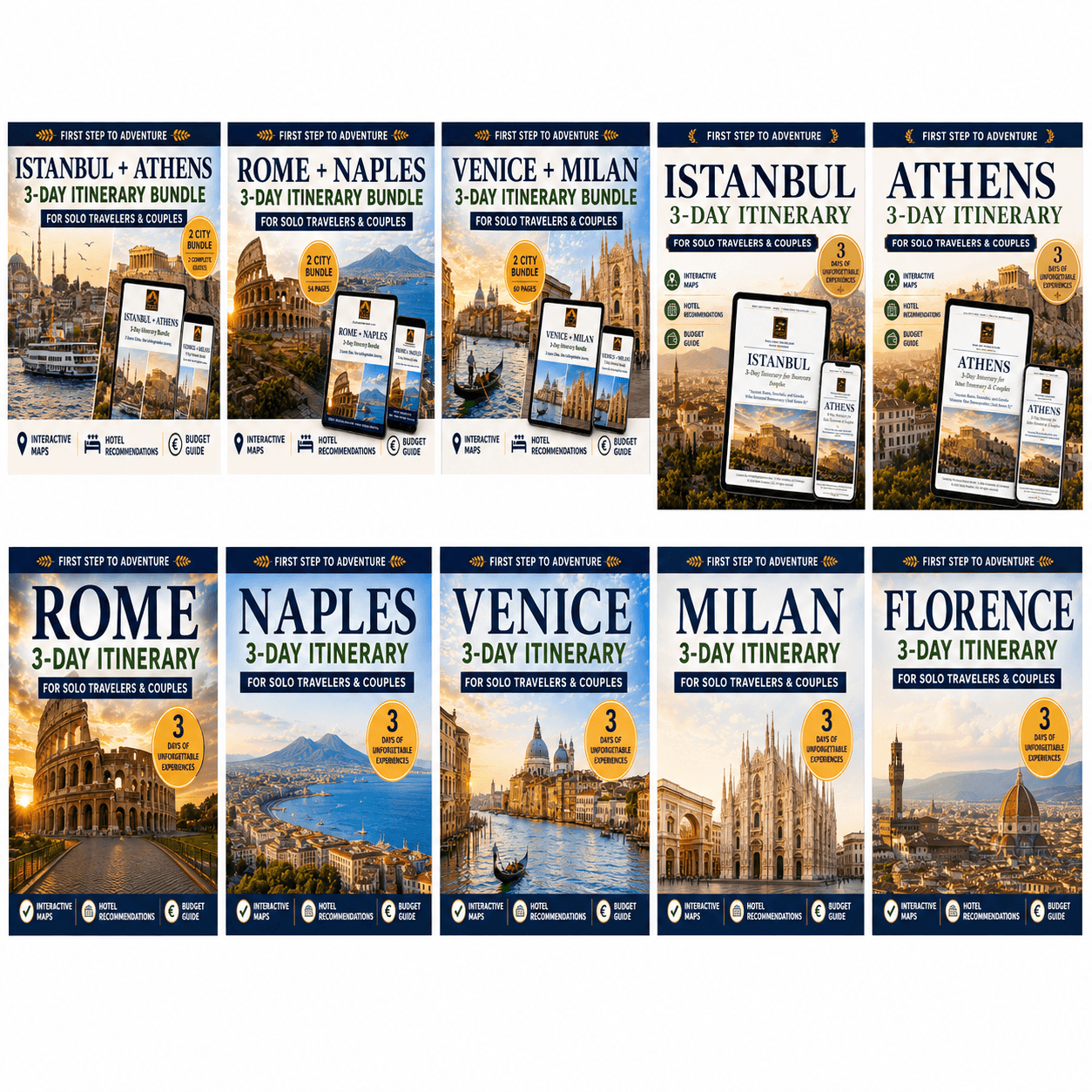
Every 3-day guide:
Florence · Naples · Venice · Milan · Athens · Istanbul
Traveling two cities? The Rome + Naples, Venice + Milan, and Athens + Istanbul bundles are there too.
Join the Adventure
No spam. Unsubscribe any time. One email at a time.