
By Andrew Boltz · August 28, 2026
Ticket prices, fares, closure days and entry arrangements below were checked against the Turkish Ministry of Culture and Tourism, the National Palaces Administration, the İstanbul Metropolitan Municipality transport tariff and Şehir Hatları on 28 August 2026. Lira prices move. Confirm anything load-bearing the week you travel.
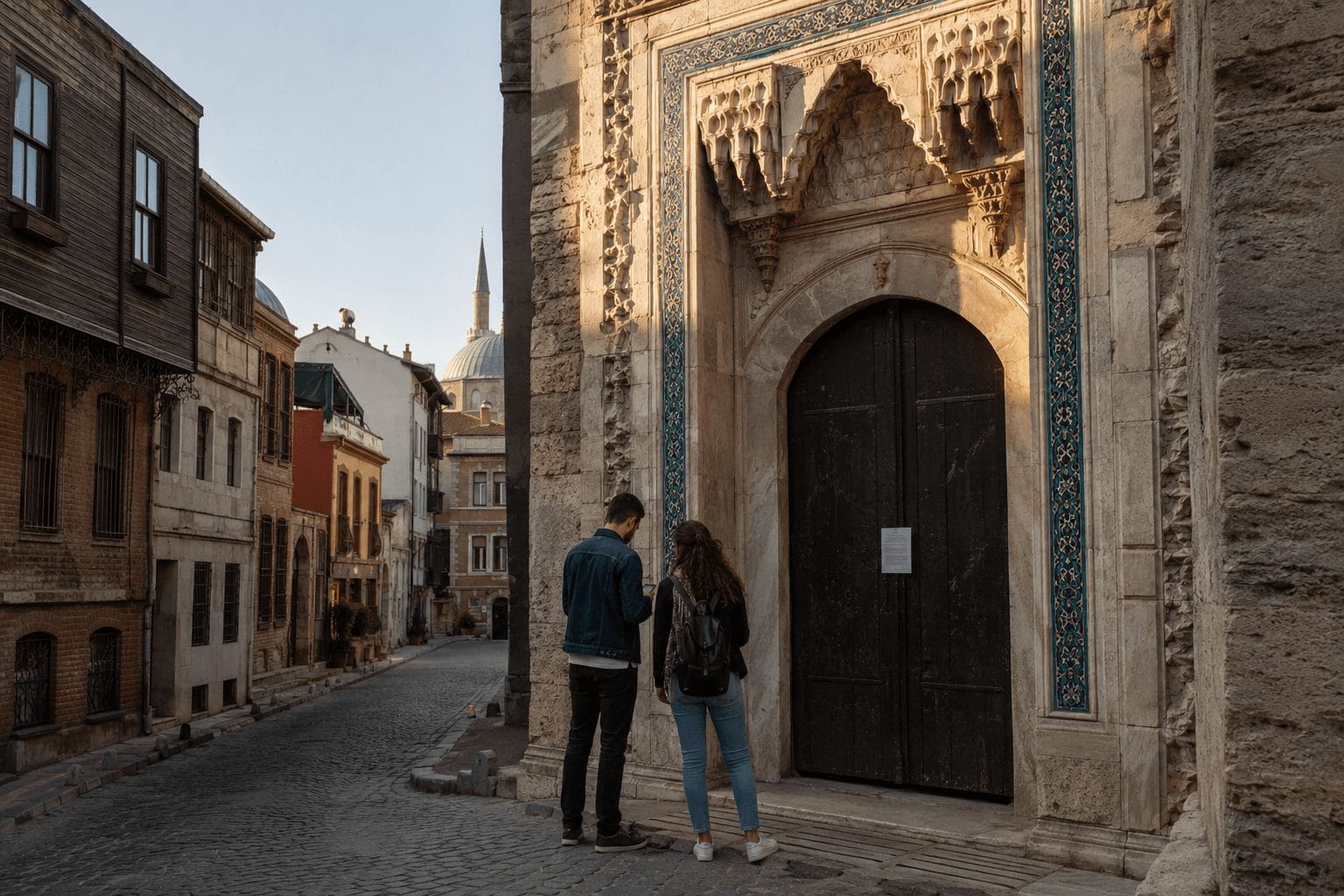
Nobody loses a first trip to Istanbul by picking the wrong sight. Every big one is worth the time.
Trips get lost to a door that was closed on the day you walked to it, a ticket that did not cover what the internet said it covered, and a card reader that would not take the cash in your hand. None of that is exotic. All of it is knowable a week before you fly.
Here is the version I wanted when I sat down to build a plan that actually works.
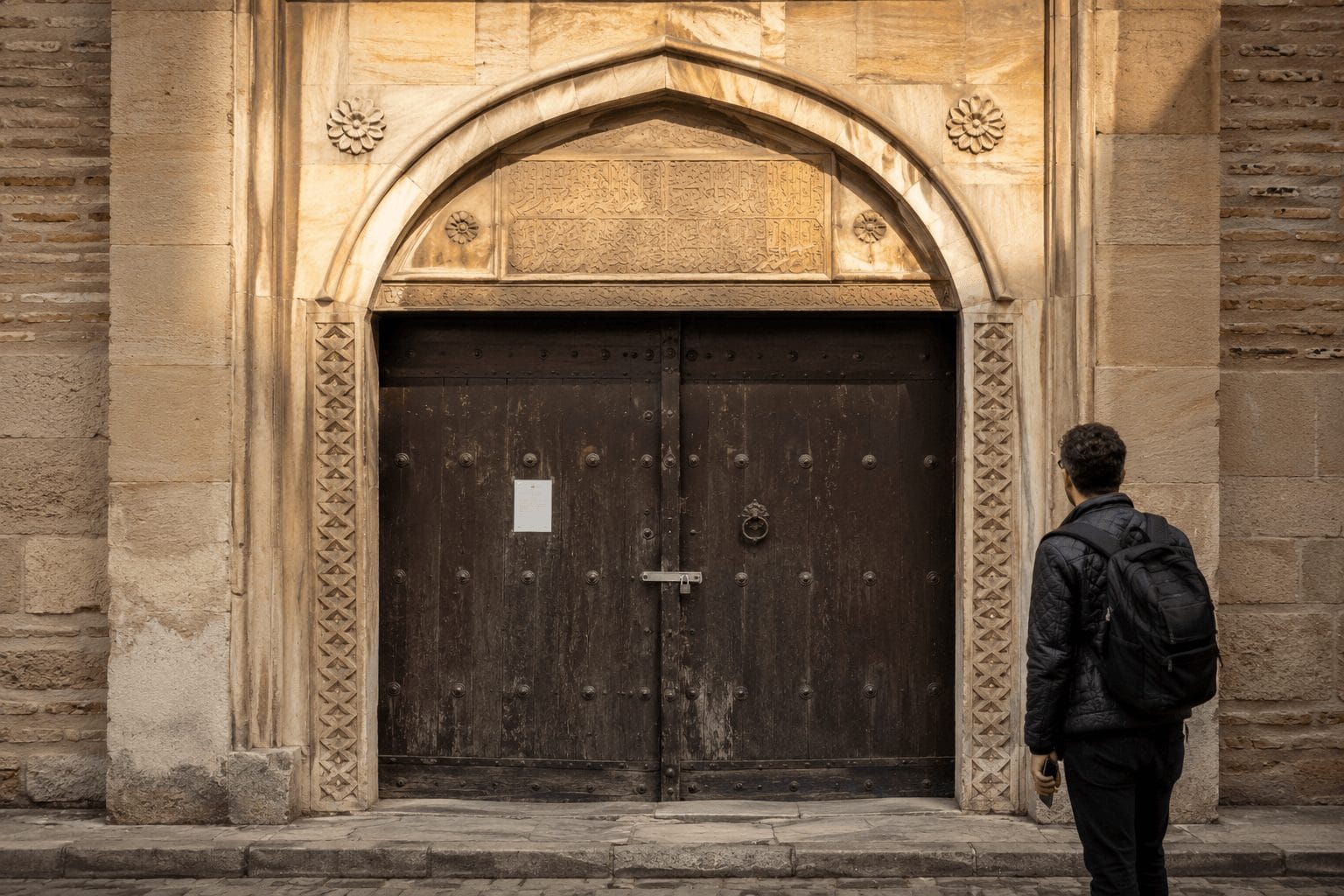
Most European cities close their museums on Monday and that is the whole rule. Istanbul does not work that way, and the pattern catches people who think they have already learned the trick.
Topkapi Palace is closed Tuesdays. That is on the National Palaces Administration listing, which states it plainly: closed days, Tuesday. It also closes on the first day of Ramazan Bayramı and reopens for the second and third.
The Grand Bazaar is closed Sundays. Free to walk into the other six days.
Chora, the Byzantine mosaic church out toward Fener and Balat, is closed to tourists on Fridays. Not a prayer window. The whole day.
Dolmabahçe Palace, the Pera Museum and Istanbul Modern are all closed Mondays. So the European habit is half right, and the half that is wrong is the half in Sultanahmet.
Hagia Sophia’s visiting area closes Friday from 12:00 to 14:00 for prayers, per the Ministry page.
Line those up and the damage is obvious. A Sunday to Tuesday trip loses the Grand Bazaar and Topkapi. A Friday to Monday trip loses Chora, half a Friday, and the three museums. Two of the four biggest names in the city are shut on days most itineraries treat as interchangeable.
The fix is not clever. Look at your actual dates, write the four closure days next to them, and build around the gaps rather than discovering them at a locked gate.
One more that catches people who only planned around Friday: working mosques restrict visitor access around all five daily prayers, not just the midday one. Friday is the longest interruption. It is not the only one.
The full Istanbul plan
Any one of these is avoidable on its own. The hard part is all of them at once, in an order that does not send you back across the Golden Horn for nothing. The Istanbul 3-Day Itinerary puts the sights, the neighborhoods and the ferry into a workable sequence, with the tickets worth buying before you fly.
Get the Istanbul 3-Day Itinerary
Instant PDF download.
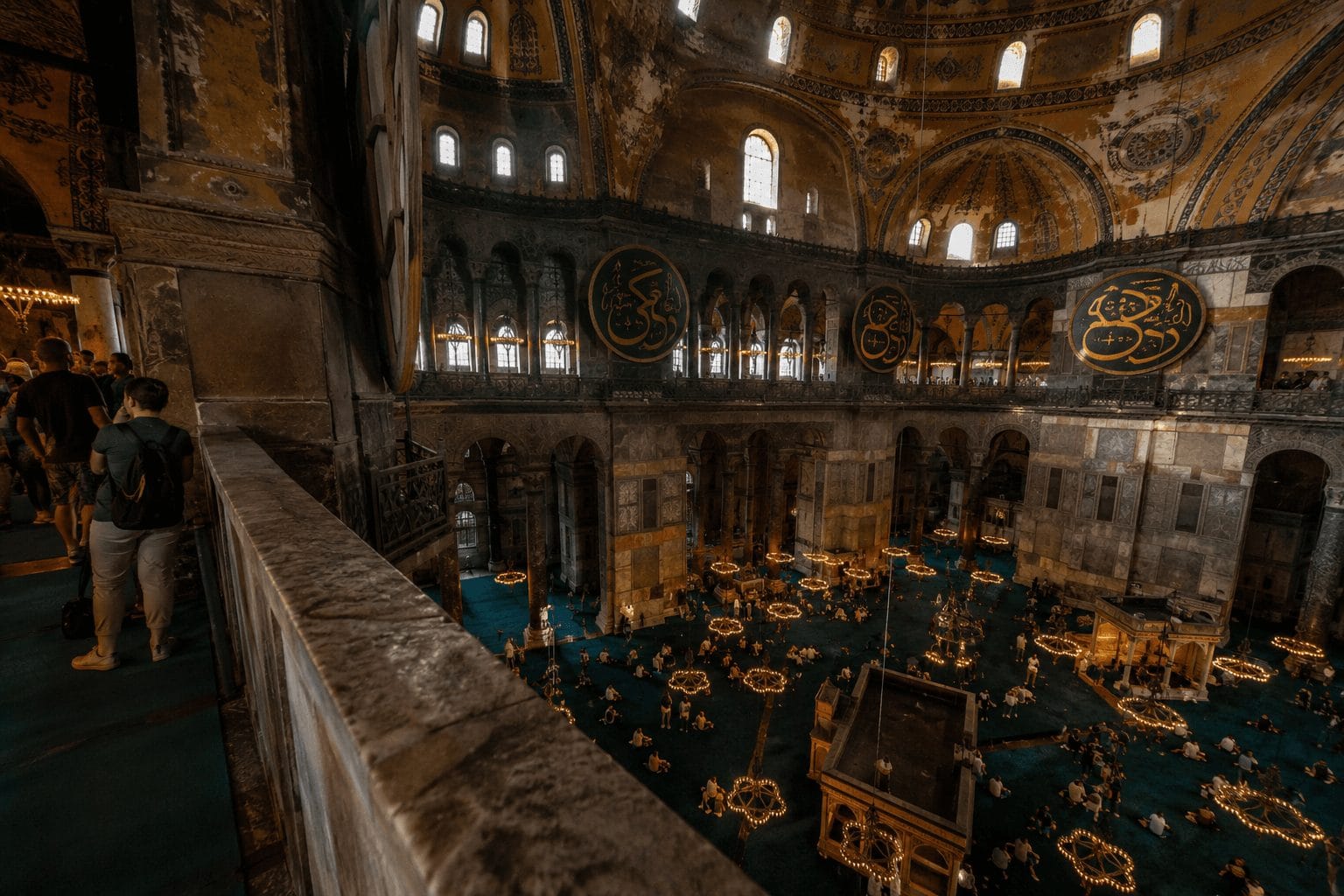
Hagia Sophia is a working mosque, and when you arrive matters more than anything else you will read about it.
Go at opening. By mid-morning the entrance is a wall of people and the gallery is a queue for a gap in someone else’s photo.
Do not go Friday between 12:00 and 14:00. The Ministry of Culture and Tourism’s page states the visiting area is closed to visitors in that window for Friday prayers. If Friday is one of your three days, put the bazaars, the cistern or the ferry in that slot and come here another morning.
One thing that reads like a conflict and is not. The Ministry page says the praying area is closed to visitors from the morning prayer until 10:00 for cleaning. That is the ground floor, which is the active prayer space and is not what your ticket buys. Your ticket takes you up to the gallery. An early arrival is still the right call, and this restriction is not the reason to delay it.
Once the timing is right, three things about the ticket surprise almost everyone, because most English-language articles still describe the building as it was before 2020.
It is not free, and it is not a museum. Foreign visitors pay 25 euro for the visiting area, converted to lira at the booth.
You do not enter the main door, and you are not going where the photos were taken. Since January 2024 foreign visitors use a separate gate across from the Sultan Ahmed III Fountain, near Topkapi’s Bâb-ı Hümâyun gate, and a ramp takes you to the gallery floor. The ground floor is the active prayer area. The wide shot from the middle of the nave that made you want to come is not the view you are buying. You get the upper gallery, the mosaics, and a look down into the room.
Museum passes are not valid here. The Ministry page says so in as many words. If you bought a pass to cover the headline sights, this is not one of them.
Two smaller things. Tickets go through the official seller named on that Ministry page, DEM Museums, and fake Hagia Sophia tickets are a real trade in Sultanahmet, so buy at the booth or through that seller and nowhere else. Children under 8 are free with a passport or ID, and women need a head covering inside, with a headscarf at 1 euro and a body cover at 3 euro available at the booth.
One that deserves more attention than it gets: the visiting-area ramps and stairs are not suitable for wheelchair users or anyone with real walking difficulty. The official page directs those visitors to use the Turkish Citizen Entrance with their ticket instead. If that applies to you or anyone you are traveling with, plan the entrance before you plan the morning.
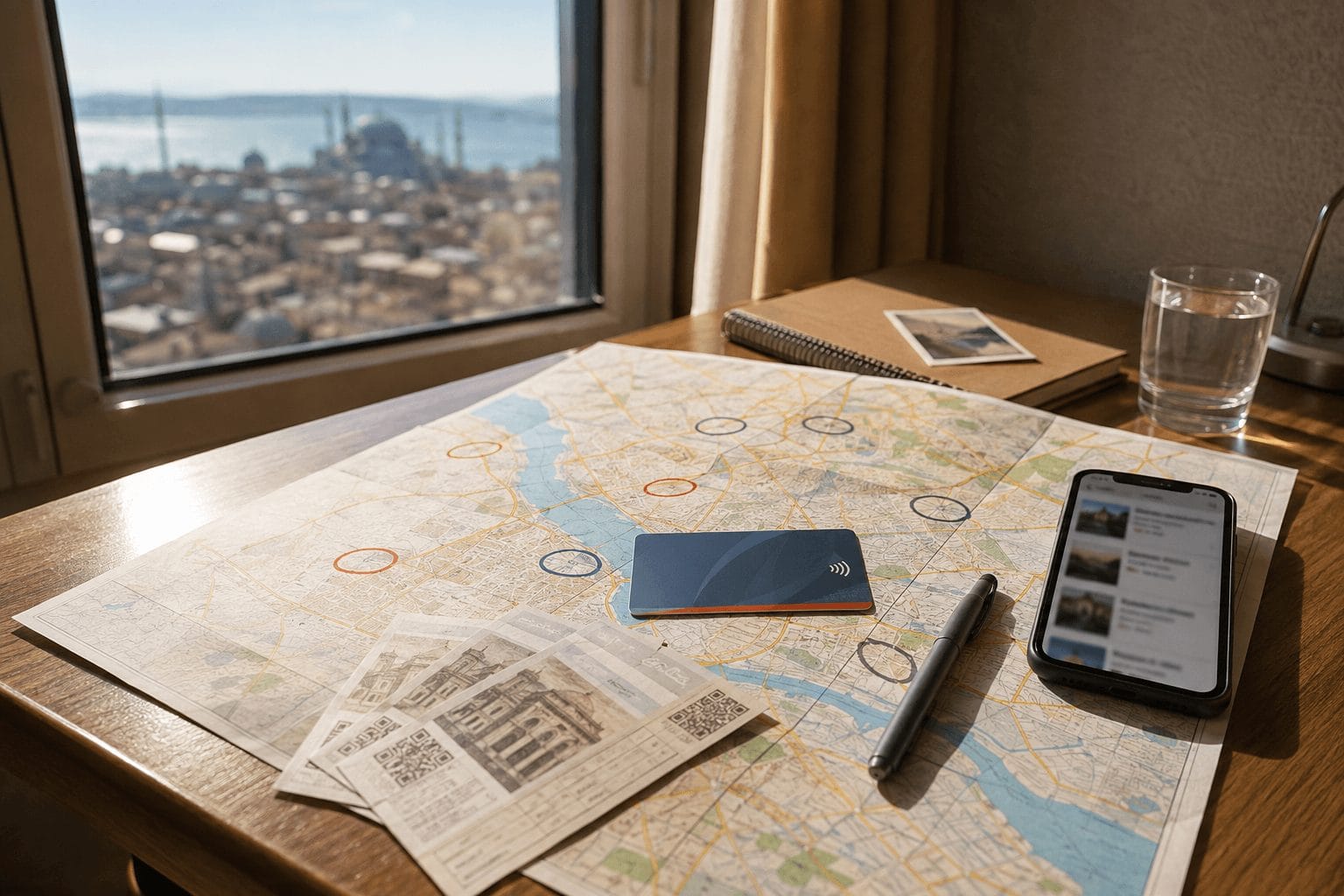
If you are the sort of traveler who buys the city pass before the flight, read this first.
The Istanbul Museum Pass is genuinely useful when a trip is heavy on state museums. It is a bad reflex purchase.
The Ministry states outright that museum passes are not valid at Hagia Sophia. Its page says so in as many words. The pass is also not accepted at Chora, the Byzantine mosaic church that is the other thing people assume a pass covers, which is worth confirming on the inclusions list rather than at the door.
So two of the sights first-timers picture when they buy a pass are two of the least likely to be on it. The pass is built around the state museum system, and several of the headline sights sit outside it under different operators. Read the inclusions list, not the marketing.
Buy it if you have counted the state museums you will actually enter and the arithmetic works. Do not buy it to cover the big ones. Check the official inclusions list against your own list before you pay, not after.
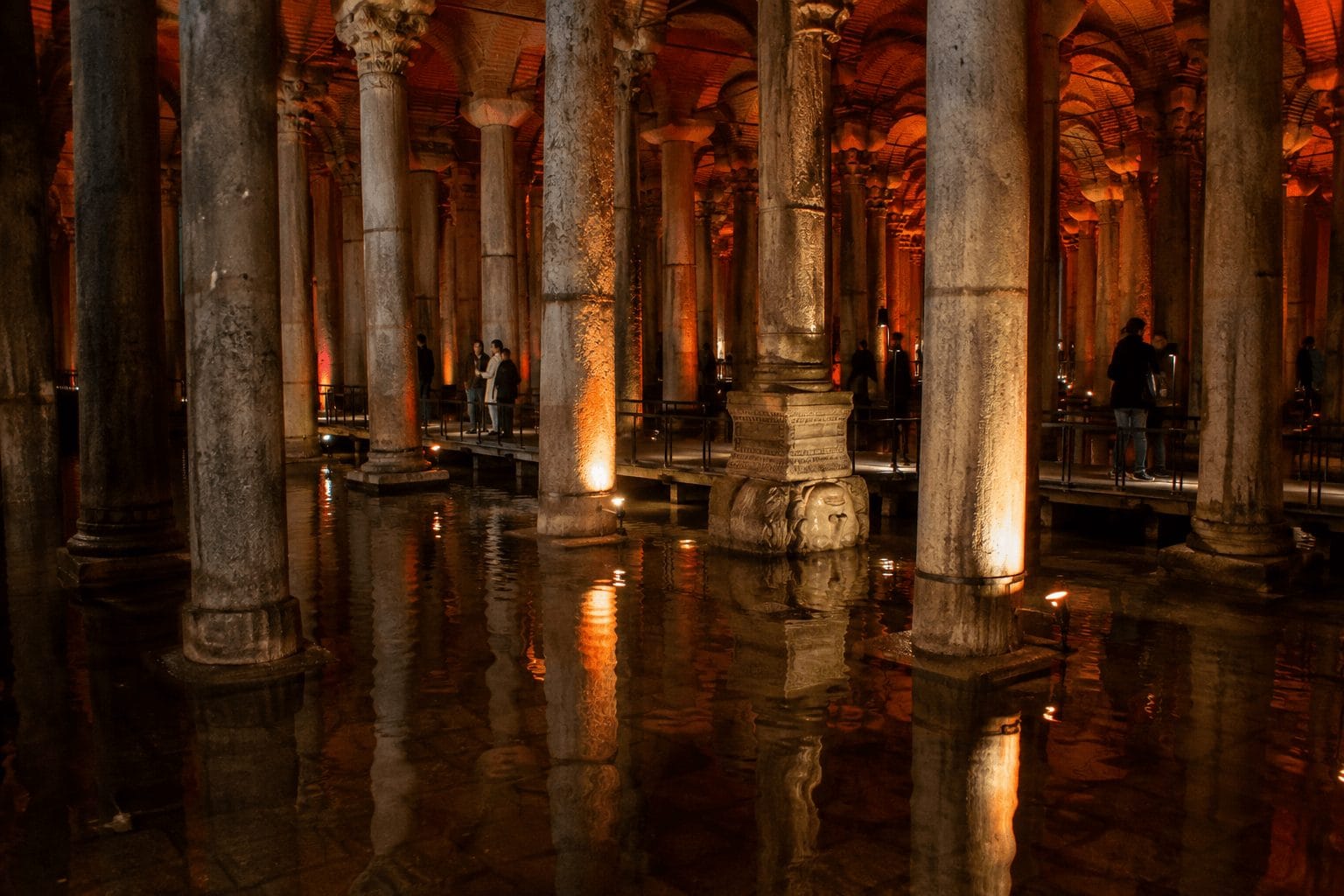
Two minutes from Hagia Sophia, under the street, there is a sixth-century reservoir the size of a small lake, built when this city was Constantinople and the capital of the Eastern Roman empire. Byzantine and Eastern Roman are the same thing, which is why you will see it called both. Two things about visiting it are easy to miss until you are standing at the door.
It runs two separate sessions at two separate prices. The daytime session ran about 1,950 lira, with ticket sales stopping at 18:30. The evening session, roughly 19:30 to 22:00, ran about 3,000 lira. Those figures were verified in July 2026 and lira prices move, so treat them as the shape of the decision rather than the number you will pay.
It is cashless. Card or Istanbulkart, and nothing else. Turning up with a fold of lira in a city where lira works everywhere else is exactly the sort of small thing that sends someone back up the stairs to find an ATM.
The practical read: if your afternoon is running late, do not sprint for the 18:30 cutoff. Take the evening session deliberately, or move it to another day. It is one of the few sights in the old city open after dinner, which makes it a good use of an evening once the tour groups have gone.
What is down there, for the record: 336 marble columns rising out of shallow water, deliberate lighting, and two Medusa heads reused as column bases at the far end. Most people walking over it have no idea it is there.
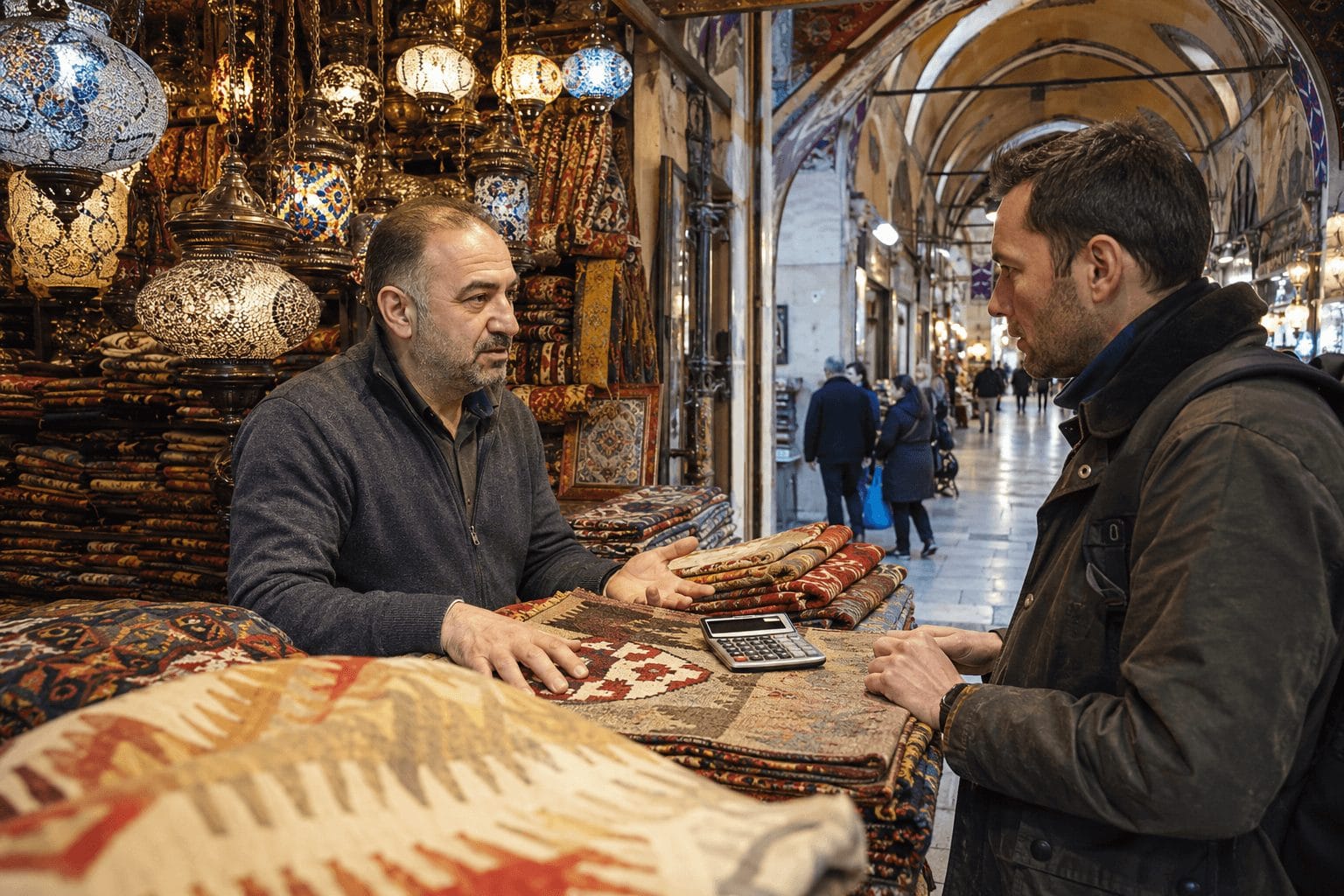
The opening figure in a Grand Bazaar shop is a position, not a price, and treating it as one is the difference between a fair transaction and a tourist rate.
The expected move is to counter well below it and work toward the middle. Opening from around half is a workable starting position rather than a formula for a fair price, and where it lands depends entirely on what you are buying. A scarf, a lamp and a hand-knotted carpet are three different negotiations. Countering is not rudeness. It is the first line of a conversation both sides know the shape of.
Two habits worth keeping:
An invitation to tea in this part of the city is often an invitation to a showroom upstairs. You can drink the tea and leave, or simply not go up. It is hospitality used as a funnel rather than a threat, and treating it as either a crime or an obligation both get it wrong.
Two alternatives worth knowing. The Arasta Bazaar behind the Blue Mosque carries a lot of the same goods in a far smaller space, which is a better setting if haggling is not something you enjoy. And at the Spice Bazaar, the shops on the streets just outside the covered section are worth a price check before you buy lokum or spices inside it.
One scheduling note that catches people: the Grand Bazaar is closed on Sundays. Put it on a Sunday and the day is gone.
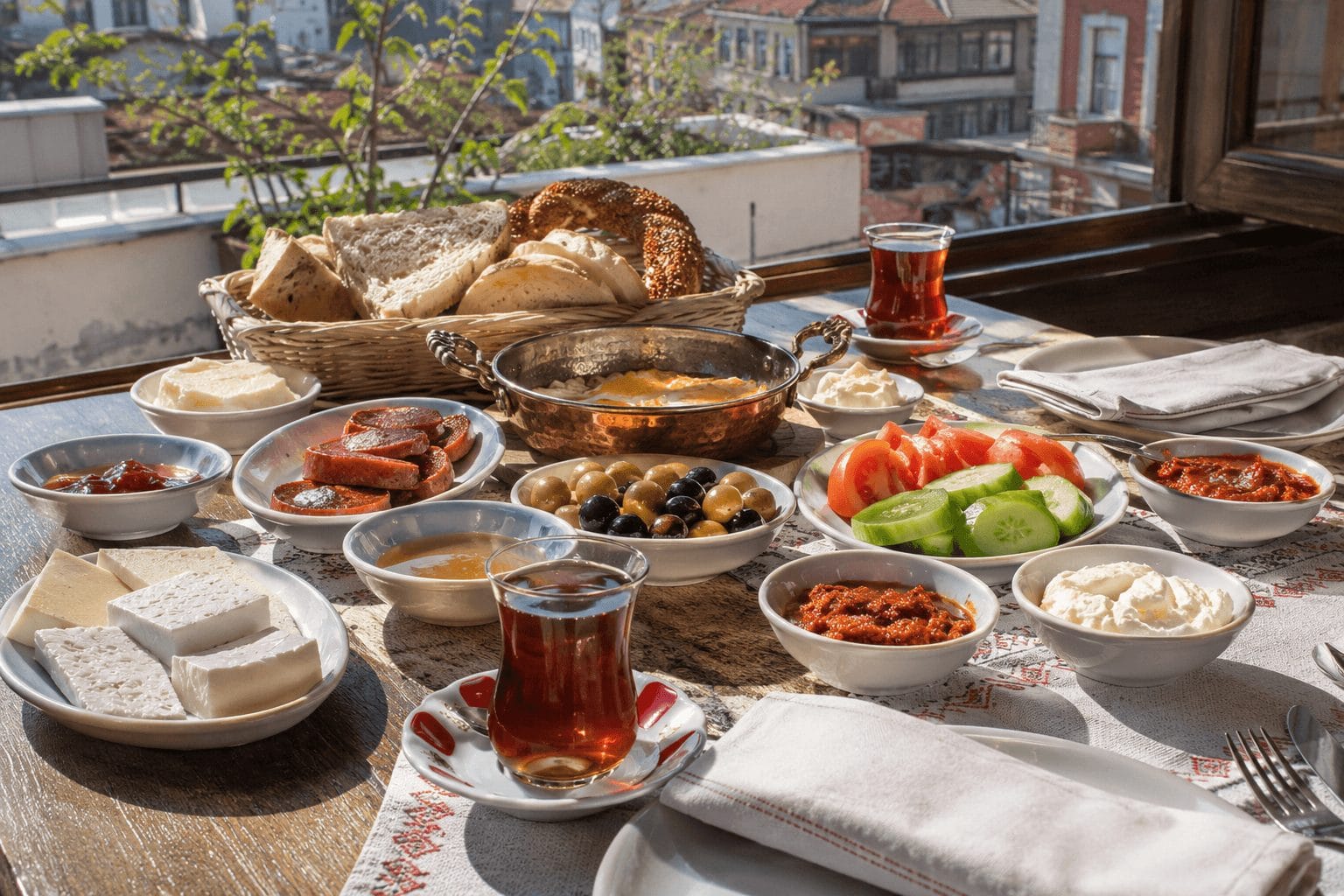
A Turkish breakfast is not a hotel buffet and it is not eggs with a side. It is a table covered end to end in small plates: several cheeses, olives, tomatoes and cucumber, jams and honey, eggs cooked in butter or with sausage, warm bread that keeps coming, and tea that keeps arriving until you stop it.
It is a leisurely meal, not a stop, and that is the planning consequence. Sitting down to a full spread can take most of a morning, so it belongs on the day with the lightest ticket load rather than the day you are trying to reach Topkapi at opening.
Do it once, properly, sitting down. The other mornings can be a simit from a street cart for pocket change.
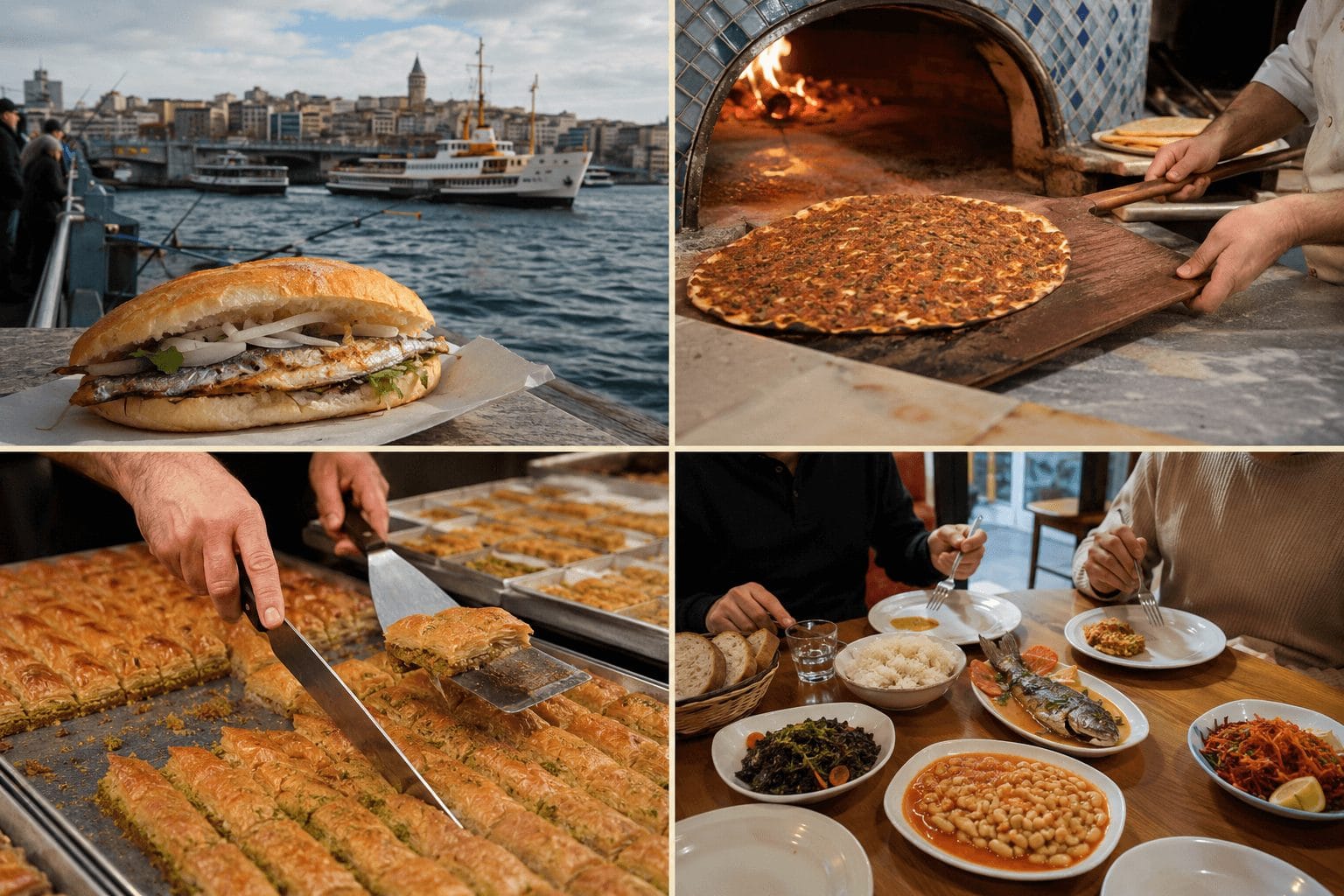
Kebab is the least interesting thing on offer and it is what a lot of three-day visitors eat three times, because it is what the picture menus around Sultanahmet Square lead with.
Reliable alternatives, none of which require a reservation or a food tour:
The easiest upgrade available is geographic. Cross to Kadıköy on the Asian side and eat dinner there. You are eating outside the strip that prices for visitors, and the ferry over is twenty-odd minutes on the water for 65.21 lira on the card, which is the official Şehir Hatları fare from Karaköy or Eminönü to Kadıköy.
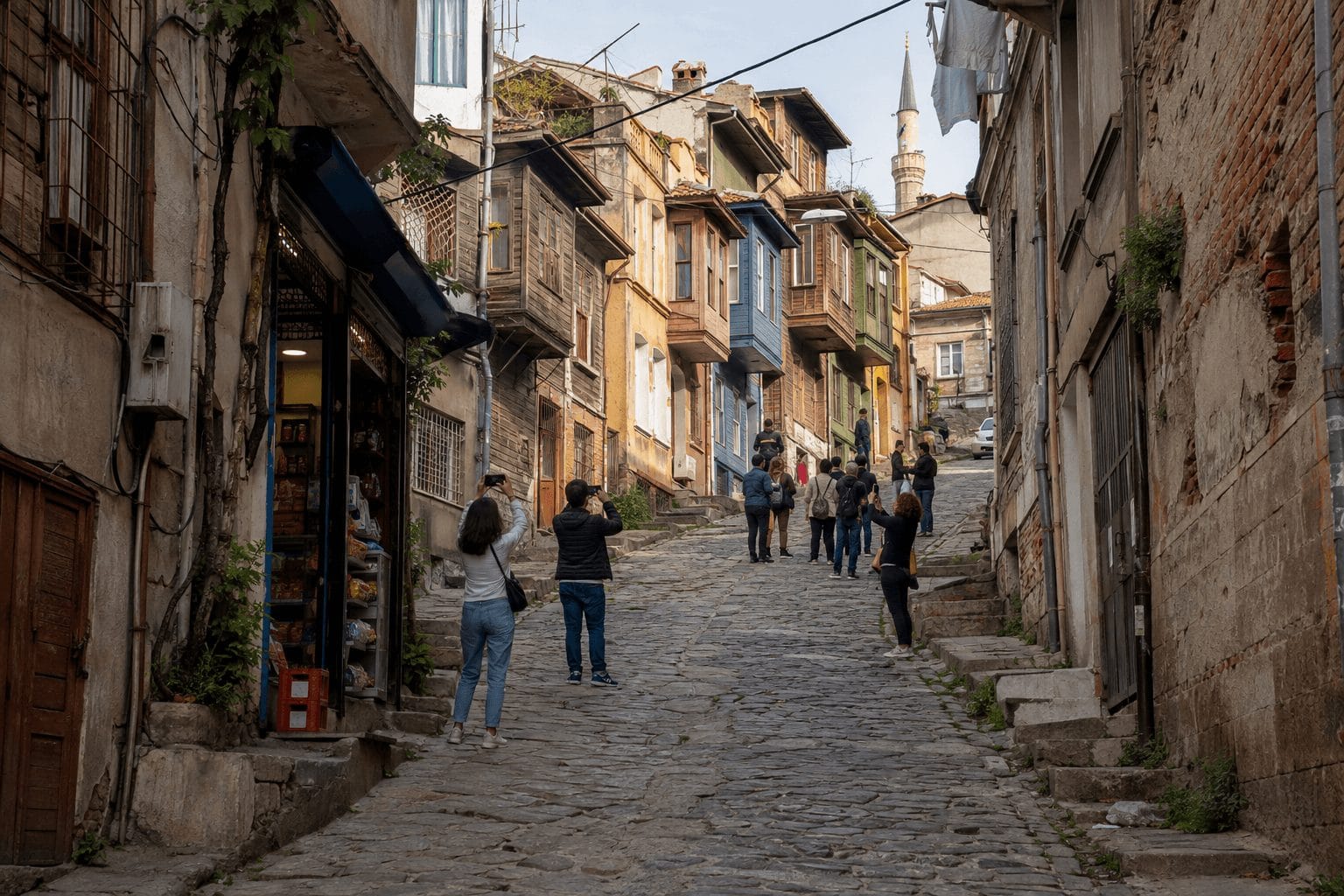
On the right lane, Balat is the place where you stop every few steps: tall narrow houses painted in blocks of color, laundry strung between them, cafes with chairs out on the cobbles. Budget more time than the distance suggests, because the walking is slow and it is slow because you keep stopping.
That is the part the mood boards get right. Two things they leave out.
The color is a few streets, not the district. The frames you have seen come from a short stretch of a residential hill. Arrive expecting a painted neighborhood and most of what you walk through will be an ordinary, un-restored, working part of the city. That is not a disappointment if you came for the city. It is a disappointment if you came for the wallpaper.
People live behind those doors. These are homes, not a set. The uncomfortable version of Balat is a queue of visitors photographing someone’s front step, and the gap between the two experiences is mostly a matter of how you behave on the street. Shoot the lane rather than the doorway, do not arrange yourself on someone’s steps for a portrait, and buy something from the shops if you have spent an hour in front of them.
One efficient way to fit it in: pair Balat with Chora, the Byzantine mosaic church out in the same direction, so the church rather than the photograph is the reason for the trip. If you do pair them, there is a hard scheduling constraint, since Chora is closed to tourists on Fridays. Going out there on a Friday means the long trip for the streets alone.
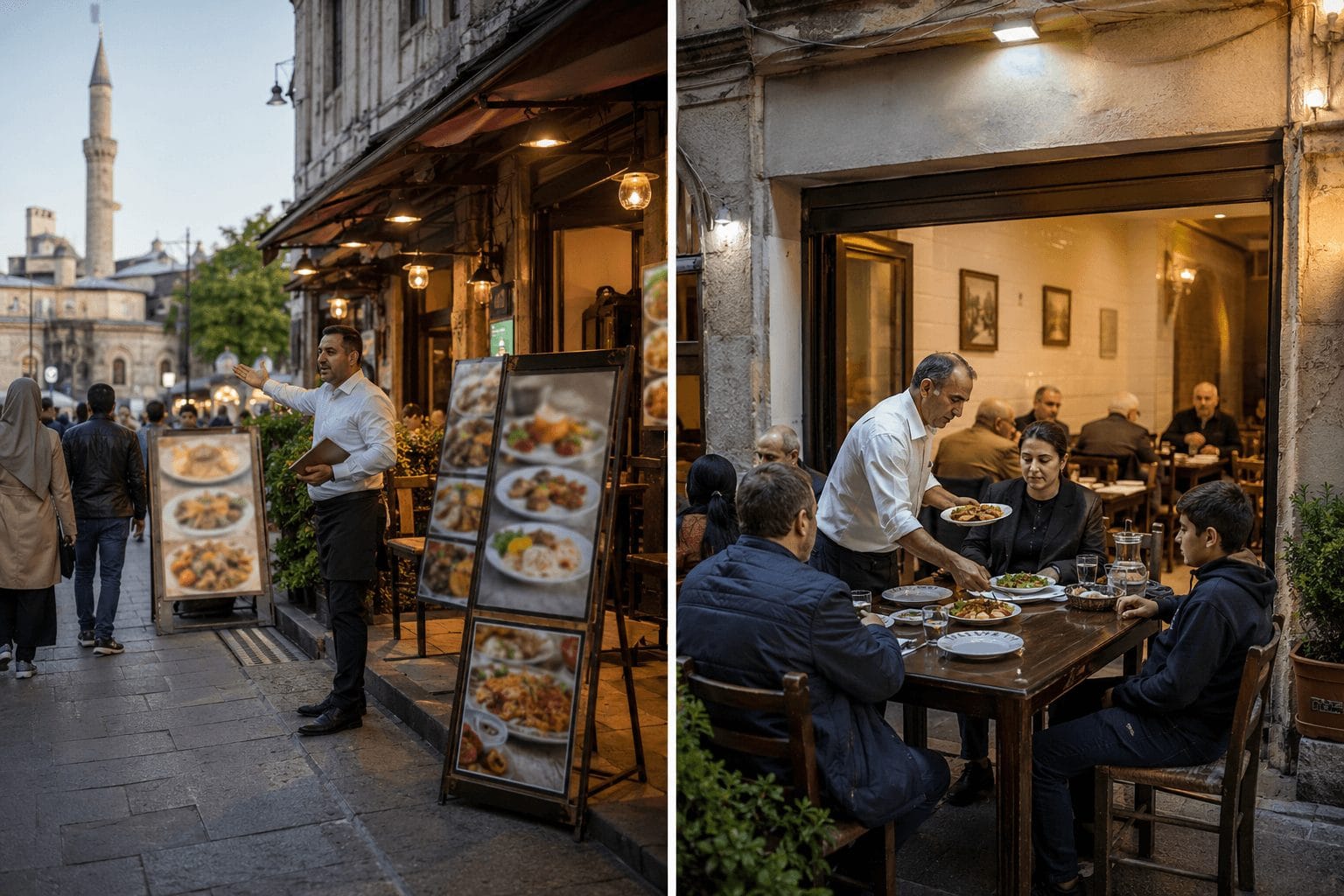
Istanbul is still good value against Western Europe. It is no longer a budget destination, and there is a real gap between the price a local pays and the price offered to a visitor.
The premium is not spread evenly. It sits in a few specific places.
Restaurants with a picture menu and someone outside inviting you in. That is the Divan Yolu strip and the blocks facing Sultanahmet Square. Walking five minutes off it changes both the price and the food.
Anything priced to you in dollars or euros. Pay in lira. When a card machine offers to charge you in your home currency, decline it. That conversion is a fee wearing a convenience costume.
Cash from anywhere other than a bank ATM. Airport exchange counters and street bureaux are where the spread lives.
Single transit fares. Get an Istanbulkart on arrival. There is a small one-time charge for the card itself, and then a standard bus, tram or metro ride is 46.20 lira on it, under the İBB tariff in force since 20 July 2026. Transfers inside the transfer window drop to 34.40 and then 26.42, so a journey with one change costs well under two full fares. Ferries are priced separately and cost more than a tram ride. Between 00:30 and 05:30 the fare doubles. On a three-day trip the card is not a close call.
What is free is more than people expect. The Blue Mosque, Süleymaniye and Rüstem Paşa are all free and all worth the stop, and Süleymaniye has the best free view over the Golden Horn in the city. The Hippodrome obelisks and Gülhane Park cost nothing. Crossing the Galata Bridge on foot costs nothing and is twenty of the better minutes available.
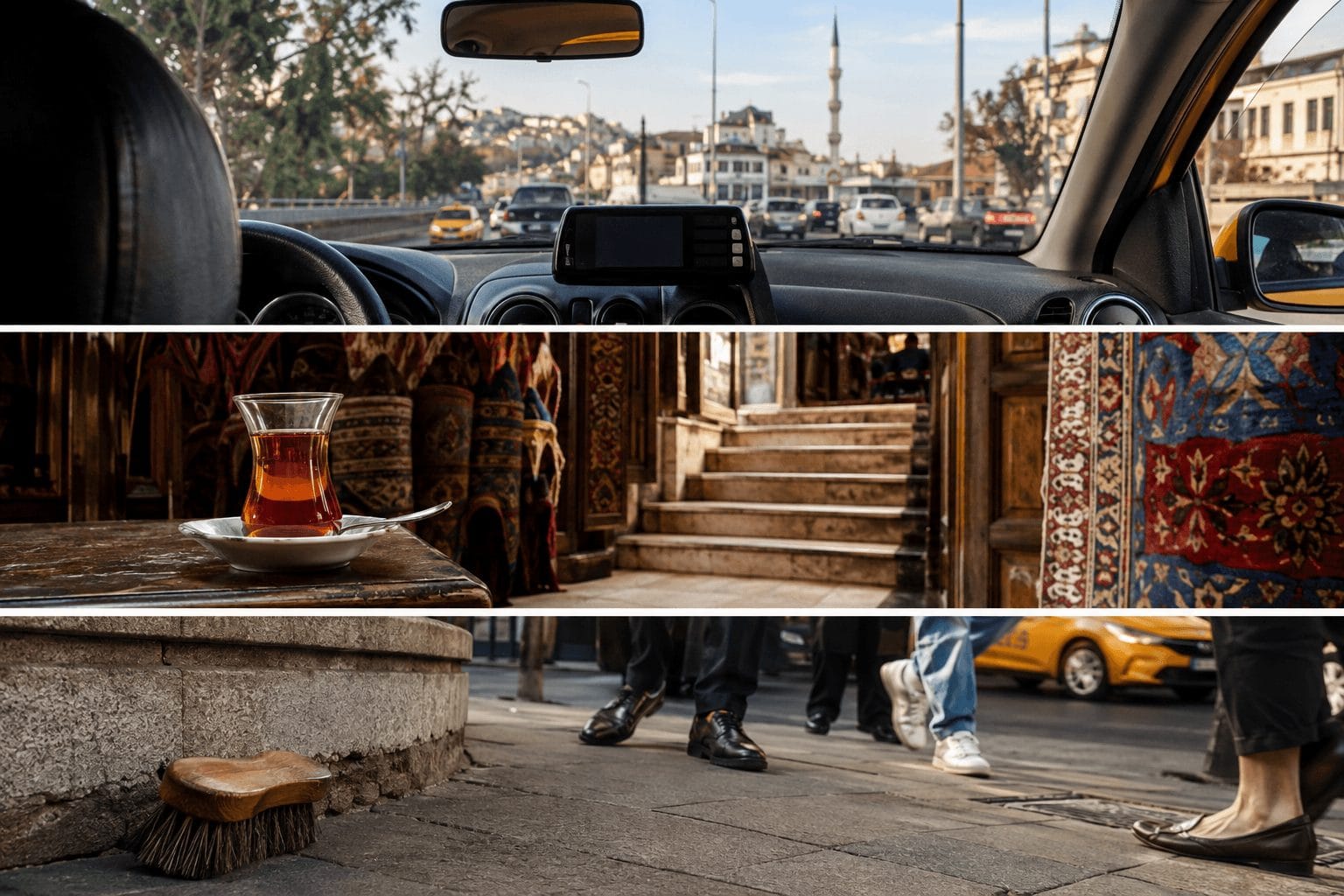
A strain of travel video treats Istanbul as a city to skip because someone might cheat you between the airport and the hotel. The clips are real. The conclusion is lazy. The same three patterns turn up again and again, and all three have a dull fix.
The taxi. Official yellow taxis run on a municipal meter. The current İBB tariff, in force since 20 July 2026, opens at 71.94 lira with a 230 lira minimum fare, and there is no separate night surcharge on taxis. The tariff is revised often enough that the rule worth carrying is behavioral rather than numeric. Get in, say “taximeter,” and watch it start. If it does not start, get out. BiTaksi dispatches the same licensed taxis with an upfront estimate and a recorded route, which takes most of the uncertainty out of it. A driver offering a flat price from the airport instead of the meter is quoting you rather than a tariff. Bridge and tunnel tolls are genuinely extra and get added on top, so a higher total on an airport run is not automatically a sign you are being worked.
The tea. Around the Grand Bazaar and in Sultanahmet, an invitation to tea is frequently an invitation to a carpet showroom upstairs. Drink the tea if you want it. Decline the stairs. If you actually want a carpet, that is a different afternoon with a different budget, and it does not belong in the middle of a three-day trip.
The shoeshine. Someone walking ahead of you drops a brush. You pick it up and hand it back. They insist on shining your shoes, then name a price. Do not pick up the brush. Keep walking. That is the entire defense.
None of this is unique to Istanbul, and none of it justifies giving the city a miss. It justifies using the meter, the app, and your own two feet.
Check the four closure days against your actual dates. Buy the Hagia Sophia ticket from the official seller and go at opening, not on Friday at noon. Do not buy a pass to cover things it does not cover. Take a card to the cistern. Treat the first number in the bazaar as an opening position. Give one morning to breakfast and cross the water for dinner. Go to Balat for the neighborhood and Chora, on a day Chora is open.
Every one of those is avoidable on its own. The trouble is fitting them together.
The full Istanbul plan
Three days is enough for a strong first trip and it is also enough time to lose a full day to a locked door and a doubled-back tram ride. The Istanbul 3-Day Itinerary is the full three-day route that puts the sights, the neighborhoods and the ferry in an order that survives contact with the closure days above.
Get the Istanbul 3-Day Itinerary
Instant PDF download.
If you are still choosing dates, which month you pick decides how much of this you feel at all. If the dates are set, where you stay decides how much walking sits between you and the doors above, and whether you leave the city decides whether you get to open them.
Join the Adventure
No spam. Unsubscribe any time. One email at a time.