
By Andrew Boltz · August 28, 2026
Closure days, ticket arrangements and fares below were checked against the Turkish Ministry of Culture and Tourism, the National Palaces Administration and the İstanbul Metropolitan Municipality on 28 August 2026. Lira prices move. Confirm anything load-bearing the week you travel.
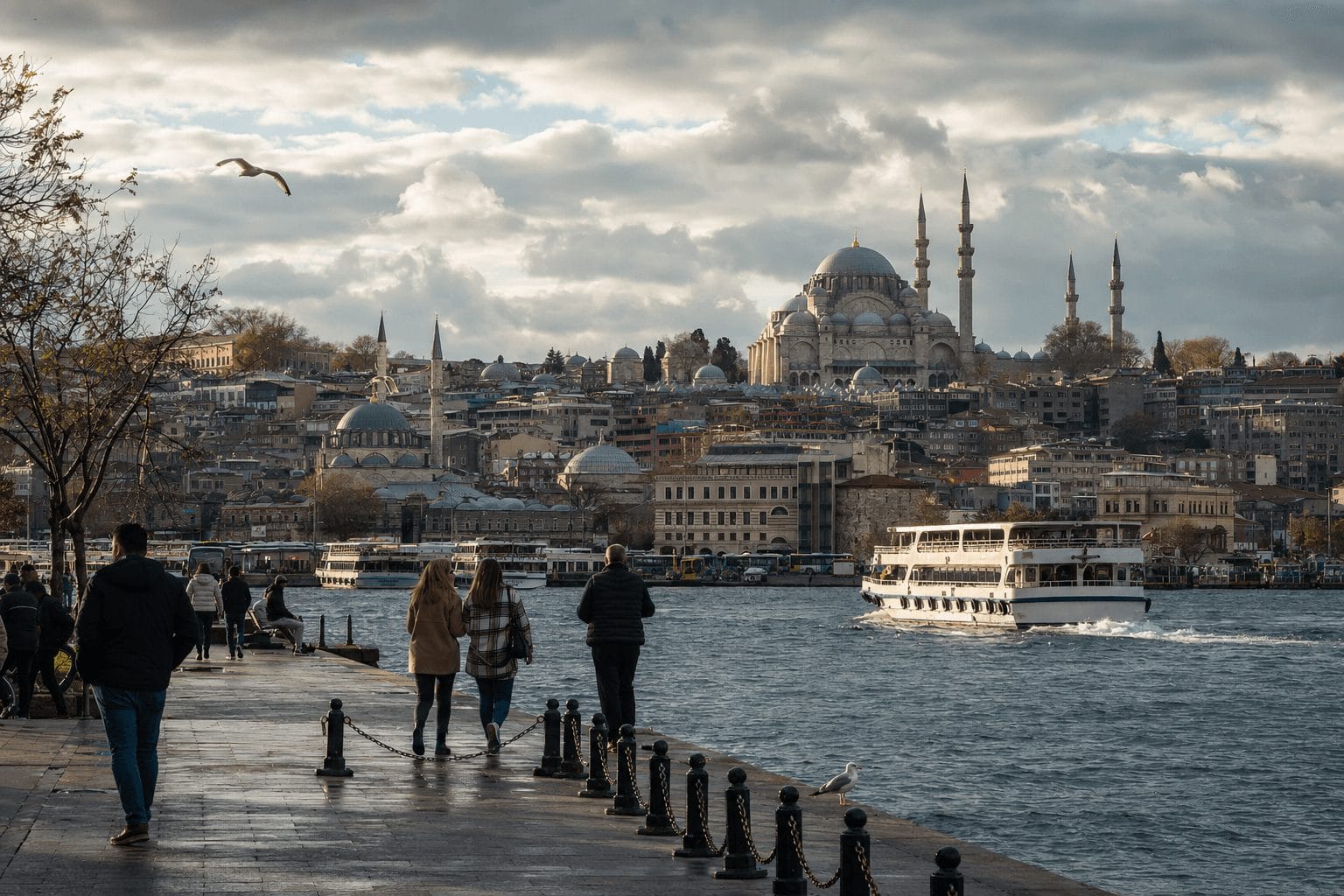
Ask the internet when to visit Istanbul and you get the same answer every time. April or May, then September or October, with a warning about July and August on the way past.
What almost never gets the outright win is late October into the first half of November, or March before the tulip posters go up. That is the argument here: late October deserves more credit than it gets, and August is the one to skip.
This is a judgment about trade-offs rather than a claim that late October is empty. It is not empty. It is the month where the four things that actually decide an Istanbul trip line up better than they do in May.
Heads up: some links on this page are affiliate links. If you book or buy through one, I may earn a small commission and you pay exactly the same price. More in the full affiliate disclosure.
Every month in Istanbul trades the same four variables against each other. Rank them for yourself and the calendar mostly sorts itself.
Heat and humidity. July and August are not warm. They are the months when walking ten to fifteen kilometers a day stops being a plan and becomes an endurance event. A three-day Istanbul trip is a walking trip whether you intended it or not.
Crowd pressure. Not visitor totals in the abstract. How long you queue at Hagia Sophia, whether a Galataport ship has just offloaded into Sultanahmet, and whether you picked a Friday.
What is actually open. This is the one that wrecks itineraries, and there are more closure days than most people expect. The matrix is below.
Price. Hotel rates swing hard between the quiet months and high summer, and the gap is wide enough to change what kind of room you can afford.
Best overall trip, if you can choose freely: late September into October, then late October into early November if you will accept shorter days for thinner crowds.
Best weather, and you pay for it in queues: May, or late April if Easter and the tulip calendar are not sitting on your dates.
The underrated window: late October and the first half of November, or March before the tulips.
Lowest prices, and you own a coat: January and February, skipping New Year.
Worst combination available: August. July if August is already gone.
The full Istanbul plan
The month sets the difficulty. It does not build the order of Hagia Sophia, Topkapi, the cistern and the ferry, and the closure days decide more of that order than the weather does. The Istanbul 3-Day Itinerary is the full three-day route, with the tickets worth buying before you fly.
Get the Istanbul 3-Day Itinerary
Instant PDF download.
Month is not the only calendar, and this is where three-day itineraries actually die. There are four separate closure days across the headline sights, and they do not overlap.
Tuesday: Topkapi Palace is closed. The National Palaces Administration lists it plainly. If your three days include a Tuesday, that is a bazaar day or a ferry day, not a palace day. Most Istanbul museums do not follow the European Monday-closed pattern, which is exactly why this one catches people.
Sunday: the Grand Bazaar is closed. Free to enter the other six days.
Friday: Chora is closed to tourists. The whole day, not a prayer window.
Monday: Dolmabahçe Palace, the Pera Museum and Istanbul Modern are closed.
Friday 12:00 to 14:00: the Hagia Sophia visiting area is closed for Friday prayers. The Ministry page states that window in those words. If you have seen 14:30 quoted elsewhere, that is not what the official page says. Build the Friday middle of the day around bazaars, the cistern or the ferry instead.
Separately, working mosques restrict tourist access around all five daily prayers, longest around Friday midday. That is daily, not a Friday-only problem.
Put bazaars on a Sunday and Topkapi on a Tuesday and the itinerary collapses on contact. The things nobody tells you about Istanbul has the full version of this, along with the tickets that surprise people.
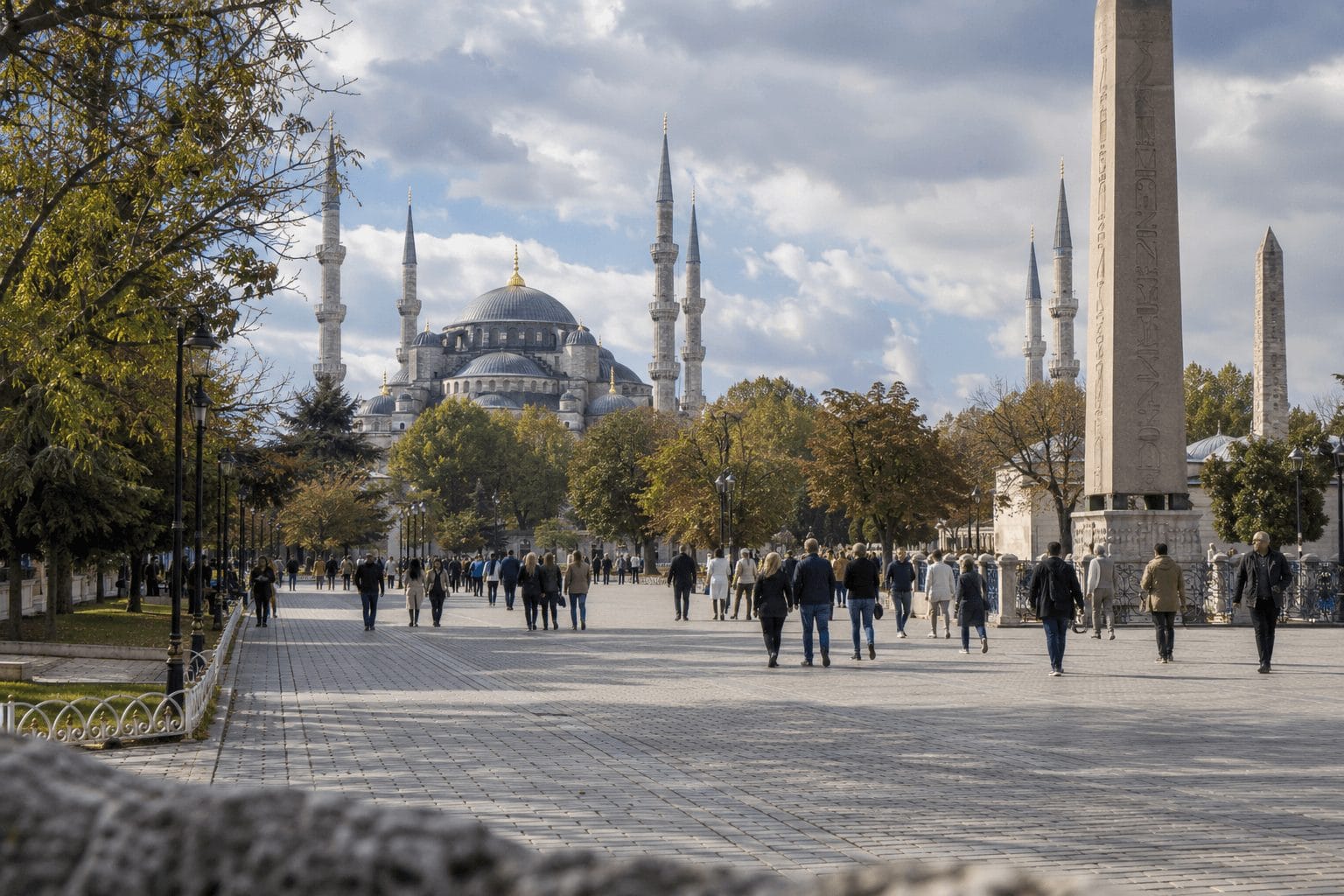
May is the consensus pick and it is a good month. Warm, long days, everything open. The catch is that being the consensus pick has consequences. You are competing with everyone who read the same list, plus the tulip traffic that tour pages still treat as a bonus.
Late October’s case rests on two things. School summer holidays are over across most of the major European markets. And the heat has dropped without the city going fully winter, so you can walk the historic peninsula at midday rather than hiding from it. Cruise calls may thin as the season turns, but I have not found a public arrivals table to prove it, so check the Galataport calendar for your own dates.
What you give up is length of day. Late October can be mild and it can also be wet. Pack a layer. March beats the tulip posters and takes a bigger weather gamble. If the choice is between late October and April and nothing else is deciding it, take late October.
April is sold as shoulder season. It is also tulip season, Easter-adjacent in some years, and the month everyone else booked because the internet said so. A quiet-spring listing that coincides with a citywide flower event is not quiet.
Check two calendars before you lock April: where Easter falls, and where Ramadan and the two bayrams fall that year. I am not printing Islamic calendar dates here, because they move every year and this post will outlive the year. Look them up for your dates.
Worth knowing: Topkapi is closed on the first day of Ramazan Bayramı and open on the second and third, per the National Palaces Administration. That is a sharper fact than the usual vague warning that bayram affects hours.
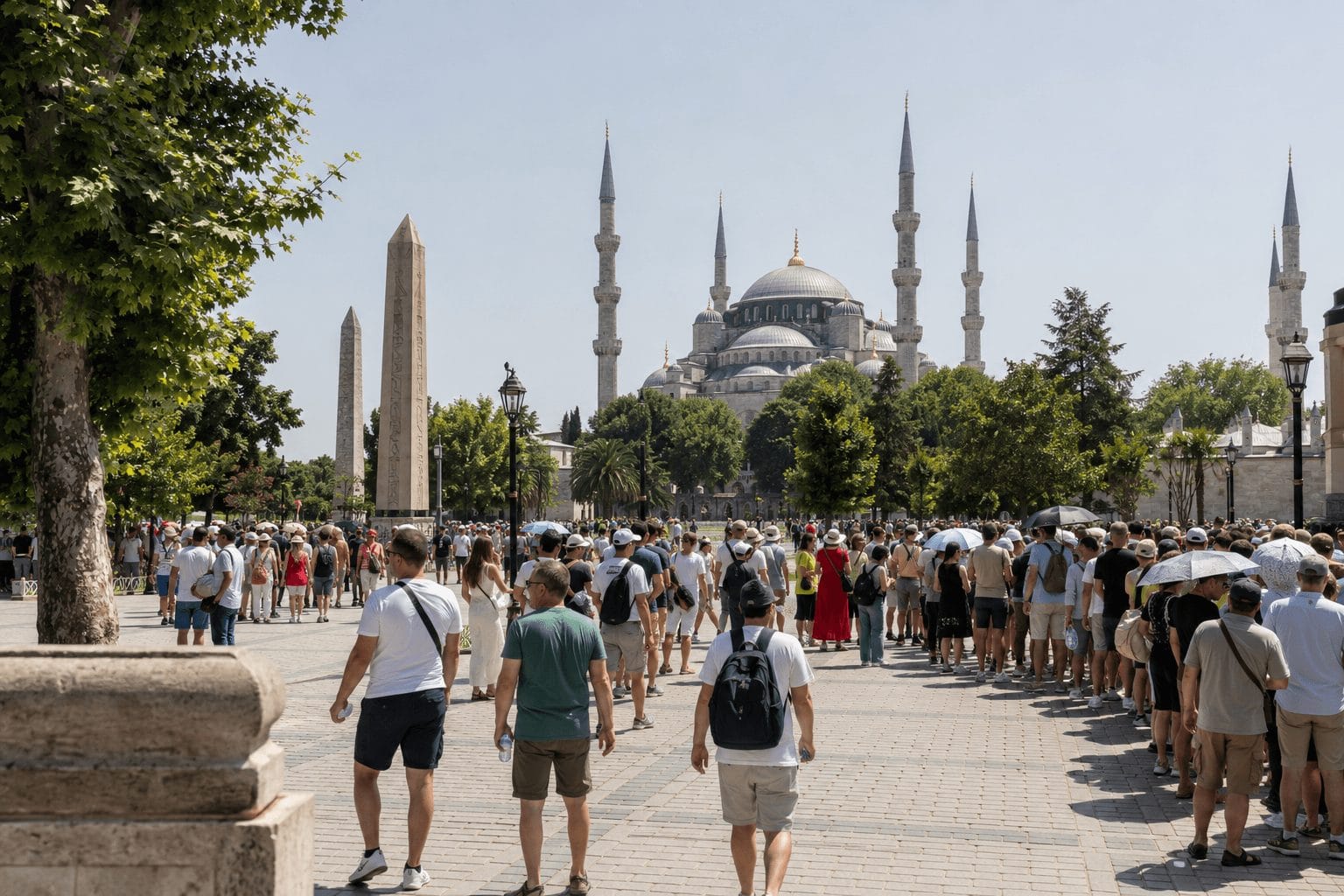
July is hot, humid, expensive and full. August is all of that, plus the month a three-day walking trip turns into a midday indoor shuffle.
If August is the only window you have, take it. Start at opening, put the middle of the day underground or indoors, and do not add a countryside bus tour on the one day you have for the old city.
There is no version of the argument that August is secretly charming which survives a first three-day trip. Save that for a second visit.
Winter is where the money is. Rates drop. Queues shrink. Pull up the same three nights in February and in July before you decide a coat is too high a price. You can stand in the Hagia Sophia gallery without waiting for a gap in someone else’s photograph.
The caveats are not small. Days are short. It rains. Opening hours can contract. And New Year is not winter, it is a peak. Early January through February is the cheapest quiet stretch with the least forgiving weather attached.
If the budget is deciding and you own a waterproof layer, it is a real trip. If your plan depends on golden-hour rooftops, it is a worse trip than the price suggests.
Galataport sits on the Karaköy waterfront, and a large arrival puts a great many people into Sultanahmet in a short window. A Tuesday in June can look like a shoulder-season Tuesday on a weather app and still be a ship day.
I have not found a public arrivals table broken out in a form worth quoting, so treat this as a planning variable rather than a number. Check a Galataport or cruise-line arrivals calendar for your own dates before you decide a given week is quiet.
If you are on the ship, you are the crowd variable, and a four, six or eight hour port call is a different problem from a three-day trip. Day trips from Istanbul covers the port-call arcs.
Hagia Sophia is ticketed and it is not a museum. Foreign visitors pay 25 euro for the visiting area, and the Ministry states in as many words that museum passes are not valid there. You are visiting the upper gallery, not the floor the famous photographs were taken from.
A museum pass is not a shortcut. It is built around the state museum system, and several of the headline sights sit outside it under different operators. Read the official inclusions list against your own list before you pay, not after.
The Basilica Cistern runs two sessions at two prices and takes no cash. The daytime session ran about 1,950 lira with ticket sales stopping at 18:30, and the evening session about 3,000 lira. Those were verified in July 2026 and lira prices move. Card or Istanbulkart only.
Transit is cheap and the card is not a close call. A standard bus, tram or metro ride is 46.20 lira on an Istanbulkart under the İBB tariff in force since 20 July 2026, and the fare doubles between 00:30 and 05:30.
Fake tickets are a real trade in Sultanahmet. Buy at the official booth or through the official seller named on the Ministry page.
Mosque etiquette does not take a month off. Shoulders and knees covered, shoes off, and a head covering for women inside.
Late September into October, then late October into early November, if the choice is yours.
March if you want to beat the tulips and will accept a weather gamble.
May if you want the spring version and will accept high season to get it.
Winter if the budget is deciding and you are honest about short days.
Not August.
Your month sets the difficulty. It does not build the plan, and the closure days above will reorder any plan that ignores them. Once the month is settled, where you stay is the next decision, and whether you leave the city is the one that can delete a day you do not have.
The full Istanbul plan
Three days is enough for a strong first trip and it is also enough time to lose one to a locked door. The Istanbul 3-Day Itinerary puts the sights, the neighborhoods and the ferry in an order that survives the closure calendar.
Get the Istanbul 3-Day Itinerary
Instant PDF download.
Join the Adventure
No spam. Unsubscribe any time. One email at a time.