
By Andrew Boltz · August 26, 2026
Last checked 27 August 2026. This guide to where to stay in Florence ranks the neighborhoods against one stated criterion rather than a general impression.
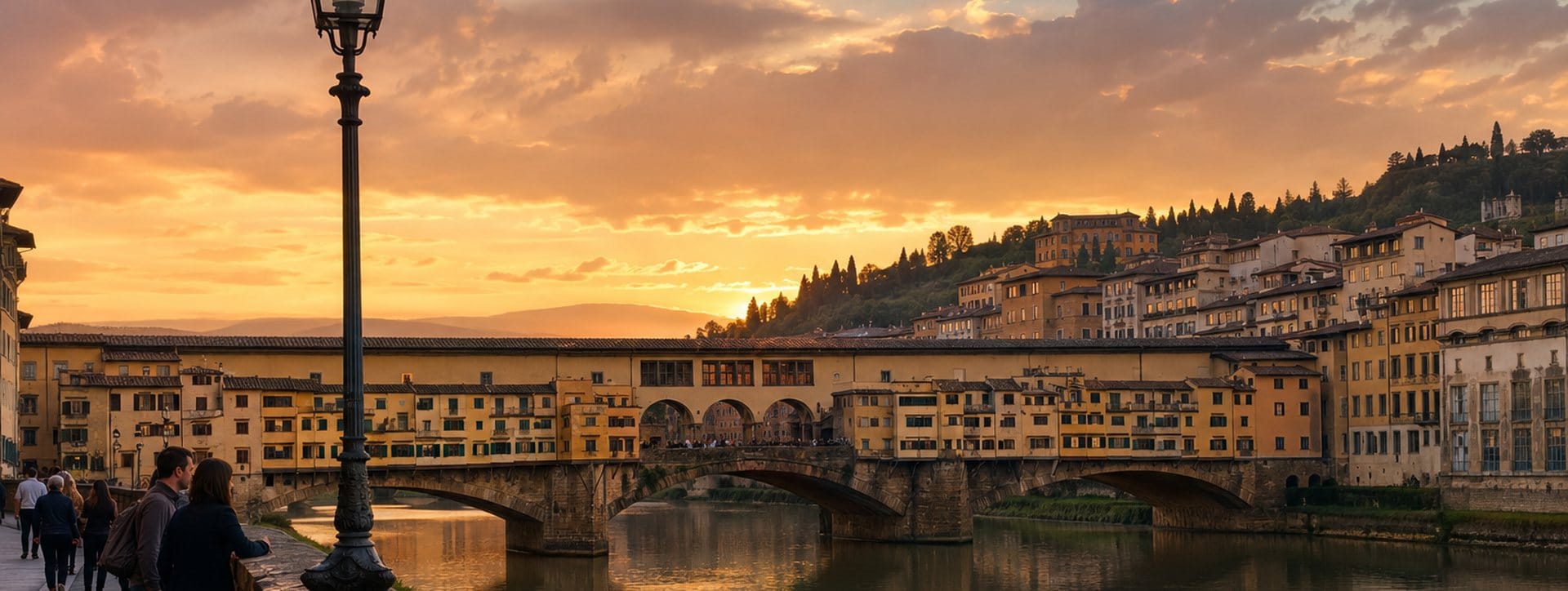
Most first-timers book as close to the Duomo as the budget allows, on the theory that central is better. In a large city that theory holds. In Florence it buys you a few minutes of walking and costs you real money and, depending on the street, a night’s sleep.
Heads up: some of the links on this page are affiliate links. If you book or buy through one, I may earn a small commission and you pay exactly the same price. I only list things I would use myself. More in the full affiliate disclosure.
Everything below follows from that.
The historic center is walkable end to end in about half an hour, and most of what you came for sits inside a much smaller area than that. You are not choosing a neighborhood the way you would in Rome or Paris, where a bad pick costs you an hour a day on transit.
What you are choosing is what happens between seven in the evening and midnight, what you pay for it, and whether the restaurants near you are aimed at people who live there or people who leave on Sunday.
So the useful question is not how close you are. It is what you want the evening to be.
Ranked on one criterion: the best balance of evening quality, value, and walking distance for a short first visit.
One word needs defining, because the ranking leans on it. Value here means what the room gets you for the money, taking size, quiet and location together. It is a judgment, not a price survey, and rates in every one of these areas swing hard by season and by building.
A different criterion gives a different order, which is what the “best for” line under each one is there to tell you.
1. The Oltrarno (Santo Spirito and San Frediano)
Best evenings, best value, four minutes further from the sights.
2. Santa Croce
The low-risk pick. Central, better value than the Duomo ring, genuine neighborhood life.
3. San Marco and San Lorenzo
Best if the museums are the whole point.
4. The Duomo and the historic core
Buy it for the view and the convenience, not the value.
5. Santa Maria Novella
Fine to good, but the exact block decides it.
6. Further out (Campo di Marte, Fiesole)
Wrong answer for three days, right answer for a week.
Detail on each below.
The full Florence plan
Picking the neighborhood is one decision. Ordering three days so the location actually pays off is the other one, and it is the one most first trips get wrong. The Florence 3-Day Itinerary lays out the route across all three days, with the tickets worth booking before you fly.
Get the Florence 3-Day Itinerary
Instant PDF download.
Across the river, which sounds like a compromise and is not, because the river takes about four minutes to cross on foot.
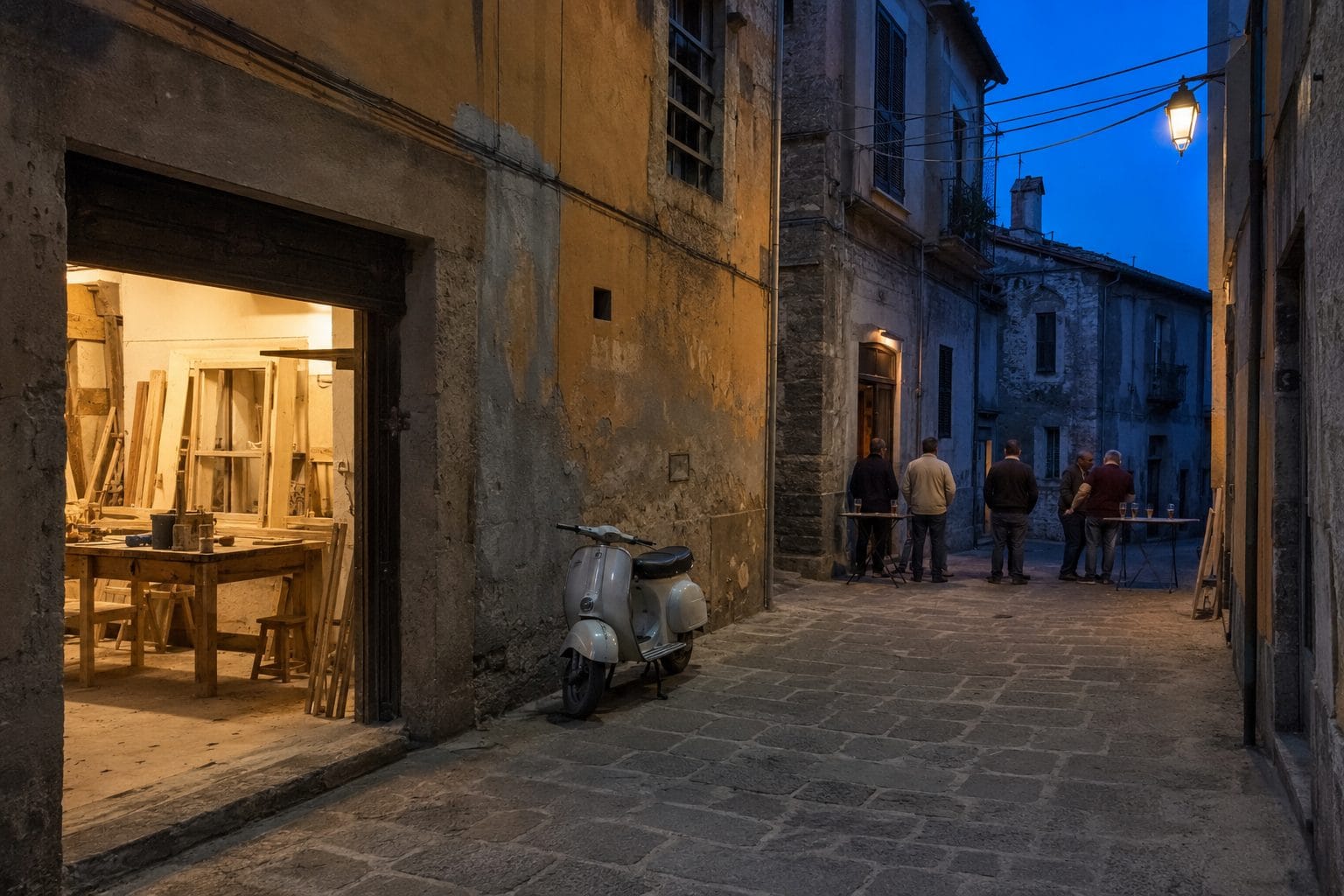
This is where Florence’s artisan trades are concentrated, the workshops and restorers and leather makers. The restaurants around Piazza Santo Spirito draw more of a local crowd than the equivalent in the center, and San Frediano, a little west, is quieter again and has been where a lot of the newer places have opened.
The trade is the bridge, which costs you a few minutes toward the headline sights each morning and little else for most travelers. Value tends to run better than the equivalent north of the river, though that gap has narrowed.
Best for: travelers who care more about where they eat and drink in the evening than about being first through a museum door. See what is available in the Oltrarno.
Break the ranking if: an 8:30am dome climb with a bad knee is on the itinerary, or you are arriving late by train with heavy luggage.
East of the center, built around the basilica where half of Renaissance Italy is buried. This is the answer when you have no strong preference and would rather not think about it further.
Central without being in the crush, with a proper market, residential life alongside the tourism, and enough restaurants not aimed squarely at visitors. Rooms here generally go further for the money than the same budget buys in the Duomo ring.
Evenings are lively rather than loud, with the caveat that the streets immediately around the main piazza get noisy at weekends.
Best for: first-time visitors who want a safe all-around choice and are not optimizing for anything in particular. See what is available around Santa Croce.
North of the Duomo. Where you want to be if the Accademia and the central market are the priorities and you plan to be at a 9am slot without crossing the city first.
Student population, university buildings, and a working feel rather than a picturesque one. San Lorenzo around the market is busy and commercial by day and much quieter at night. San Marco is calmer throughout. Value is decent.
Best for: anyone who has booked early entry slots and wants to walk to them.
You walk out of the hotel into the postcard, which is worth something, and you pay for it three ways.
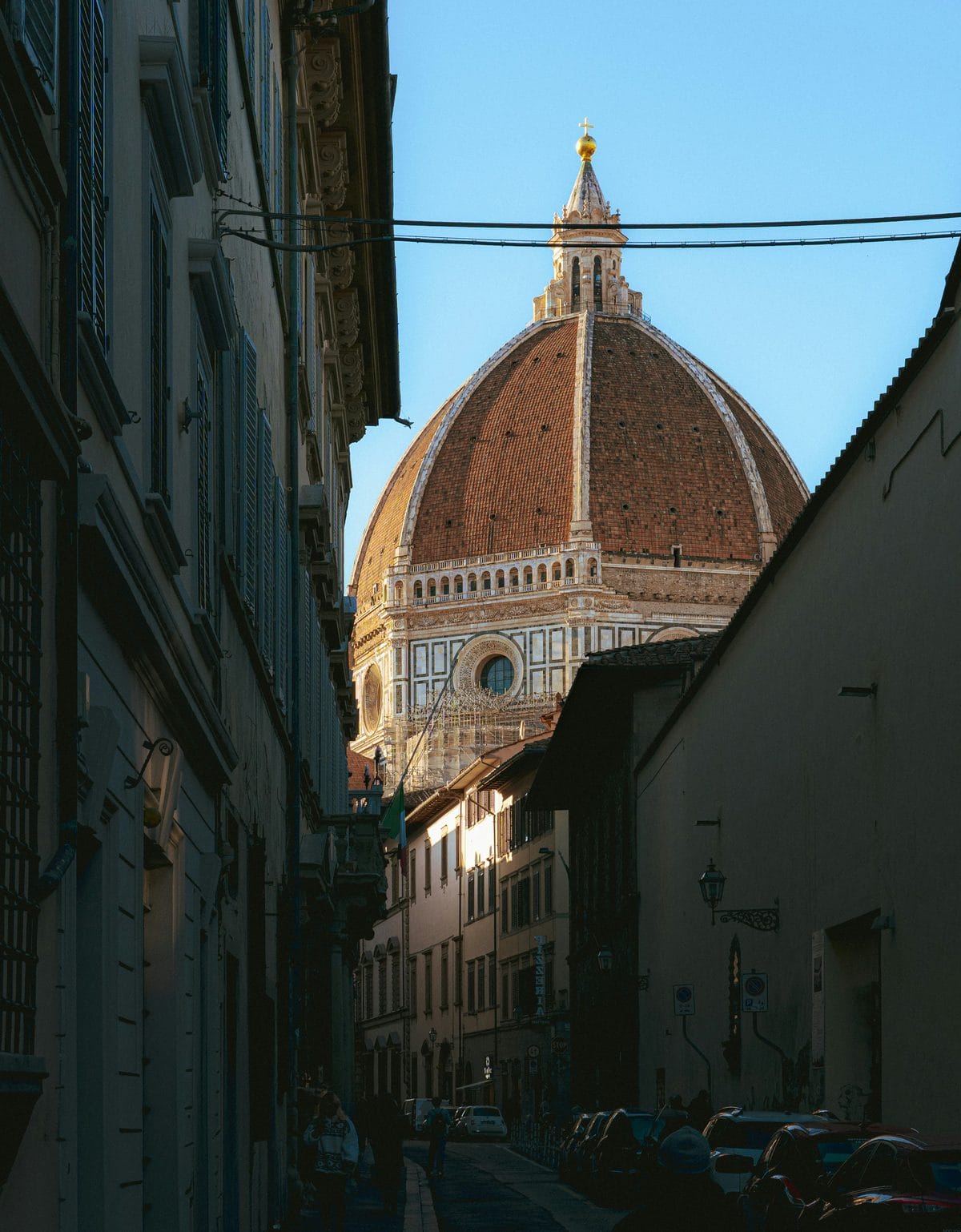
The streets are stone and they carry sound, so a room facing one can be loud past midnight and busy again before eight. Prices carry a location premium. And the restaurants in the streets immediately around the cathedral are the ones least worth choosing on proximity alone, which is a good habit anywhere and a necessary one here.
Best for: one-night stays, mobility considerations that make every hundred meters count, or a trip where the view from the room is genuinely the point. See what is available in the Duomo district.
Skip it if: you sleep lightly.
This is the one that needs care, and the warning is narrower than most articles make it.
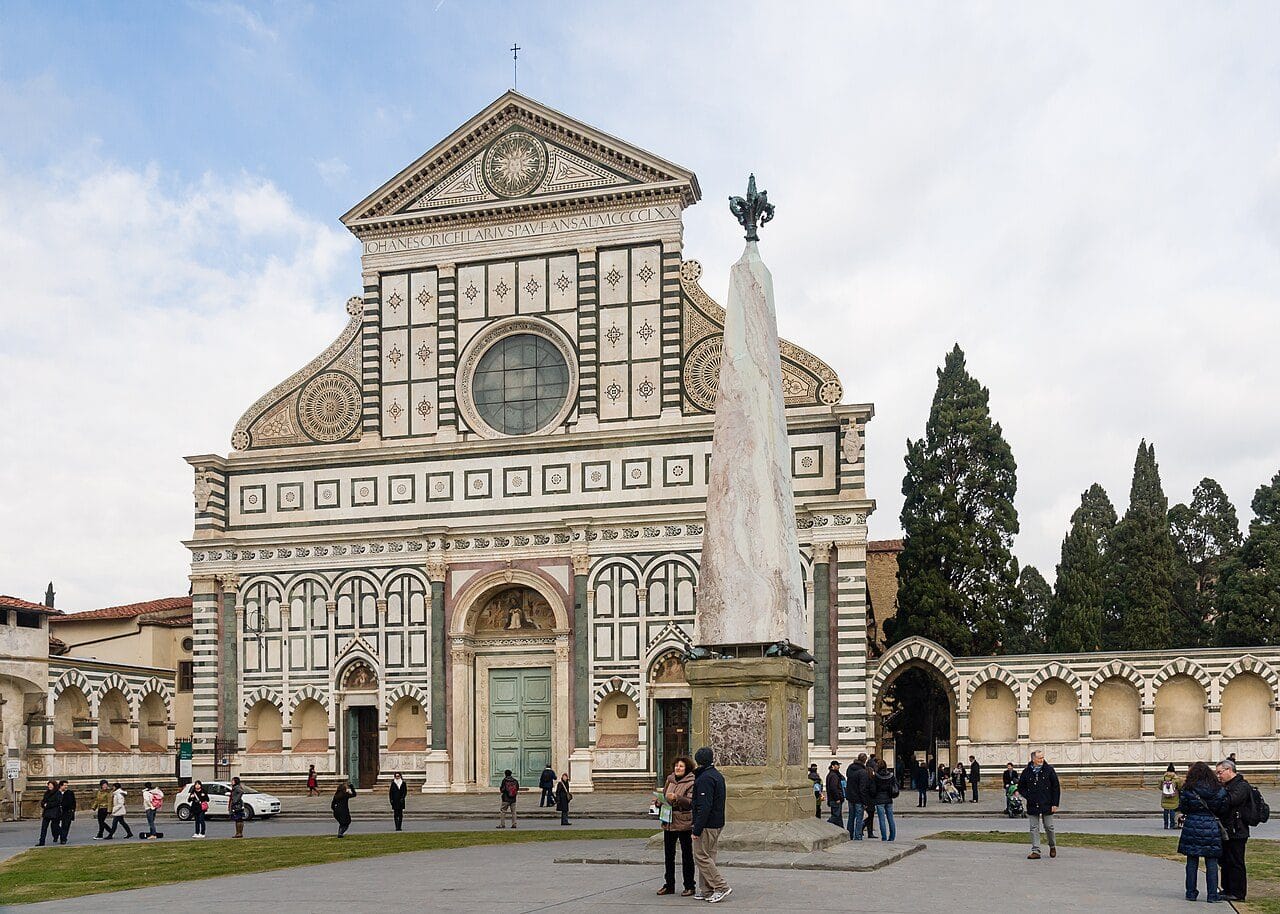
The district is fine. Much of it is genuinely pleasant and better value than the Duomo ring, particularly the streets running toward the basilica itself and down toward the river. The part that earns the caution is the cluster of blocks directly facing the main station, which is a transit zone and behaves like one after dark.
The mistake is not booking Santa Maria Novella. The mistake is booking it on price and a map pin without checking which street you are on.
You do not need anyone’s list of streets. Put the hotel’s address into a map and answer four questions.
Does the building front onto the station or its forecourt, or onto the open ground immediately outside it? That is the zone to be careful about. Anything with the basilica, the river, or a block of ordinary city between it and the station is a different proposition.
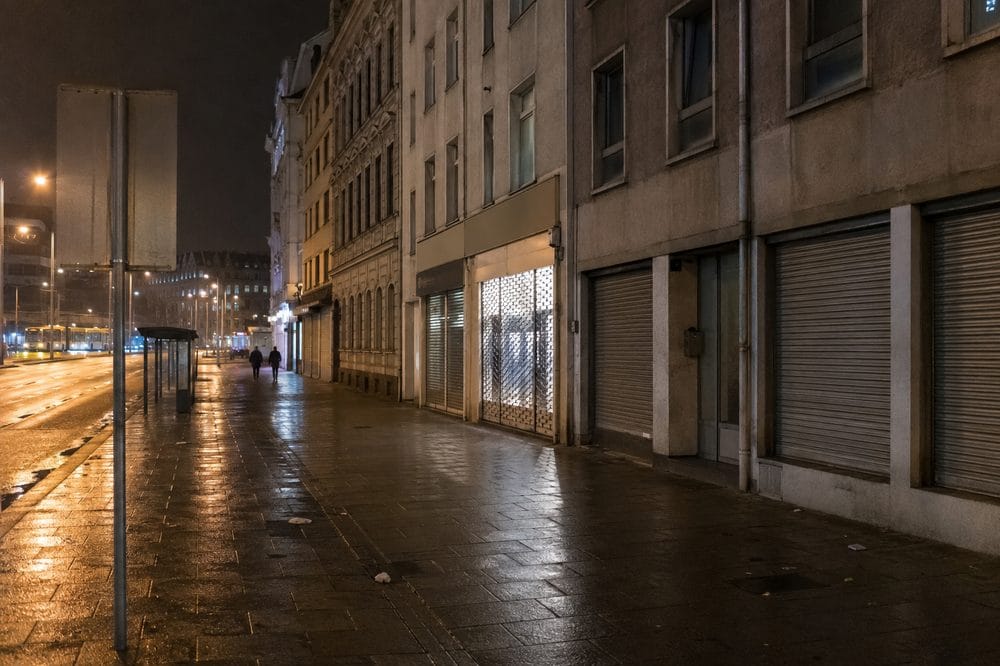
Drop into street view and look at the ground floor along the block. Late-night retail, shuttered frontages and coach parking read differently from apartments, cafes and normal shops. This tells you more in thirty seconds than any neighborhood description.
Sort the reviews by newest and read for the words noise, safe and station. People who stayed there last month will tell you exactly what the street is like at eleven at night.
Then ask what you are buying it for. If you have a 6am train or you land late with luggage, station proximity is a genuine advantage and it can outweigh the rest. If you are there for three days of sightseeing, it buys you nothing you cannot get two streets away in a nicer spot.
Reject on the reviews, not on the postcode. A well-run, well-glazed hotel on a station-facing block can be the right call for the right trip. A cheap one chosen on the map pin alone usually is not.
Best for: early trains, late arrivals, and anyone who has run the check above.
Campo di Marte and the eastern residential areas are well connected and tend to offer better value than anywhere central. They earn their place on a longer stay, with a family, or with a car.
Fiesole, in the hills above the city, is a lovely place to sleep and an inconvenient one if the plan involves being in the center twice a day. Excellent fourth night. Poor first night.
Best for: stays of five nights or more. For three days, what you save on the room tends to come back out in transit time and in the evenings you decide not to go back into town.
Picking the right area does not protect you from the wrong room. Once you have a shortlist, spend five minutes on this.
Read the newest reviews, not the best ones. Sort by most recent. Noise complaints and building work show up there first, and those are the two things most likely to ruin a short trip.
Search the reviews for noise, then bells, then stairs. A room on a quiet street above a bar is a noisy room, and no amount of neighborhood research finds that for you.
Find out which floor it is on and whether there is a lift. Plenty of historic Florentine buildings have no lift and a lot of stairs, and that combination is often disclosed in the fine print rather than the headline.
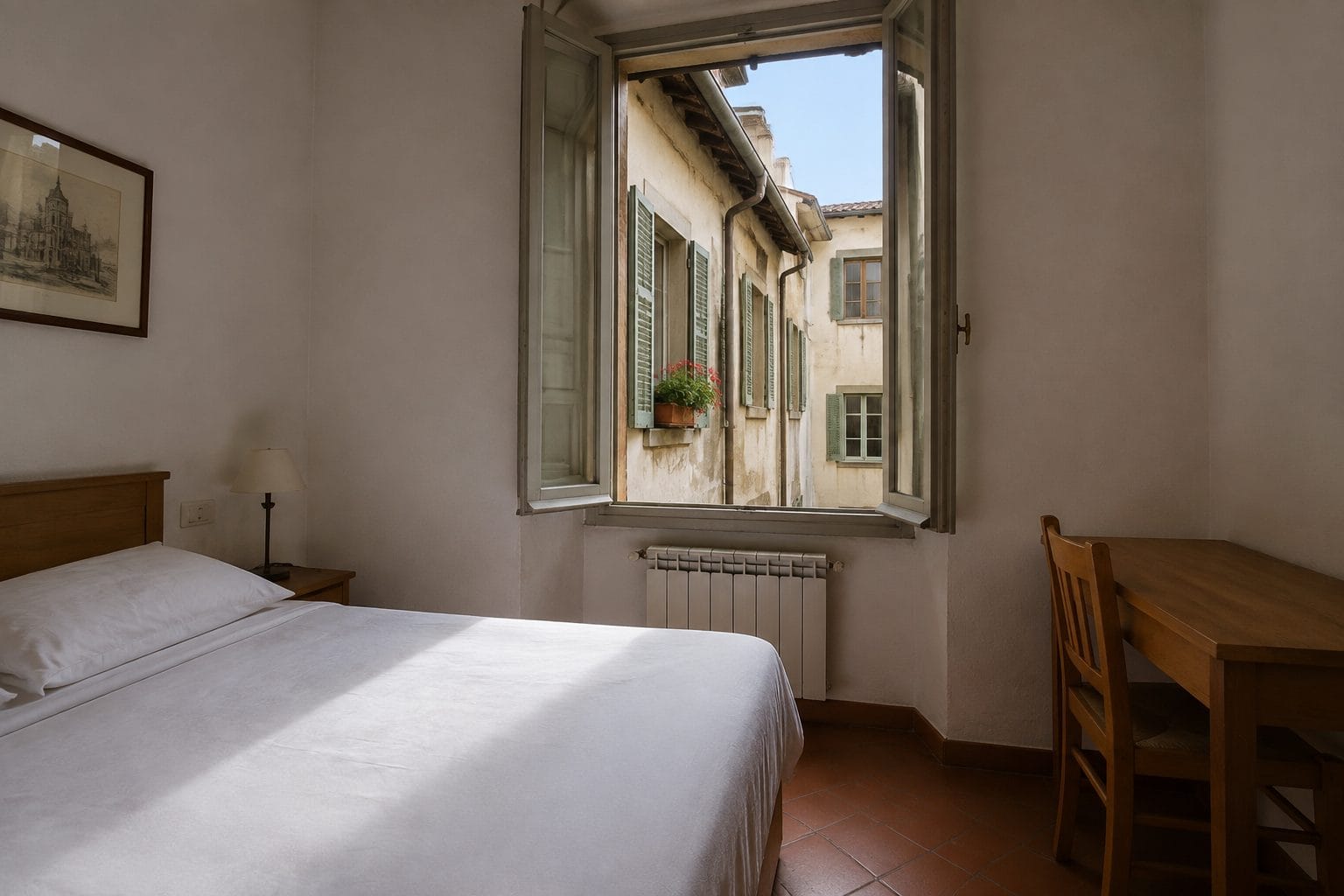
Check what the window faces. A courtyard is usually the safer bet and a street in the center is usually the riskier one, but neither is a guarantee. Courtyards carry kitchen and air conditioning noise, and some street-facing rooms are properly glazed.
Confirm whether breakfast and the city tax are included. Neither is a given, and the tax is usually not in the prepaid total.
Florence runs a limited traffic zone across the historic center. It is split into sectors and enforced by camera gates that read your plate automatically, so there is no moment where anyone stops you and tells you what you have just done.
The part that catches people is the timing. Each unauthorized pass generates its own fine, and they arrive months later through the rental company with an administrative fee attached. People routinely collect several before finding out about the first. That delay is the reason this gets a section rather than a footnote.
The hours are not what most visitors assume. For the central sectors the zone runs Monday to Friday from 7:30am to 8pm, and Saturday from 7:30am to 4pm. So it is not permanently on.
Then there is the one nobody warns you about. From early April to early October there is an additional night-time ZTL on Thursday, Friday and Saturday nights, running late into the early hours. If you are driving back after dinner on a Friday in September, believing the zone shut at 8pm, that is exactly when it catches you.
If you are driving, the safe move is simple. Do not try to reach a hotel inside the zone at all. Park outside and walk or take a taxi in. Some accommodation can arrange access for a guest’s plate, but treat that as something to confirm directly with your hotel in writing before you travel rather than something to assume.
Confirm the current sector boundaries and active hours with the Comune di Firenze before you go. They are adjusted, and the summer night zone in particular changes its dates.
Florence charges a tourist tax per person per night. It is collected by the accommodation rather than the booking platform, which is why it tends to appear at checkout as a surprise rather than in the total you agreed to.
Two things worth knowing. It is capped at seven consecutive nights, so a longer stay stops accruing it. And children under 12 are exempt, which matters more to a family budget than the nightly figure suggests.
The rate varies by accommodation type and rating and is set by the city. Check the current table on the Comune di Firenze site before you budget.
Work backwards from the evening rather than the morning. If the trip is about the art and early starts, stay north and book your entry slots before you book the room. If it is about being somewhere rather than seeing something, cross the river. If you have one night and a train, buy the convenience.
And book the room after you know which three days you are doing and in what order, because the order decides whether the location was a good call. And if the dates are still open, which month you pick changes the price of every room above. And the things nobody tells you about Florence are worth reading before your first walk around the city.
Join the Adventure
No spam. Unsubscribe any time. One email at a time.