
By Andrew Boltz · July 9, 2026
Venice has a reputation problem, and it’s the opposite of Florence’s. Florence gets undersold. Venice gets oversold, and then undersold in a different way, because everyone shows up expecting St. Mark’s Square, a gondola ride, and a plate of mediocre pasta at triple the price, gets exactly that, and leaves thinking they’ve seen the city. They haven’t. They’ve seen the lobby.
Heads up: some links on this page are affiliate links. If you book or buy through one, I may earn a small commission and you pay exactly the same price. More in the full affiliate disclosure.
If you’re looking for the usual things to know before visiting Venice, this is the part most travel advice skips. Venice is a maze built on wooden pilings sunk into a lagoon over a thousand years ago, and most of what makes it strange and worth the trip is not on the ten-minute walk between St. Mark’s and the Rialto Bridge. It’s in a bookshop that stores its inventory in bathtubs, a boatyard that still builds gondolas by hand, and a ceiling most tourists never look up to see.
Quick Venice Reality Check
- Best for: second-time visitors, curious first-timers, slower travelers who don’t want a checklist trip
- Time needed: a day or two to work several of these in around the big landmarks
- Best neighborhoods for wandering: Castello, Dorsoduro, Cannaregio
- Best add-on island: Torcello
- Biggest mistake: spending the entire trip between Rialto and St. Mark’s and never crossing into the quieter sestieri
If you only have one extra day beyond the standard sights, prioritize San Giorgio Maggiore, Libreria Acqua Alta, San Pantalon, and the Squero di San Trovaso. All four sit within a reasonable walk or short vaporetto hop of each other and give you the best return for the least effort.
On this page:
Here are 8 things Venice doesn’t put on its postcards, but should.
Libreria Acqua Alta, tucked near Santa Maria Formosa in Castello, floods. Regularly. The owner, Luigi Frizzo, opened the shop in the early 2000s already knowing it sat in a flood zone, and instead of fighting it, he built the whole business around it. Books are stacked inside a full-sized gondola. More books sit in a bathtub. When the acqua alta actually rises, the boat and tub keep the inventory dry while the floor underneath goes underwater.
The shop’s other trick: books that got ruined in past floods weren’t thrown out. They were stacked into a makeshift staircase that leads up to a small courtyard with a canal view, which is now one of the most photographed corners in the whole city. It’s open daily, no ticket required, and the cats that live there did not ask for your Instagram engagement but will tolerate it.
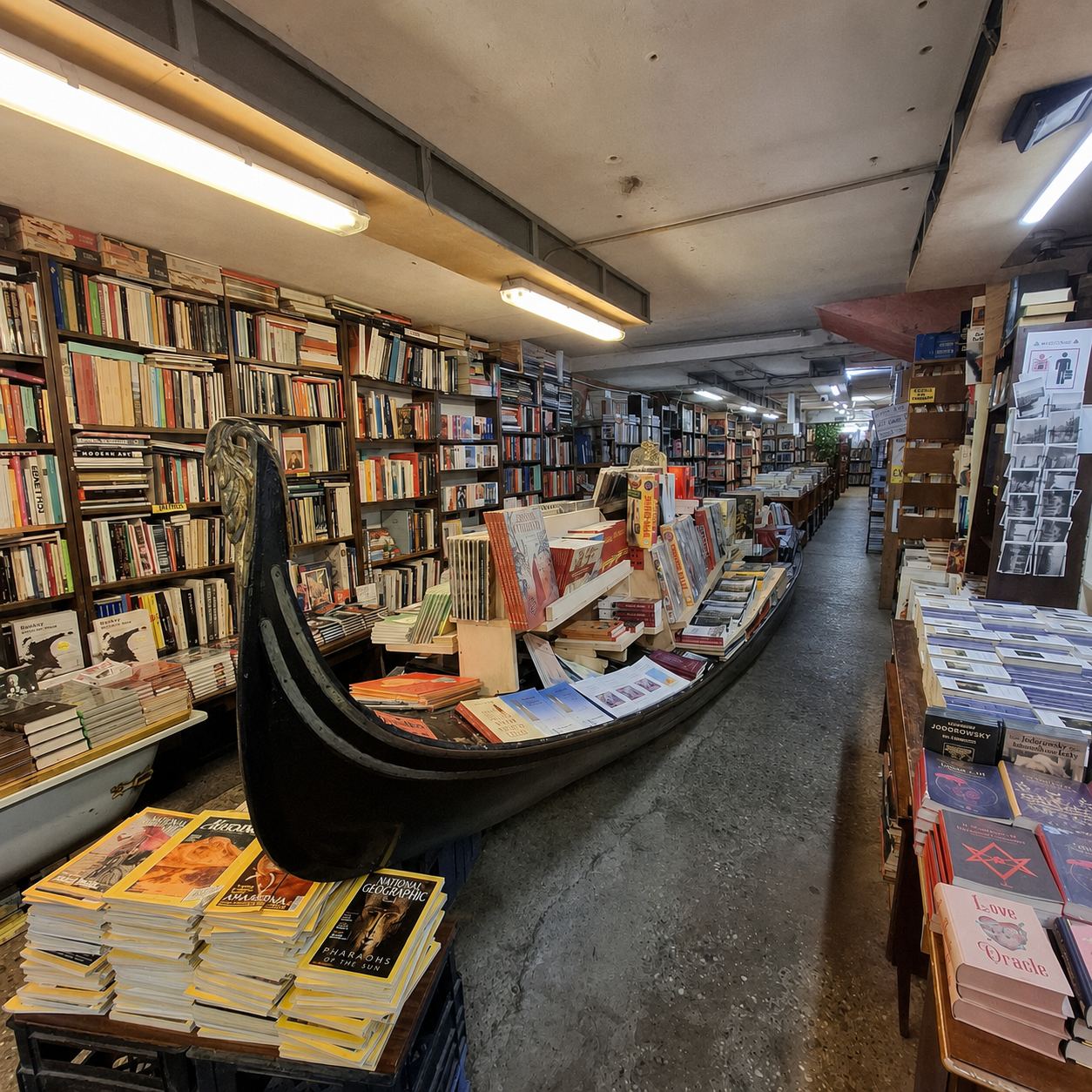
Travel tip: Go early or near closing if you want the famous book-staircase photo without a crowd in it. Pair the visit with Santa Maria Formosa and a walk into the quieter parts of Castello. Most people don’t wander past this one block.
The Squero di San Trovaso, in Dorsoduro, has been repairing and building gondolas since the 17th century, and it’s one of only a handful of squeri left in the entire city. From the fondamenta across the canal, you can watch actual shipwrights work on actual gondolas using traditional techniques. Each boat takes months, uses eight different types of wood, and is built slightly asymmetrical on purpose so it tracks straight when rowed by a single oar on one side.
The building itself looks out of place, more alpine chalet than Venetian palazzo, because the carpenters and the timber both traditionally came down from the mountains near Cadore. It’s not a museum. It’s a functioning workshop that happens to be visible from a public footpath, which makes it one of the few genuinely free, genuinely real things left to see in the city.
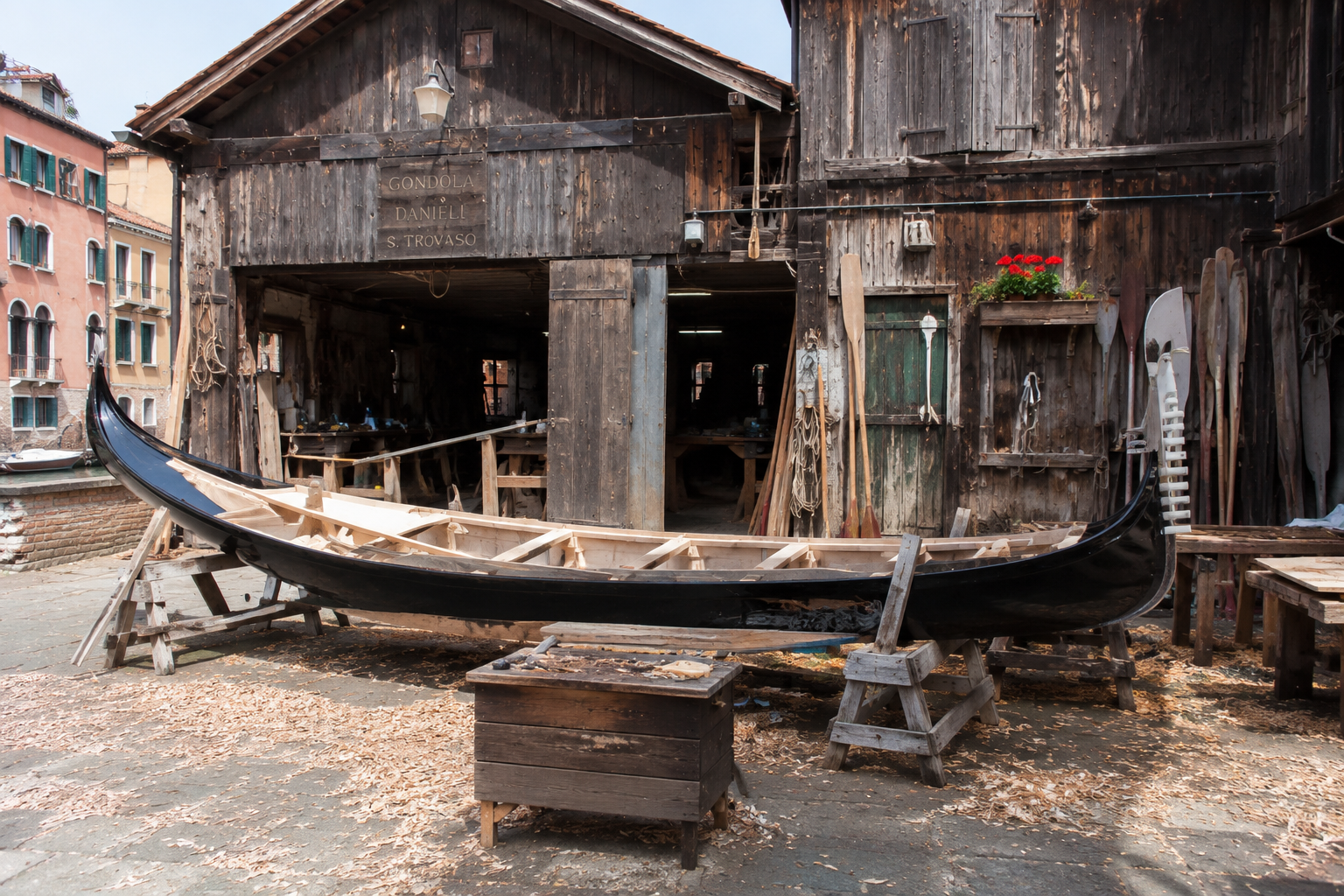
Travel tip: It is free, requires no ticket, and can be viewed any time from the opposite bank. You are most likely to catch actual work happening on weekdays during business hours. Pair it with Campo Santa Margherita and San Pantalon. All three sit within a ten-minute walk of each other in Dorsoduro.
In 1516, the Venetian government forced the city’s Jewish population into a small, canal-locked section of Cannaregio, connected to the rest of the city by exactly two bridges that were locked at night. It became the model for what would later be known worldwide as a “ghetto”: a legally restricted district where Jewish residents were forced to live. The district’s name, tied to the old iron foundries that used to operate there, became the word used worldwide for forced segregation ever since.
The Ghetto is still a real neighborhood today, with some of the tallest buildings in Venice, a result of a growing population being forced to build up instead of out for over 250 years. There are still active synagogues, a Jewish museum, and kosher bakeries. It’s a five-minute walk from the train station and most visitors never go.
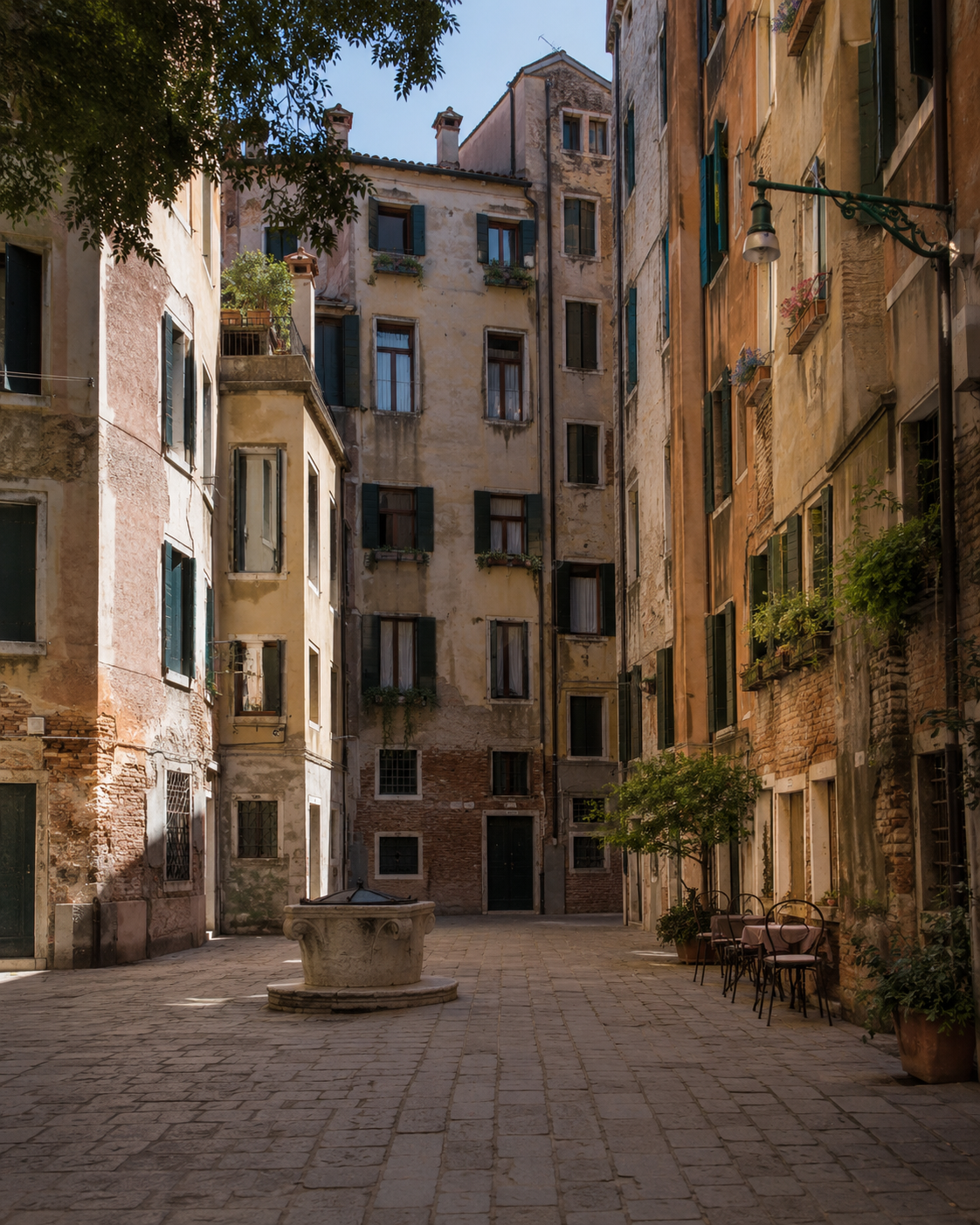
Travel tip: Worth 45 minutes to an hour if you also want the Jewish Museum. It’s an easy add-on the moment you arrive by train, before you’ve even checked into your hotel. This one only runs as a guided tour, so there is no official ticket window to beat.
The full Venice plan
Venice punishes wandering more than any city in Italy, largely because the wrong bridge costs you twenty minutes. The Venice 3-Day Itinerary puts these in an order that works, and tells you which passes are worth buying and which are not.
Get the Venice 3-Day Itinerary
Instant download.
From the outside, the Chiesa di San Pantalon in Dorsoduro looks unfinished, because it is. The facade was never completed. Walk inside and look up, though, and you’re staring at dozens of canvases joined into one continuous ceiling painting, often billed as the largest oil painting on canvas in the world, though a school ceiling in Maddaloni, near Naples, has a rival claim.
The artist, Gian Antonio Fumiani, worked on it from 1680 to 1704, using a perspective trick that makes the painted architecture look like it’s physically extending the real building upward. Venice likes to say he fell to his death from the scaffolding as he finished. Most biographies put his death in 1710, six years later, but the legend is the kind of detail Venice tucks behind almost everything beautiful. There is a small entry charge, and it is usually much quieter than Venice’s major churches.
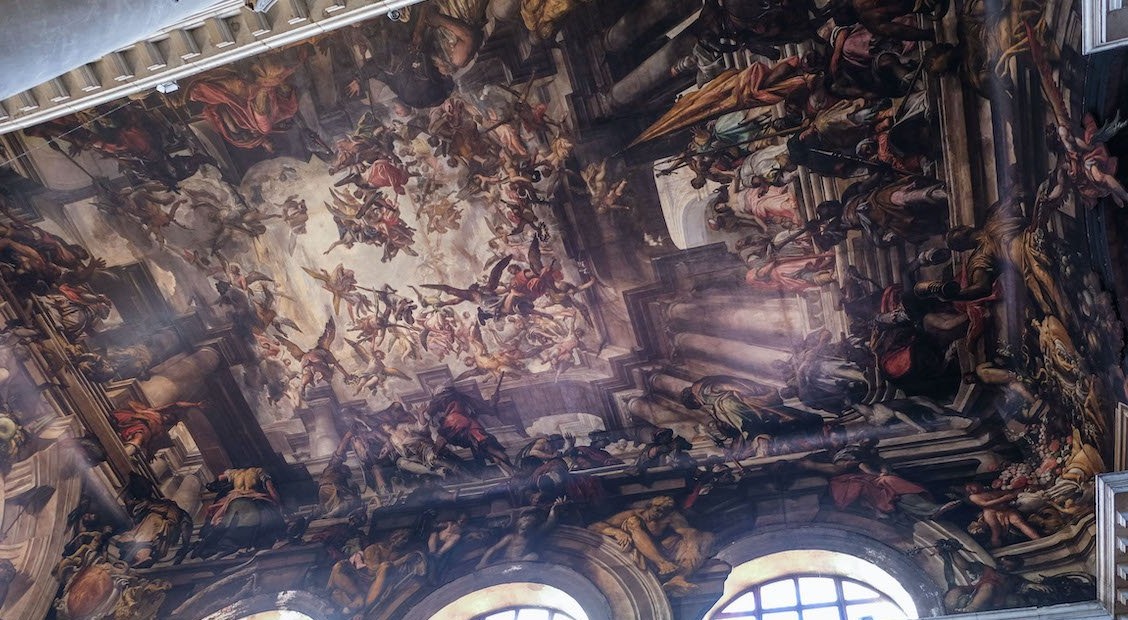
Travel tip: Five minutes is enough, but prepare to stare straight up the whole time. Pair it with Campo Santa Margherita for a coffee afterward.
Planning more than a quick stop in Venice? My Venice 3-Day Itinerary Guide turns places like these into a realistic three-day route, so you’re not wasting half the trip zigzagging across the lagoon.
The Ponte dei Pugni, the “Bridge of Fists,” near Campo San Barnaba, has four white marble footprints set into the stone at the top, marking where fighters from two rival factions, the Nicolotti and the Castellani, used to square off for generations. The bridge had no railings back then, on purpose. The goal, beyond simply winning, was often to throw your opponent straight into the canal below.
The brawls sometimes turned into genuine riots with stones and knives, until a particularly bloody one in 1705 got the whole tradition banned. The footprints are still set into the bridge today, and almost nobody stops long enough to notice what they’re standing on.
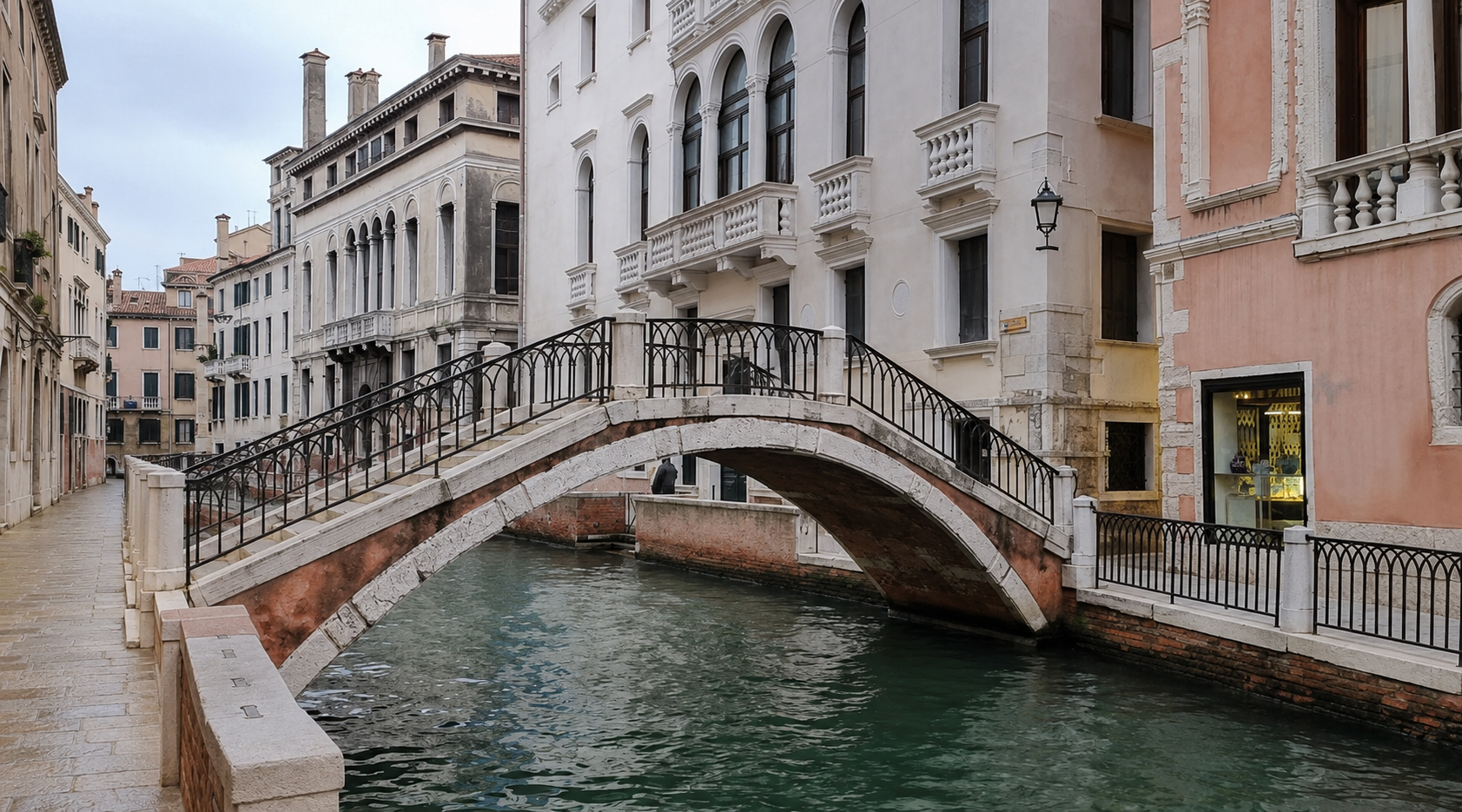
Travel tip: It is a bridge, not a destination. Budget two minutes and fold it into a Dorsoduro walk between San Pantalon and the Accademia.
Before Venice was Venice, there was Torcello, settled by mainlanders fleeing barbarian invasions and thriving as a trade hub with a Byzantine cathedral, Santa Maria Assunta, founded in 639, centuries before St. Mark’s Basilica existed. At its peak, Torcello held a population estimated around 15,000, more than Venice itself at the time.
Then the lagoon around it silted up, malaria moved in, and the population drained toward Venice proper starting in the 14th century. Today Torcello has a handful of year-round residents, one working basilica with Byzantine mosaics that rival anything in St. Mark’s, and a quiet that is genuinely hard to find anywhere else in the lagoon. It’s a boat ride out, which is why far fewer visitors make it there compared with Murano and Burano.
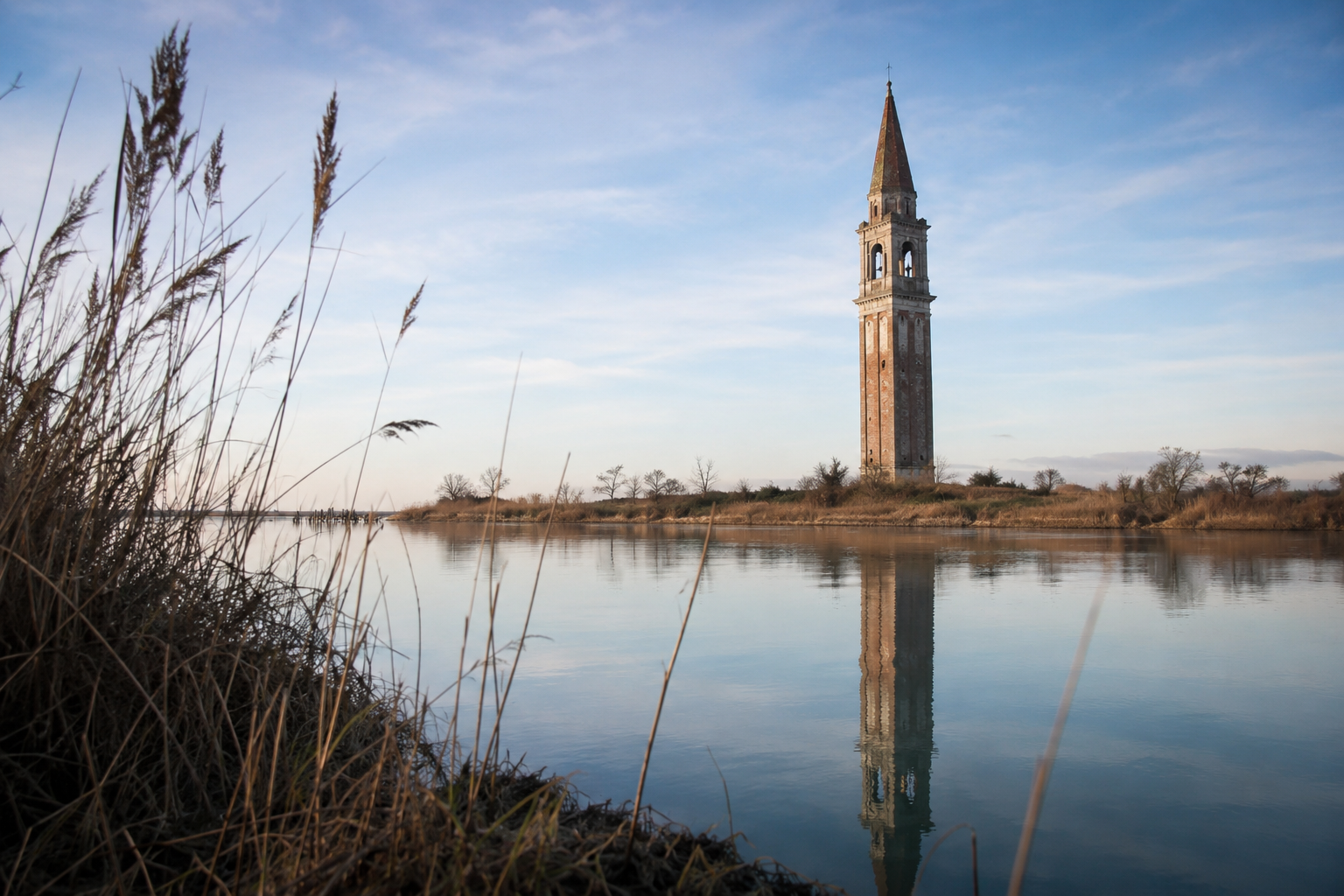
Travel tip: Budget a half day round trip by vaporetto from the northern lagoon stops. Worth it for the quiet alone. It’s a good pick if you want at least one lagoon island beyond the main tourist run.
Many visitors queue for St. Mark’s bell tower to ride the elevator up, stand at the top, and get a great view of, mostly, the rest of the piazza they were just standing in. Take the vaporetto across to San Giorgio Maggiore instead. Its bell tower has its own elevator, a fraction of the line, and a view that actually includes St. Mark’s, the Doge’s Palace, and the Grand Canal laid out in front of you instead of underneath you.
Tickets cost a few euros, but check current hours and pricing before you go. The bell tower’s schedule can shift with the season, weather, religious services, and maintenance closures.
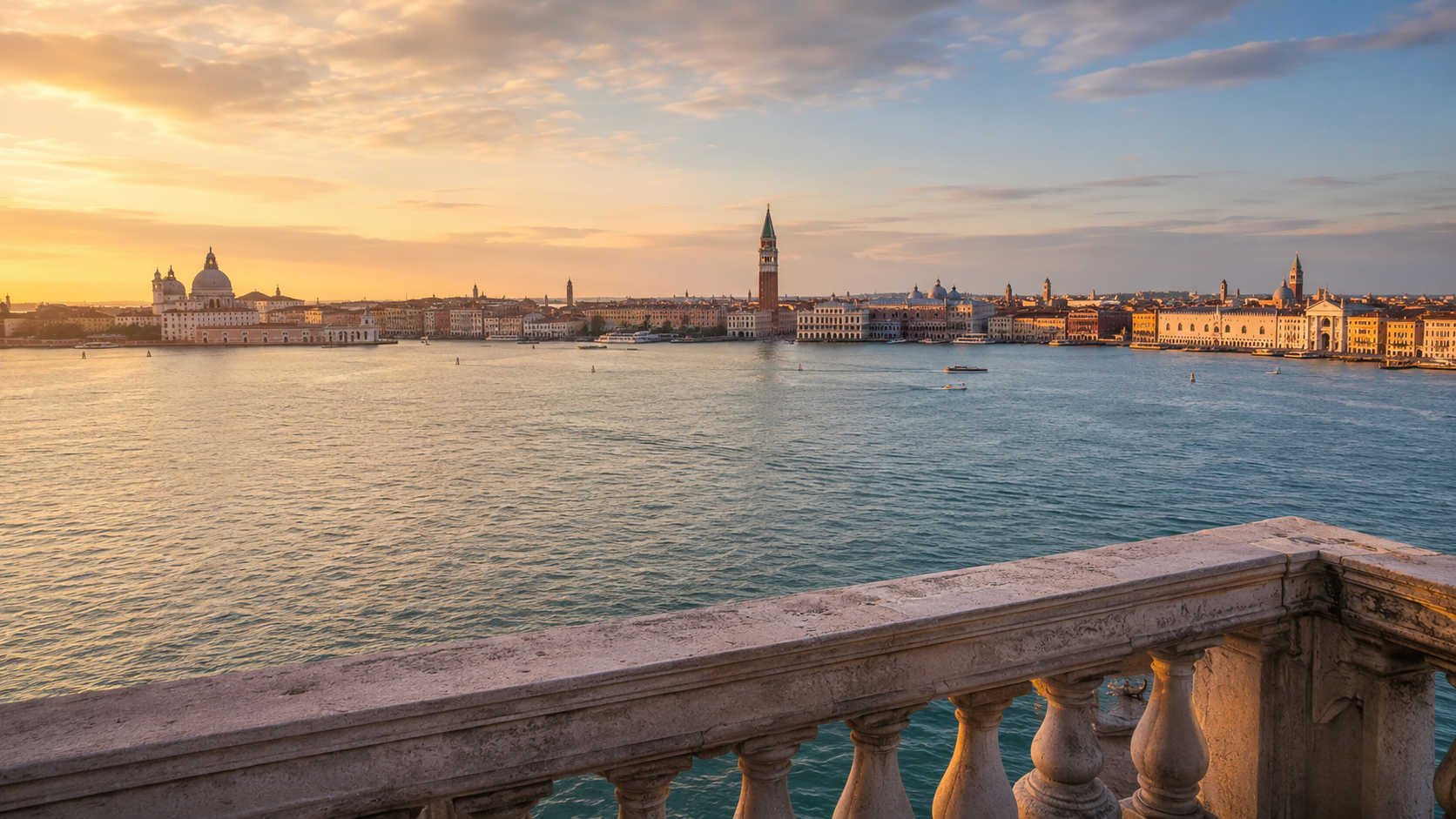
Travel tip: Go late afternoon for the best light on St. Mark’s Basin. Combine it with a wander through the church itself, which is free, and the Cini Foundation gardens next door if they’re open that day.
This one isn’t hidden, exactly, but it doesn’t fully register until you’re standing there with a suitcase and no rideshare option. Venice runs on water buses (vaporetti), water taxis, and walking, full stop. Line 1 is the slow, scenic Grand Canal route. Line 2 is the fast lane between the same major stops.
If you’re going to use the vaporetto more than once or twice, compare ACTV multi-day passes through Venezia Unica before buying single tickets one at a time. For most short-term visitors, the practical choice is usually a time-based transport pass, not individual rides.
Travel tip: Load your pass before you land if you can. The ticket machines at the train station get real lines during peak arrival hours.
Venice ran its day-tripper access fee again in 2026, on selected peak dates through the spring and early summer. It is not running now. The city ended the trial on 27 July 2026, and its own access-fee site says you can visit without any payment and without requesting an exemption. Whether it returns in 2027 is the city’s call, and it has floated charging more on peak days, but nothing is approved. Check the official Venice access-fee page before you book anything. Don’t rely on a number from any blog, including this one. Checked 4 September 2026.
Venice rewards the traveler who gets lost on purpose and stops looking for St. Mark’s Square as the destination instead of the starting point. The real city is in a flooded bookshop, a boatyard that still smells like fresh-cut larch, a ceiling nobody looks up at, and an island that used to outnumber Venice itself and now barely has a dozen full-time residents. If you’re mapping out a full trip and not just a day of wandering, my Italy Pre-Booking Guide covers what actually needs to be booked ahead versus what you can decide on the fly.
Now, the part where I sell you something. I’m not going to pretend this next paragraph is anything else.
Venice 3-Day Itinerary Guide
A practical 3-day plan for first-time visitors who want the landmarks, quieter neighborhoods, food stops, and side-trip options without wasting half the trip backtracking.
Includes: the full daily routes, vaporetto guidance, where to stay, restaurant suggestions, budget notes, and day-trip ideas.
Not ready to commit to a full guide yet? Drop your email below and I’ll send you the Venice + Milan Day Trips Freebie, completely free. Consider it a free sample before you trust me with your $9.
Is Venice worth visiting even with the crowds?
Yes, but the experience improves a lot the moment you spend time outside the St. Mark’s-to-Rialto corridor. Most of the crowd never leaves that stretch.
What’s the best hidden gem in Venice?
San Pantalon, the Squero di San Trovaso, and San Giorgio Maggiore are three of the best low-effort additions to a first Venice trip, all quick visits with a real payoff.
Can you visit Venice without a car?
Yes, you have to. In the historic center, walking and boats are the transportation system. You should not plan on cars, rideshares, or normal taxis once you are inside Venice itself.
How many days do you need in Venice?
Three days is a solid minimum if you want the major landmarks, time in the quieter neighborhoods, and at least one lagoon island like Torcello.
Get the Venice 3-Day Itinerary: Instant PDF download, $9. Grab it here →
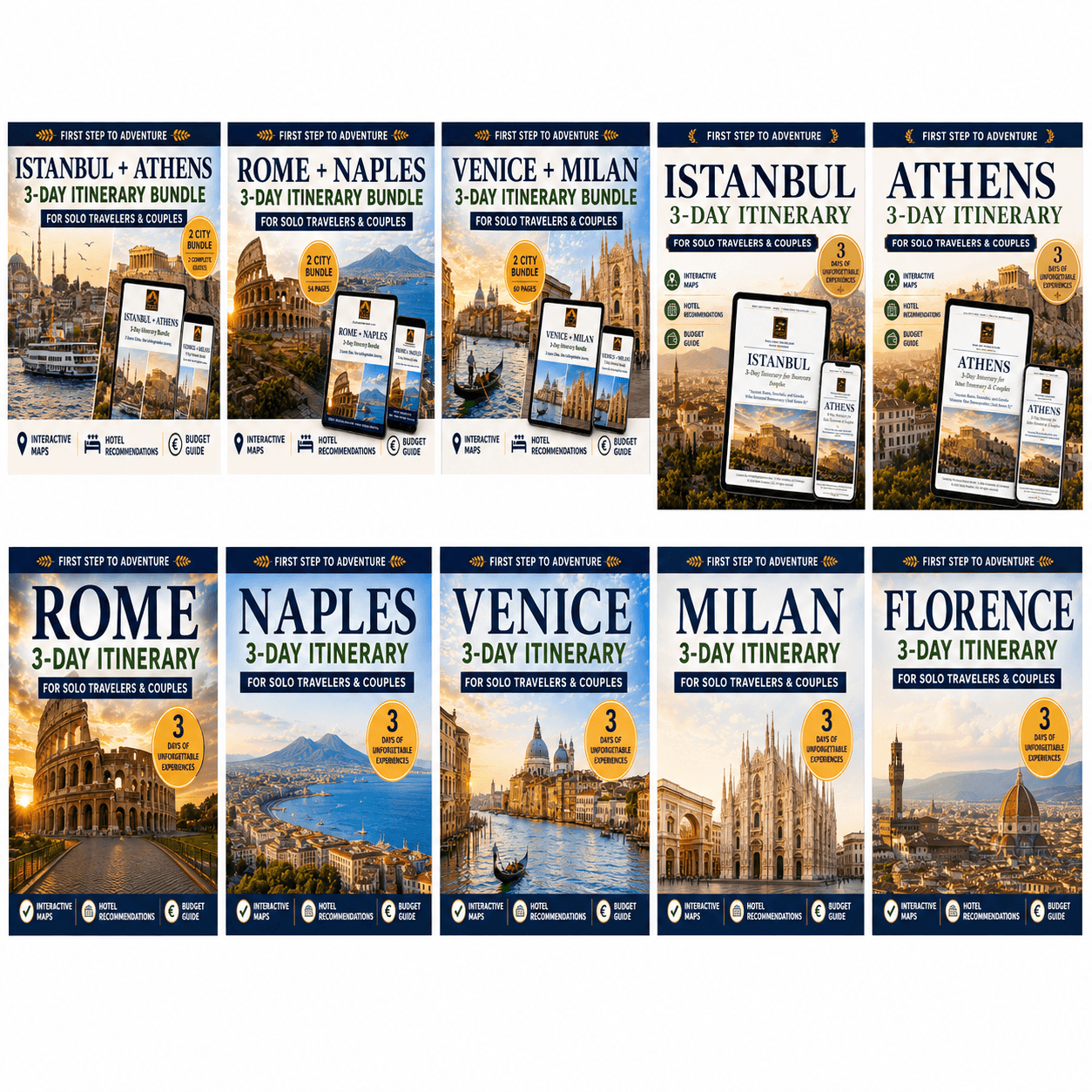
Every 3-day guide:
Rome · Florence · Naples · Milan · Athens · Istanbul
Traveling two cities? The Rome + Naples, Venice + Milan, and Athens + Istanbul bundles are there too.
Join the Adventure
No spam. Unsubscribe any time. One email at a time.