
By Andrew Boltz · July 28, 2026
Prices and rules checked against official ticketing sites on July 28, 2026.
Five years ago the Pantheon was free, you could stand at the edge of the Trevi basin without a ticket, and nobody blew a whistle at you for sitting on the Spanish Steps.
Today one needs a ticket, one charges for close access, and one is an expensive place to rest your feet.
Italy got tired of being loved to death and started charging for the privilege. Fair enough. The problem is that most travel advice online is running two years behind, so people arrive with a budget built on old numbers and get bled dry by seven euros here and thirty euros there.
What the money actually buys
Knowing the numbers is half of it. Knowing which three days to spend them on is the other half. The Rome 3-Day Itinerary maps the route, the timings, and the bookings worth making early.
Instant download.
Two people, three days in Rome, doing the Colosseum, the Borghese, the Pantheon and the Trevi steps will spend about €90 in entry fees before a single plate of pasta. Two of those four were free in 2019.
And the thing that actually ruins trips is not the money. It is the booking windows. The Last Supper releases tickets quarterly. The Colosseum releases thirty days out. Vesuvius sells online only. Miss those and no amount of budget fixes it.
Venice spent two years running a day-tripper access fee across 60 designated days between April and July.
The 2026 trial ended on July 27. You can now walk into Venice without paying anything, without registering, and without applying for an exemption. The city’s own access fee portal says exactly that.
As of July 28, 2026, Venice has published no 2027 dates and no 2027 fee. Every article currently telling you to book a Venice entry code is wrong today.
If it comes back, the 2026 rules were simple. Five euros booked four or more days ahead, ten euros inside three days, 08:30 to 16:00, historic centre only. Murano, Burano, Torcello and the Lido were never included, and the fine was €25 to €150.
Do not confuse any of this with the overnight tourist tax, which never went anywhere. Your hotel charges that per person per night, for the first five nights. There is more on what the city does not tell you in my piece on what nobody tells you about Venice.
The Pantheon is €7. Free until July 2023, then €5, and it rose to €7 on 1 July 2026. Four weeks ago. Most guides still say €5.
Entry runs in time slots and you have to respect the one you picked at purchase. Buy through the Musei Italiani site or app, or at the ticket office and machines on site. There is no skip-the-line option, so anyone selling you one is selling you nothing. It is also not covered by the Roma Pass or the Omnia Card, which stings if you bought one for that reason.
First Sunday of the month is free, but you cannot book online on free days. You queue like everyone else.
The Trevi Fountain charges €2 to go down into the basin area. Yes, the ticket actually happened. It was proposed, denied, reported and un-reported so many times that people assume it never did. It started February 2, 2026.
Access opens at 11:30 on Mondays and Fridays and at 09:00 the rest of the week, with last admission at 21:00. At the fountain entrance it is card only. You can also buy online, or from city sales points and tourist information offices, some of which take cash. Rome residents, under-6s, and disabled visitors with a companion go free.
There is no timed slot system whatever you may have read. You can still look at the fountain from street level for nothing. You are paying for the steps. While you are in the area, it is worth knowing which Rome tourist traps to avoid.
The Spanish Steps will cost you far more than €2 if you sit down. The ban has been in force since 2019 and municipal police actively move people off. Reports have cited fines as high as €400, but I could not confirm the current amount from Rome’s official sanctions table, so I am not printing a figure. The ban is real. Treat it as expensive.
The Colosseum, Roman Forum and Palatine is €18 on the standard ticket, valid 24 hours. Tickets carry your name and go on sale exactly thirty days before your visit date. Not sixty. Not ninety. Thirty. If you are planning six months out, you cannot buy them yet, and no amount of refreshing will change that. There is an on-site ticket office subject to availability, but do not build a day around it.
The Borghese Gallery is €18, booking mandatory for everyone, in two-hour shifts capped at 180 people. The last slot at 17:45 drops to €11 plus the fee, which is the closest thing to a bargain Rome offers. Bag rules are strict.
Since March 2025, the Dome is no longer sold as a standalone ticket. Dome access comes only inside the Brunelleschi Pass at €30, which also covers the Bell Tower, the Baptistery, the Opera del Duomo Museum and the Santa Reparata crypt across three calendar days.
Your Dome slot cannot be changed or cancelled once issued and the pass carries your name. It is 463 steps with no lift, medium and large bags have to go into storage first, and no skip-the-line option exists.
The cathedral itself, the nave at ground level, is still free and needs no ticket. Plenty of people buy a pass they did not need.
The Uffizi has the strangest pricing in Italy. It is €25 at the door and €29 booked in advance. Booking ahead costs four euros more, which is the reverse of nearly every museum on the planet.
The real bargain is Friday evening. A Friday evening ticket covering the Uffizi and the Vasari Corridor is €20 on the day, €24 booked ahead. That is less than a plain Uffizi ticket, and the Corridor normally pushes that combination to €43. It is the best-value ticket in Florence and almost nobody buys it.
If you want more than the Uffizi, the PassePartout is €40 and covers the Uffizi, the Pitti Palace and the Boboli Gardens across five consecutive days, or €58 with the Vasari Corridor included.
The Accademia is €20 at the door and €24 booked ahead, since the €4 booking fee sits on top of the ticket. Prices went up on February 1, so anything still quoting €16 is out of date, and plenty of sites are. Booking is recommended rather than required, whatever the resellers imply.
If you want more than the one museum, the Accademia sells a 48-hour combined ticket with the Bargello at €26, and a 72-hour ticket covering all six museums in its group at €38. Both are better value than they look if you are staying three nights. For what to do between the museums, see Florence’s hidden gems.
And if you drive into the centre, the cameras will find you. Florence’s ZTL gates read plates automatically. Under Italian national law the penalty runs €83 to €332 per gate crossing, and three gates means three fines. Rental companies pass them on months later with their own admin fee on top. This is the most expensive mistake a first-timer makes in Florence, and it is entirely avoidable by not driving.
Rare good news. As of April 2025 the Duomo scrapped all booking and presale fees, so the price is identical at the desk or online. Cathedral plus museum is €10, or €8 on Wednesdays. Rooftop terraces are €18 by lift, €16 by stairs.
The Last Supper is €15, booking is mandatory for everyone, and this is the booking that ruins itineraries. It is mandatory, tickets carry your name, and they release in quarterly blocks rather than rolling. The September to December 2026 block went on sale on June 23. If you missed it, extra tickets drop every Wednesday at noon for the following week, online only, five maximum. That Wednesday drop is the realistic way in, and it explains why people who found it sold out still get seats.
Milan also hammered visitors with an Olympic-year tourist tax increase. A 4-star room is €10 per person per night, and short-term rentals, B&Bs and room rentals sit at €9.50. Two people for four nights in a 4-star is €80 in tax alone, collected at the property. If you are wondering whether the city is worth the stop, I made the case in things nobody tells you about Milan.
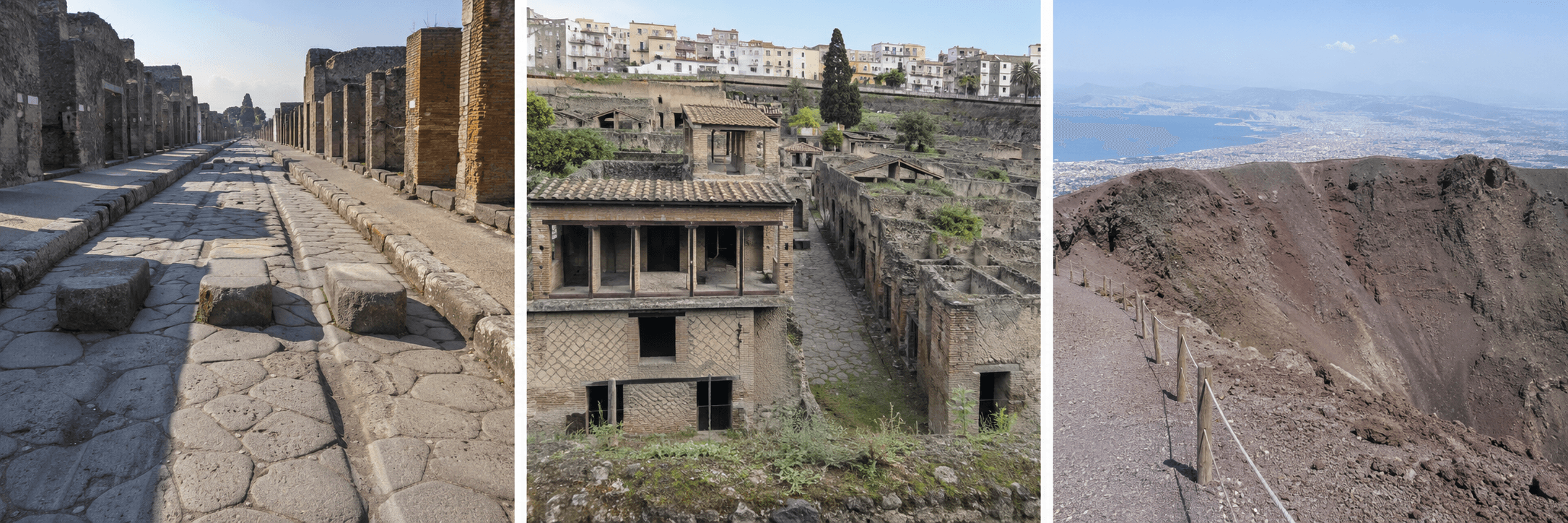
Pompeii is €20 with a hard cap of 20,000 visitors a day. From March 16 to October 14 the day splits into 15,000 morning admissions and only 5,000 in the afternoon, so do not assume you can turn up late and walk in. Tickets are sold at the entrances subject to that allocation.
Herculaneum is €16. Smaller, quicker to cover, and in my opinion better preserved. If you only have one Vesuvian site in you, I would take this one.
Vesuvius is €10 base, and €11.68 all in on vesuviopark.vivaticket.it, which is the only authorised seller. Tickets are online only. There is no ticket window at the crater. Worse, the last-minute release of leftover slots is purchasable only over the park’s own WiFi, meaning you have to already be standing there. Sort it before you leave the hotel. The city itself is badly misjudged, which I get into in Naples’ hidden gems.
| Attraction | Booking status |
|---|---|
| Last Supper, Milan | Required, quarterly release, Wednesday backup drop |
| Colosseum, Rome | Required, 30-day window, limited on-site sales |
| Borghese Gallery, Rome | Required, no exceptions |
| Florence Dome | Required, slot non-changeable |
| Vesuvius | Required, online only, no gate sales |
| Pantheon, Rome | Time slot, on-site machines available |
| Trevi basin, Rome | Buy online or on site, card only at the gate |
| Pompeii | Walk-up possible within the daily cap |
| Uffizi | Walk-up is cheaper than advance |
| Accademia | Recommended, not required |
| Florence cathedral nave | Free, no ticket |
The Entry/Exit System replaced passport stamping with a facial image and fingerprints for non-EU visitors. It began a gradual rollout in October 2025 and became fully operational on April 10, 2026. It costs nothing, but your first registration may add time at border control.
ETIAS, the actual travel authorisation, is not running yet. The EU says it will announce the start date several months before launch. When it starts, it will cost €20, with under-18s and over-70s exempt from the fee. The exact launch date has not been announced and it has slipped more than once, so do not plan around it.
More money gets lost to resellers than to any fee in this article. Search ads are full of them. Every attraction above sells through an official channel:
Italy is still worth it. Winging it is not. If you do nothing else, book in this sequence:
None of these are problems you should rely on solving on the day. You solve them at your kitchen table, weeks out, or you do not see the thing.
The pasta will wait.
Every one of my 3-day city guides carries the current prices, the booking windows, and the full three-day route that works around them. No guesswork, no dead afternoons in a queue you could have skipped.
The whole library is here.
Cities: Rome · Florence · Venice · Milan · Naples · Athens · Istanbul
Bundles: Rome + Naples · Venice + Milan · Athens + Istanbul
Italy changes these more often than it used to. Check the official links above before you book. Some links on this site are affiliate links, which cost you nothing and keep the lights on here.
Join the Adventure
No spam. Unsubscribe any time. One email at a time.