
By Andrew Boltz · August 26, 2026
Prices and opening arrangements checked 27 August 2026. Everything in this guide to when to visit Florence names its source so you can re-check it yourself.
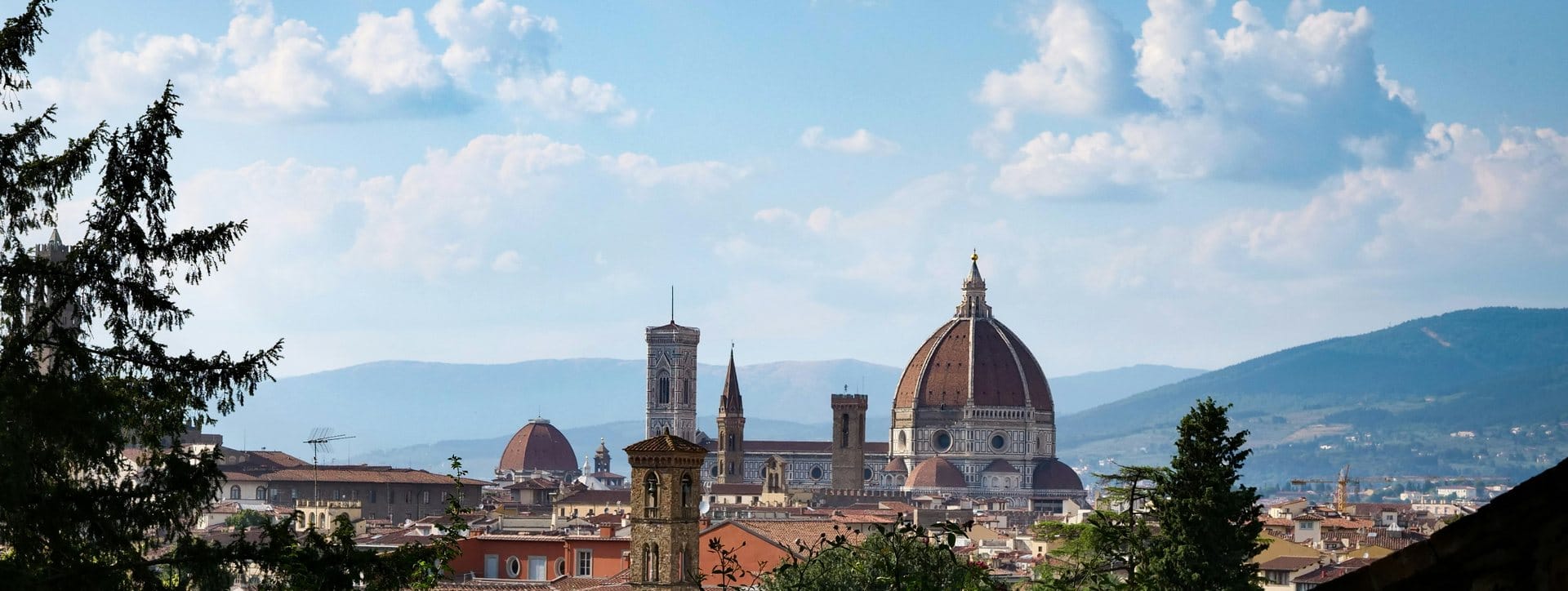
Ask the internet when to visit Florence and you get the same answer every time. Spring. April or May, occasionally with a nod at October on the way past.
September gets mentioned. What it almost never gets is the outright win. That is the argument here: September is the month worth building a Florence trip around, and it loses the recommendation to spring more or less by default rather than on the merits.
Two things before the reasoning. This is a judgment about trade-offs, not a claim that September is empty. It is not empty. And the case rests on things you can check for yourself, which is why they are named as they come up.
Heads up: some links on this page are affiliate links. If you book or buy through one, I may earn a small commission and you pay exactly the same price. More in the full affiliate disclosure.
Every month in Florence trades the same four variables against each other. Rank them for yourself and the calendar mostly sorts itself.
Heat. Florence sits in a river valley ringed by hills and its summers get hot enough that the middle of the day stops being usable for anything outdoors.
Crowd pressure. Not visitor totals in the abstract, but how long you queue and how much of the day disappears into it.
What is actually open. The one nobody weighs, and it swings the most. Winter brings shorter hours. Mid-August brings closures at exactly the independent places worth finding.
Price. Rates move a long way across the year, and for a lot of people this is the variable that quietly makes the decision.
Everything below is those four applied month by month.
Best overall trip, if you can choose freely: September, running into the first half of October.
Best weather, and you will pay for it in queues: May, or late April.
Lowest prices, and you own a coat: November through early March, skipping Christmas and New Year.
Worst combination available: August.
One thing worth knowing now, because almost every article gets it backwards: at the Uffizi, buying your ticket before the day of entry costs more than buying it on the day. The explanation is further down and the practical answer is still usually to book ahead.
The full Florence plan
Knowing the month is the easy half. Fitting the Uffizi, the dome climb and the Accademia into three days without doubling back across the river is the part that takes work. The Florence 3-Day Itinerary lays out the route across all three days, with the tickets worth booking before you fly.
Get the Florence 3-Day Itinerary
Instant PDF download.
May is the consensus pick and it is a good month. Warm, long days, everything open, and the gardens at their best. The catch is that being the consensus pick has consequences. May is high season and priced accordingly, and you are competing with everyone who read the same advice you did.
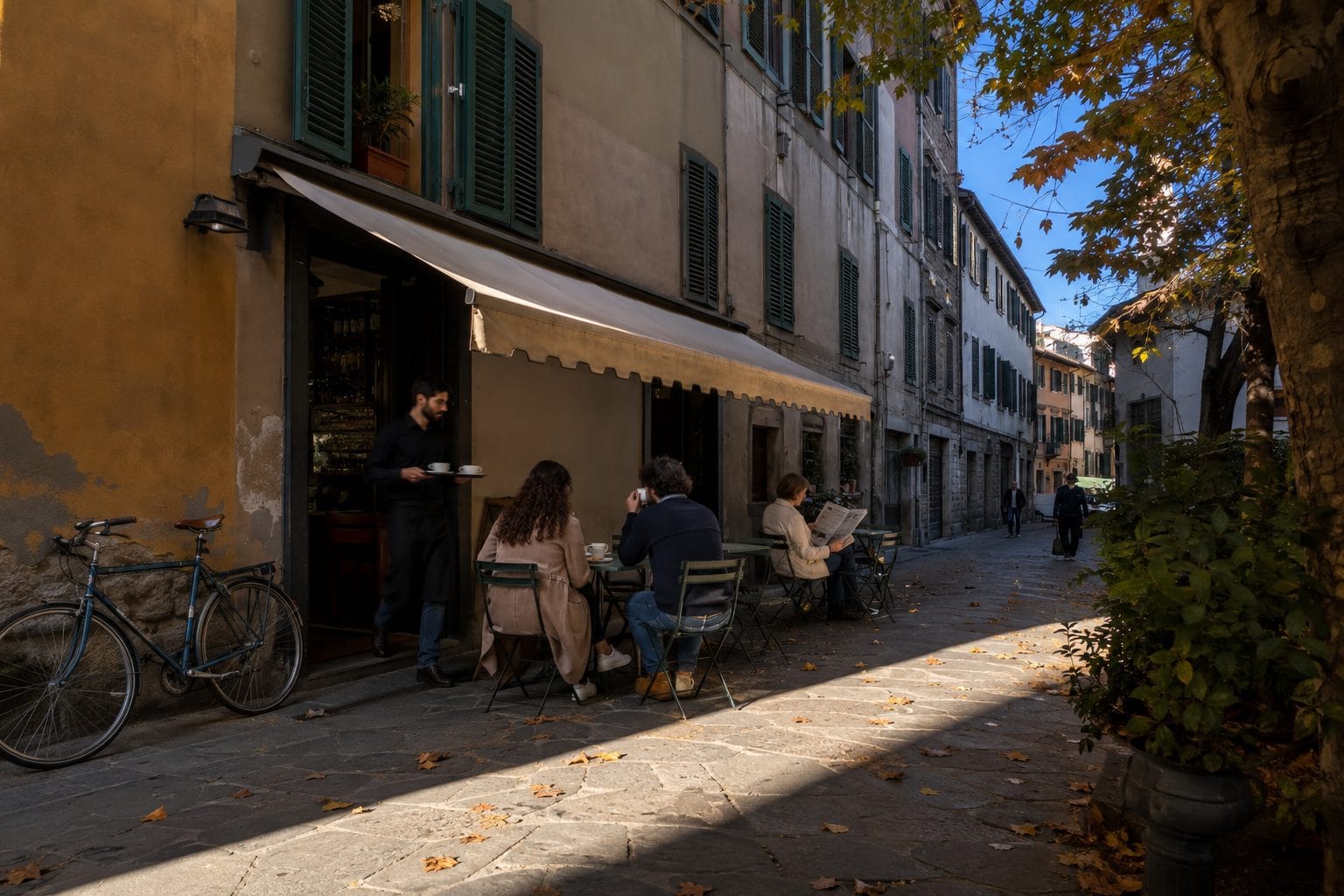
September’s case rests on three things.
School summer holidays end in late August and early September across most of the major European markets. Not every country runs the same calendar, but the broad pattern holds, and it changes who is able to travel rather than merely who wants to.
The August closures end. The independent restaurants and workshops that shut for the middle of August are back. That is not true in August, and it is only partly true in the depths of winter, when hours contract instead.
And the heat has dropped without the season turning. September in Florence is warm rather than punishing, with the long evenings largely intact.
From those, an inference, and it is worth being clear that it is one. Families with school-age children largely leave the market once term restarts, and my read is that this produces a real crowd difference between May and September. Published monthly Florence visitor figures were not available to prove it, so treat that as reasoning, not a statistic.
What you give up is spring. The gardens are past their best and the city is heading toward autumn rather than out of winter, which is a real thing to want and a fair reason to pick May instead.
So the honest version: if the choice is between September and May and nothing else is deciding it, take September. You get a comparable city under better conditions, and on the reasoning above, probably with fewer people in front of you.
May is covered above. Two notes on its neighbors.
April is a gamble. Early April can be cool and wet, and Easter moves around the calendar dragging a crowd wherever it lands. Check where Easter falls before booking anything in April, because the week around it books up like high summer with worse odds on the weather.
June is the last comfortable month before the heat turns. Early June is fine. By the back half of June you are effectively in July, and the city is also running its biggest event of the year, on which more below.
July is hot and busy. August is hot, busy, and partly shut.
The closure problem is the one that catches people. A significant share of Italian small businesses close for a stretch around the middle of August, and in Florence that lands hardest on the independent places worth finding, the small family-run restaurants and the artisan workshops. You arrive in the most expensive stretch of the year, in the worst weather of the year, and a meaningful part of what you came for is shuttered until September.
If August is the only window you have, take it. Start early, put the middle of the day indoors or out of the city, and adjust what you expect from dinner.
Winter is where the money is. Rates drop, queues shrink to something reasonable, and you can stand in front of a famous painting without waiting for a gap.
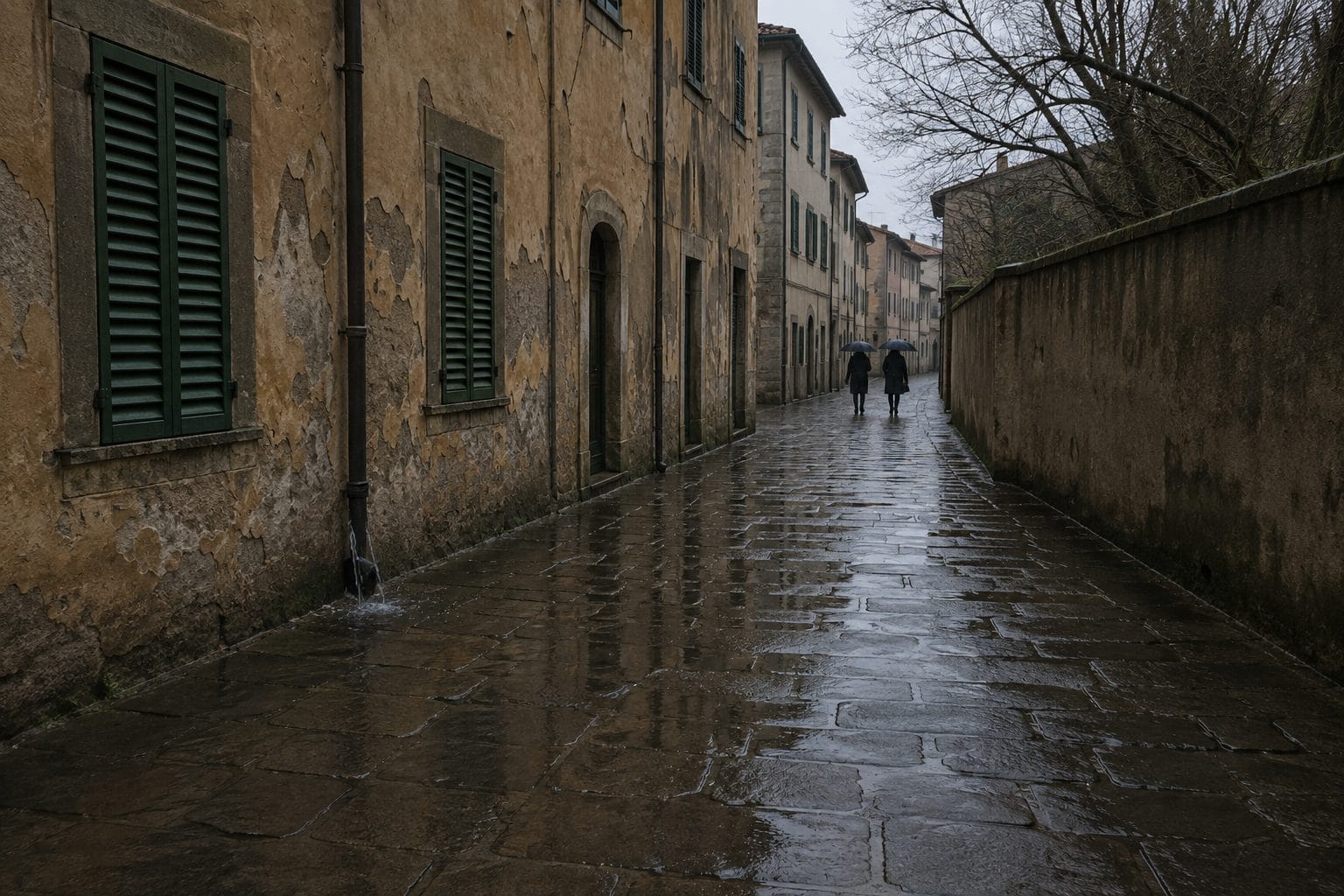
The caveats are not small. Days are short, so a late start costs a disproportionate share of your daylight. It rains. Florence in winter is damp as well as cold, which is worth a waterproof layer rather than just a thick one. And opening hours contract, so the thing you traveled for may be running a shorter day than you assumed.
Two windows inside winter behave differently. Christmas through New Year is busy and priced accordingly. And the run from early January to the end of February is the cheapest and quietest stretch of the year, with the shortest days and the least forgiving weather attached.
Here is the thing flagged at the top, straight from the official fares table.
The Uffizi is 25 euro for a ticket purchased on the day of entry and 29 euro for one purchased before that date. The Pitti Palace runs 16 against 19, and the Boboli Gardens 10 against 13. There is no separate booking fee listed and no high or low season variation. The premium is simply what buying ahead costs.
Pay it anyway in any busy month. What you are buying is availability and a place in the day rather than a cheaper line item, and in May that is worth four euro without much thinking about it. In January, when the queue is short, buying on the day is the better call. Confirm the exact entry arrangements when you book, because how the reservation works is a separate question from what it costs.
Worth knowing if you plan on more than one of them: a combined ticket covers the Uffizi museums across five days for 40 euro, against 51 euro buying the three separately.
Check current prices at the official Uffizi site before you book. These change and this article will not.
Two things move Florence’s calendar enough to matter.
Late June brings the feast of San Giovanni, the city’s patron saint, and the final of the Calcio Storico, a historic football tournament closer to organized violence in period costume than to sport. Spectacular, and the city is full. Go for it deliberately or avoid it deliberately, but do not discover it after booking.
Easter Sunday brings the Scoppio del Carro, which is better than its billing. A cart the size of a small building, hauled into the cathedral square by two pairs of white oxen, is detonated by a dove-shaped rocket that is lit at the high altar inside the cathedral and travels out along a wire to reach it. It has been done in some form for centuries. In 2026 Easter Sunday falls on April 5.
Confirm both against the city’s own events calendar before building a trip around either, and note that the June dates move too.
The dome climb requires a timed reservation year round, and the slot you pick cannot be changed or cancelled afterwards, so treat it as the fixed point you build the day around. The Uffizi and the Accademia want a reservation in any month with decent weather.
Two closures wreck more itineraries than anything else here. The Uffizi is closed on Mondays. And the cathedral itself is closed to visitors every Sunday, along with religious holidays, which catches people who assumed a Sunday in Florence was a cathedral day. The dome, bell tower and baptistery keep their own separate hours, so check all four rather than assuming they move together.
And the thing seasonal guides leave out: Florence is compact enough that three days covers a strong first trip, and compact enough that three days can be wasted by taking it in the wrong order. Your month sets the difficulty. It does not build the plan. Once the month is settled, where you stay is the next decision, and in a city this compact it matters far less for walking distance than for what your evenings look like. If Florence is sharing the trip with Rome, Rome or Florence for three days compares the two on cost, and the things nobody tells you about Florence are worth reading before you land.
September, into early October, if the choice is yours.
May if you want the spring version and will accept high season to get it.
Winter if the budget is deciding and you are honest with yourself about short days.
Not August.
Join the Adventure
No spam. Unsubscribe any time. One email at a time.